.jpg)
Time sensitive networking for industrial automation (Rev. A)
Texas InstrumentsTime-sensitive networking (TSN) is an Ethernet extension defined by the Institute of Electrical and Electronic Engineers (IEEE) designed to make Ethernet-based networks more deterministic. Industries like automotive, industrial and performance audio use real-time communication with multiple network devices and will benefit from the TSN standard.
The consumer and enterprise world of Ethernet and wireless Ethernet communication is bandwidth oriented. For example, while browsing the Internet you accept a varying amount of delay before video playback starts. Although there is a preference for quick interaction, for the average user it is acceptable if one out of 100 clicks perform an order of magnitude worse. However, if a video is bad quality or even halted the typical consumer will be frustrated.
Even infrequent delays are unacceptable in control systems such as those inside automobiles, production lines or concert halls. The most important aspects for these systems are latency and jitter or variation in the latency of control data through the network. The maximum time a packet takes to reach the destination in the system defines the communication cycle or control frequency in the network.
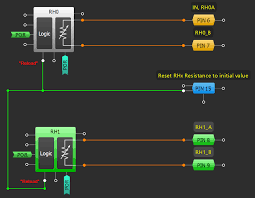
Adjustable Analog Filter
Dialog SemiconductorThere are a variety of applications where signals from different sources (for example, sensors) are sensed with one ADC. Such systems require an analog multiplexer with analog filters for each channel, because each signal source may have its own set of filter requirements (for example, different cutoff frequencies). An alternative space-efficient and cost-efficient solution is to use one tunable analog filter for all channels. The SLG47004 IC solves this task perfectly.
Using SLG59H1401C and SLG59H1403C in PowerMUX and OR'ing Applications
Renesas Electronics CorporationThis application note describes how to use Renesas SLG59H1401C and SLG59H1403C in PowerMUX and OR'ing applications. Corresponding oscilloscope captures of operational behavior are included
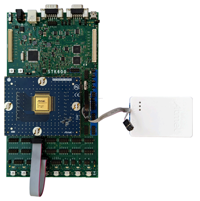
AN4827 ATmegaS128 IO Expander
Microchip Technology Inc.This application note describes the implementation of a Radiation Tolerant Port Expander application using the Serial Peripheral Interface (SPI) interface on the ATmegaS family of space-qualified AVR Microcontrollers (MCUs). The goal is to functionally emulate the MCP23S17. The ATmegaS128 is a function and pin-identical variant of the ATmega128 commercial device, and it ensures a full code and toolchain compatibility.
AN4383 - 32-bit Microcontroller Wafer-Level Chip-Scale Package (WLCSP)
Microchip Technology Inc.This document provides Microchip's 32 MCU Wafer-Level Chip-Scale Packages (WLCSP) information. It gives details such as bootloader, programming, and ordering guidelines. It also includes information on handling, shipping, SMT, and rework.
AN-105 - Current Sense Circuit Collection Making Sense of Current
Analog Devices Inc.Sensing and/or controlling current flow is a fundamental requirement in many electronics systems, and the techniques to do so are as diverse as the applications themselves. This Application Note compiles solutions to current sensing problems and organizes the solutions by general application type. These circuits have been culled from a variety of Linear Technology documents.
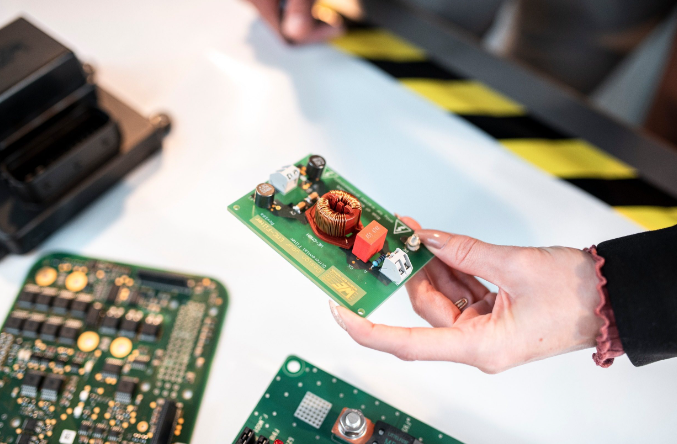
ANP006 - Influence of Control Loop by an Output Filter
Wurth ElektronikThe output voltage of switching regulators has a voltage ripple that can disturb with electrical power supplied circuits and lead to electromagnetic disturbances. Thus output filters are often used for noise suppression, which may under certain circumstances have an influence on the control loop. To prevent output power losses it may be necessary to compensate the control loop.
No matter what switching regulator topology is used, as a result of the parasitic series resistor ESR and the parasitic inductance ESL of the output capacitor, the output current causes an undesired residual ripple. Depending on the capacitor type selected, a relatively large residual ripple is created, which has varying wave forms. A common electrolytic capacitor, for example, can have a ripple voltage of up to a few hundred millivolt, depending on the output power of the switching regulator. If a ceramic capacitor is chosen, the ripple voltage may only be a few tenth of a Volt.
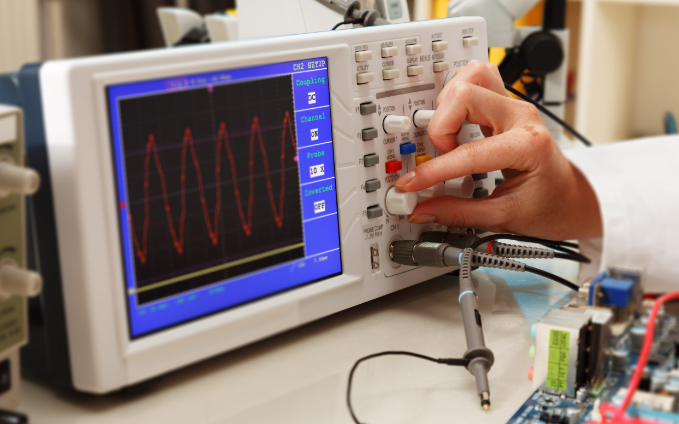
ANP109 - Impedance Spectra of Different Capacitor Technologies
Wurth ElektronikImpedance and capacitance spectra (or scattering parameters) are common representations of frequency dependent electrical properties of capacitors. The interpretation of such spectra provides a wide range of electrochemical, physical and technical relevant information. Those need to be separated from the ever-present measurement artifacts as well as parasitic effects.
Since it is sometimes not possible to provide all data in the data sheet, the engineer may have to utilize measured spectra to choose the suitable component for the circuit design. To provide the best possible database, Würth Elektronik eiSos has implemented the online tool REDEXPERT, where spectra and other measurements are provided.
In this note, we will recap the properties of such spectra and discuss how basic electrical characteristics can be inferred from it.

AKX00837-1 - Photorelays
Toshiba Electronics EuropePhotorelays (MOSFET output photocouplers) have a variety of advantages, and replacement from mechanical relays is progressing. However, there are some points that must be taken into consideration in comparison with mechanical relays when they are used in high-frequency circuits such as semiconductor testers and measuring instrument applications. This application note mainly describes precautions when controlling high-frequency signals with photorelays. Here, signals with a frequency ranging from several hundred MHz to several ten GHz are positioned as high-frequency signals. In addition, assume that a 1-Form-A photorelay (a photorelay in which the output-side MOSFET is turned on when the input-side LED signal is on) is used as a precondition.
App-Note-202 - Soldering to Semiconductor Leads
TT electronics plcNormal lead soldering information furnished on semiconductor product data sheets is limited to the maximum temperature, the maximum time at this temperature and the minimum distance from the temperature to the case of the unit. This bulletin discusses some of the aspects of soldering using an iron, a pot, or a flow bath. This will involve discussions of both hermetic or metal packaged parts and plastic encapsulated parts.
Digital readout and trimming of NTC thermistors
TDK CorporationThe combination of low power consumption, high sensitivity and signal stability makes NTC thermistors the most popular temperature sensor choice in automotive battery management, motor and climate control as well as factory automation and field instruments. In this application note the basic circuit design considerations will be explained to convert the NTC’s resistance change into a digital temperature readout. The circuit example uses an ADS1115 from TI to convert the voltage drop of a K560 surface sensor to a 16 bit I2C output for skin temperature sensing. Alternative resistance to temperature calculations will be compared: Exponential curves, lookup tables and Steinhart Hart equation. For all cases Python 3 code is available for download that can be adapted for other applications and other NTC curves in own projects using Python 3 or CircuitPython.
AN4888 - Innovative Mounting Techniques Enhance Thermal Performance of the Surface-Mount D3PAK Package
Microchip Technology Inc.The D3PAK surface-mount power package accommodates silicon chips with dimensions up to 416 × 270 mils. Such chips, when housed in the TO-247 package, can dissipate up to 360W at a case temperature of 25°C. However, these same chips are limited to less than 7W at 25°C ambient, when housed in a D3PAK and soldered to a standard FR-4 printed circuit board (PCB). Clearly, any technique capable of boosting the D3PAK dissipation capability nearer to the TO-247 benchmark merits close attention.
This application note will compare the thermal performance of various mounting methods for the D3PAK including classic surface mount device (SMD) printed circuit board mounting; insulated metal substrate (IMS) mount down, with and without an attached heat sink; oven-fired ceramic substrate, with and without heat sink; and direct bonded copper (DBC) substrates, with and without heat sink.
The importance of optimized bonding will be explored, independent of the actual substrate used, covering choice of appropriate solder alloys and fluxes, as well as the layout of the interface metallization patterns to preclude voiding during reflow operations.
Finally, a relative cost versus performance evaluation will be presented on the various methods described in the paper.
AN3782 - RT PolarFire: TMR and Spatial Separation for Higher Reliability
Microchip Technology Inc.The purpose of this application note is to help FPGA designers to implement the Triple Module Redundancy (TMR) design technique on a VHDL design, which is targeted on a Microchip Radiation-Tolerant PolarFire (RT PolarFire) FPGA.
This application note describes how to implement each logical register with a TMR register on different hierarchies of a VHDL/Verilog design. It shows how to use the syn_radhardlevel synthesis attribute on the architecture and signal on different hierarchies.
These design example projects are targeted towards use in a RTPF500T-CG1509M device (Rad-Tolerant PolarFire FPGA, 500K Logic-Elements with High-Speed Serial Transceivers in a Ceramic Column Grid Array Package with 1509 solder columns).
AN4903 - Differences Between RT PolarFire RTPF500T and RTPF500ZT FPGAs
Microchip Technology Inc.Radiation-Tolerant (RT) PolarFire FPGAs are derived from PolarFire 28 nm non-volatile and reprogrammable FPGA devices from Microchip.
This document summarizes the differences between the RTPF500T and RTPF500ZT device versions.
Advantages of RBLQ Series: Compact and Highly Power Conversion Efficiency Schottky Barrier Diodes for Automotive
ROHM SemiconductorThis application note provides an easy-to understand explanation about the advantages of the RBLQ series with respect to its characteristics based on comparison with common competing products. It also explains its advantages in actual circuits based on results of comparative evaluation using an LED driver.
AN1181 - DGD2190M DGD21904M Application Note
Diodes Inc.The DIODES DGD2190M and DIODES DGD21904M are High-Side/Low-Side gate drivers that are used to optimally drive the gate of MOSFETs or IGBTs. The DGD2190M is an SO-8 package and the DGD21904M is an SO-14 package with a separate logic ground pin VSS; this can be used when required to separate power ground and logic ground.
AN1176 – Design Considerations for Driving Piezoelectric Buzzers
Diodes Inc.This document discusses the case for using piezoelectric buzzers and piezoelectric buzzer drivers.
Note: Piezoelectric buzzers can also be referred to as piezoelectric horns or sounders, in this document they will be referred to as buzzers.
Inverting Buck-Boost Application for the LM63615-Q1
Texas InstrumentsThe LM63615-Q1 is a synchronous buck converter with a wide input voltage range from 3.5 V to 36 V and maximum output current of 1.5 A.
The LM63615-Q1 can be configured as an inverting buck-boost (IBB) converter with a negative output voltage.
This application note demonstrates how the LM63615-Q1 can be used as an inverting buck-boost converter, along with optional design considerations for inverting buck-boost converters such as a PGOOD or EN level-shifter.
If higher output current is required, the LM63615-Q1 is pin-to-pin compatible with the 2.5-A rated LM63625-Q1 and the 3.25-A rated LM63635-Q1.
The LM63615-Q1 is also pin-to-pin compatible with 1-A rated LM63610-Q1.
AN1169 - DGD2184M DGD21844M Application Note
Diodes Inc.The DGD2184M and DGD21844M are half-bridge gate drivers that are used to optimally drive the gate of MOSFETs or IGBTs. T h e DGD2184M package is an SO-8 and the DGD21844M package is an SO-14 with a separate logic ground pin Vss. This can be used when required to separate power ground and logic ground.
In this discussion, the important parameters needed to design in the DGD2184M and DGD21844M are discussed.
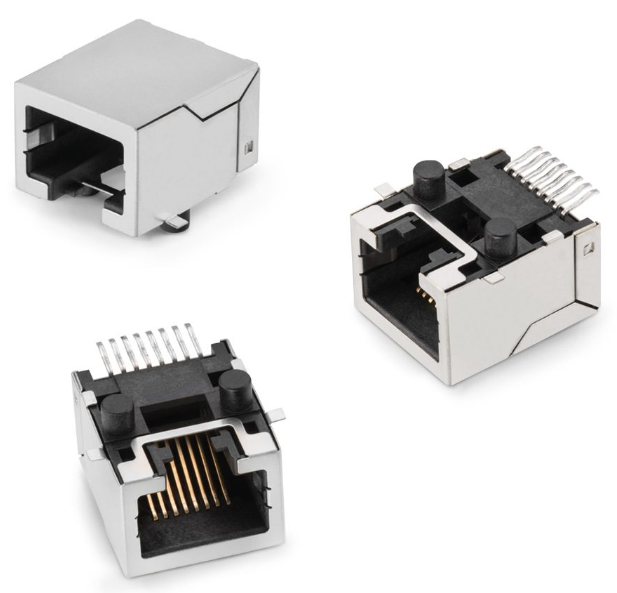
ANE008 - Hot plugging of PoE Modular Jacks
Wurth ElektronikModular jacks (MJ) connectors and cables are broadly used to bring Ethernet signal up to 10 Gb/s depending on the category of the product. It is also possible to deliver power through it with PoE. Type 1 and 2 PoE specifications are applicable to Würth Elektronik modular jacks. In this Application Note we will study if recommendations can be extended up to Type 4. Moreover most WE MJ connectors are rated up to 1.5 A. That is why they will be tested at this current.
However, like all of the other types of input/output connectors, MJ connectors should not be plugged and unplugged (hot swapped) under load. Disconnectors products (breakers, switch, etc.) have special disconnection areas to be able to break the electric arc without damaging the contacts. This Application Note will show the capabilities of modular jacks in case they are accidently used as a disconnector product in a PoE application