Top Manufacturers
Stock

Displaying 1061 - 1080 of 5453

Evaluation Kits from Analog Devices Inc.

DC104B-B

Analog Devices Inc.
The LTC1068 product family consists of four monolithic clock-tunable filter building blocks. Each product contains four matched, low noise, high accuracy 2nd order switched-capacitor filter sections. An external clock tunes the center frequency of each 2nd order filter section. The LTC1068 products differ only in their clock-to-center frequency ratio. The clock-to-center frequency ratio is set to 200:1 (LTC1068-200), 100:1 (LTC1068), 50:1 (LTC1068-50) or 25:1 (LTC1068-25). External resistors can modify the clock-to-center frequency ratio. High performance, quad 2nd order, dual 4th order or 8th order filters can be designed with an LTC1068 family product. Designing filters with an LTC1068 product is fully supported by FilterCAD? filter design software for Windows. The LTC1068 products are available in a 28-pin SSOP surface mount package. A customized version of an LTC1068 family product can be obtained in a 16-lead SO package with internal thin-film resistors. Please contact LTC Marketing for details.Applications Lowpass or Highpass Filters: LTC1068-200, 0.5Hz to 25kHz; LTC1068, 1Hz to 50kHz; LTC1068-50, 2Hz to 50kHz; LTC1068-25, 4Hz to 200kHz Bandpass or Bandreject (Notch) Filters: LTC1068-200, 0.5Hz to 15kHz; LTC1068, 1Hz to 30kHz; LTC1068-50, 2Hz to 30kHz; LTC1068-25, 4Hz to 140kHz

DC104B-D

Analog Devices Inc.
The LTC1068 product family consists of four monolithic clock-tunable filter building blocks. Each product contains four matched, low noise, high accuracy 2nd order switched-capacitor filter sections. An external clock tunes the center frequency of each 2nd order filter section. The LTC1068 products differ only in their clock-to-center frequency ratio. The clock-to-center frequency ratio is set to 200:1 (LTC1068-200), 100:1 (LTC1068), 50:1 (LTC1068-50) or 25:1 (LTC1068-25). External resistors can modify the clock-to-center frequency ratio. High performance, quad 2nd order, dual 4th order or 8th order filters can be designed with an LTC1068 family product. Designing filters with an LTC1068 product is fully supported by FilterCAD? filter design software for Windows. The LTC1068 products are available in a 28-pin SSOP surface mount package. A customized version of an LTC1068 family product can be obtained in a 16-lead SO package with internal thin-film resistors. Please contact LTC Marketing for details.Applications Lowpass or Highpass Filters: LTC1068-200, 0.5Hz to 25kHz; LTC1068, 1Hz to 50kHz; LTC1068-50, 2Hz to 50kHz; LTC1068-25, 4Hz to 200kHz Bandpass or Bandreject (Notch) Filters: LTC1068-200, 0.5Hz to 15kHz; LTC1068, 1Hz to 30kHz; LTC1068-50, 2Hz to 30kHz; LTC1068-25, 4Hz to 140kHz

LT3503EDCB Demo Board | 4.5 ≤ VIN ≤ 20V, VOUT = 3.3V at 1.2A

Analog Devices Inc.
Demonstration circuit 1050 is a monolithic step-down DC/DC switching regulator featuring the LT3503. The demo board is designed for a 3.3V/1.2A output from a 4.5V to 20V input. The 2.2MHz switching frequency allows the use of small, low cost external components and results in a low, predictable output ripple.

LTC3526LEDC Demo Board | 1MHz, 0.8V ≤ VIN ≤ 5.5V, VOUT = 1.8V/3.3V/5V @ 100mA

Analog Devices Inc.
Demonstration circuits 1053A-E through 1053A-H exercise the LTC3526L family of high efficiency synchronous boost converters, and are capable of operating with an input voltage range from 0.8V to 5.5V. The 2 × 2 mm DFN thermally enhanced package, high switching frequency (1MHz or 2MHz) and 550mA internal power switches provide a very tiny solution. The LTC3526L family also features output disconnect, and the input voltage can be greater or less than the output voltage. DC1053A-E features the LTC3526L (Burst mode operation) and the DC1053A-F features the LTC3526LB (Burst mode defeated). Both have a 1MHz switching frequency and use a 4.7µH inductor.

LTC3526LEDC-2 Demo Board | 2MHz, 0.8V ≤ VIN ≤ 5.5V, VOUT = 1.8V/3.3V/5V @ 100mA

Analog Devices Inc.
Demonstration circuits 1053A-E through 1053A-H exercise the LTC3526L family of high efficiency synchronous boost converters, and are capable of operating with an input voltage range from 0.8V to 5.5V. The 2 × 2 mm DFN thermally enhanced package, high switching frequency (1MHz or 2MHz) and 550mA internal power switches provide a very tiny solution. The LTC3526L family also features output disconnect, and the input voltage can be greater or less than the output voltage. DC1053A-G features the LTC3526L-2 (Burst mode operation) and the DC1053A-H features the LTC3526LB-2 (Burst mode defeated). Both have a 2MHz switching frequency and use a 2.2µH inductor.

ADE9153A Arduino Shield Evaluation Board

Analog Devices Inc.
The EV-ADE9153ASHIELDZ is an Arduino shield compatible with Arduino Uno, Arduino Zero, or ESP8266. The shield has an on-board shunt resistor for line current measurement and enables quick evaluation and prototyping of energy measurement systems that use the ADE9153A. Arduino library and application examples are provided on the ADE9153A product page to simplify implementation of larger systems. Using mSure® autocalibration, the shield can be calibrated to measure energy with 1% accuracy over the dynamic range without the need for expensive calibration equipment.

DC433A

Analog Devices Inc.
The LT1961 is a 1.25MHz monolithic boost switching regulator. A high efficiency 1.5A, 0.2? switch is included on the die together with all the control circuitry required to complete a high frequency, current-mode switching regulator. Current-mode control provides fast transient response and excellent loop stability.New design techniques achieve high efficiency at high switching frequencies over a wide operating voltage range. A low dropout internal regulator maintains consistent performance over a wide range of inputs from 24V systems to Li-Ion batteries. An operating supply current of 1mA maintains high efficiency, especially at lower output currents. Shutdown reduces quiescent current to 6?A. Maximum switch current remains constant at all duty cycles. Synchronization allows an external logic level signal to increase the internal oscillator from 1.5MHz to 2MHz.The LT1961 is available in an exposed pad, 8-pin MSOP package. Full cycle-by-cycle switch current limit protection and thermal shutdown are provided. High frequency operation allows the reduction of input and output filtering components and permits the use of chip inductors.Applications DSL Modems Portable Computers Battery-Powered Systems Distributed Power

LT3080EDD Demo Board | LT3080(x4), Paralleled, Single Resistor LDOs, 3.8V ≤ VIN ≤ 25V, VOUT = 3.3V @ 4.4A

Analog Devices Inc.
Demonstration circuit 1294A exercises four adjustable linear regulators in parallel using the LT3080. A small 20 mΩ ballast resistor is required for parallel operation. A short PCB trace can easily serve that purpose. The paralleled devices provide up to 4.4A of output current at 3.3V. Architected as a precision current source and voltage follower, the LT3080 can be used in many applications requiring high current, adjustability to zero output, and no heat sink. The device brings out the collector of the pass transistor to allow low dropout operation when used with multiple supplies. The LT3080's output voltage can be programmed to any level between 0V and 36V; however the demo board has a reduced input voltage range from 3.8V to 25V due to the input capacitor voltage rating.

EVAL-AD7961FMCZ

Analog Devices Inc.
The AD7961 is a 16-bit, 5 MSPS charge redistribution successive approximation (SAR), analog-to-digital converter (ADC). The SAR architecture allows unmatched performance both in noiseand in linearity. The AD7961 contains a low power, high speed, 16-bit sampling ADC, an internal conversion clock and an internal reference buffer. On the CNV edge, the AD7961samples the voltage difference between the IN+ and IN? pins. The voltages on these pins swing in opposite phase between 0 V and 4.096 V/5 V. The reference voltage is applied to the partexternally. All conversion results are available on a single LVDS self-clocked or echo-clocked serial interface.The AD7961 is available in a 32-lead LFCSP (QFN) with operation specified from ?40?C to +85?C.APPLICATIONS Digital imaging systems ?Digital X-rays ?Computed tomography ?IR cameras MRI gradient control High speed data acquisition Spectroscopy Test equipment

LT1950EGN | Telecom High Efficiency, 36V to 72V Input, 3.3V @ 25A Output, Isolated DC/DC Converter

Analog Devices Inc.
DC442A: Demo Board for the LT1950 Single Switch PWM Controller with Auxiliary Boost Converter.

LTC3833EFE Demo Board | VIN = 4.5V to 24V, VOUT1 = 1.5V @ 15A, Inductor DCR Sensing, 89.4% Efficiency

Analog Devices Inc.
Demonstration circuit 1516A is a 1.5V/15A synchronous buck converter operating with a switching frequency of 300kHz over an input voltage range of 4.5V to 24V. The demo board comes in two versions. The -A version uses inductor DCR current sensing with an iron powder inductor for highest efficiency. The -B version uses a 2.5mΩ/1% sense resistor for accurate current sensing with a low DCR ferrite inductor. The fixed on-time valley current mode control of the LTC3833 allows for a fast load step response.

LTC6813-1 Demo Board | 18-Channel Battery-Stack Monitor with Daisy-Chain Interface

Analog Devices Inc.
Demonstration circuit 2350B features the LTC6813-1, 18-channel battery-stack monitor. Multiple boards can be linked through a 2-wire isolated serial interface (isoSPI™) to monitor a long series of cells in a stack. The DC2350B demo board also features reversible isoSPI enabling a redundant communication path. The PCB, components, and DuraClik connectors are optimized for low EMI susceptibility and emissions. The DC2350B can communicate to a PC by connecting a DC2792B dual master isoSPI together with DC2026C Linduino® One. The DC2026 must be loaded with the appropriate program (called a sketch) to control the battery-stack monitor IC and receive data through a USB serial port. The DC2026 provides a standard SPI interface which can be translated to isoSPI and then connected to a DC2350B isoSPI port (J4 or J5 connector). The DC2792B companion board provides two SPI-isoSPI channels for reversible operation.

LT8642-1 | 18V, 10A Synchronous Step-Down Silent Switcher

Analog Devices Inc.
Demonstration circuit 3162A is a 18V, 10A synchronous step-down Silent Switcher® with spread spectrum frequency modulation featuring the LT8642-1. The demo board is designed for 1.2V output from a 2.8V to 18V input. The LT8642-1 is a compact, low emission, high efficiency, and high speed synchronous monolithic stepdown switching regulator. Special Silent Switcher architecture minimizes EMI emissions. Selectable spread spectrum mode can further improve EMI performance. Fast minimum on-time of 20ns enables high VIN to low VOUT conversion at high frequency. The LT8642-1 switching frequency can be programmed either via a resistor or external clock over a 200kHz to 3MHz range. The default frequency of demo circuit 3162A is 2MHz. The LT8642-1 SYNC/MODE pin on the demo board is grounded (JP1 at BURST position) by default for low ripple Burst Mode® operation. Spread spectrum mode and forced continuous mode can be selected respectively by moving JP1 shunt. To synchronize to an external clock, move JP1 to FCM/SYNC and apply the external clock to the SYNC terminal. The LT8642-1 data sheet gives a complete description of the part, operation, and application information. The data sheet must be read in conjunction with this demo manual for demo circuit 3162A. The LT8642-1 is assembled in a 3mm × 4mm LQFN package with exposed pads for low thermal resistance. The layout recommendations for low EMI operation and maximum thermal performance are available in the data sheet section Low EMI PCB Layout and Thermal Considerations.

LT8652S Demo Board | Dual Channel 8.5A, 18V, Synchronous Step-Down Silent Switcher with 16µA Quiescent Current

Analog Devices Inc.
Demonstration circuit 2523A is an 18V, 8.5A (continuous)/12A (peak) synchronous step-down Silent Switcher® with 16µA quiescent current featuring the LT8652S. The LT8652S is a compact, high efficiency, high speed synchronous monolithic step-down switching with the second generation Silent Switcher structure that minimizes EMI and reduces PCB layout sensitivity. Top and bottom power switches, compensation components and other necessary circuits are inside of the LT8652S to minimize external components and simplify design. The demo board has two outputs: 3.3V and 1.2V from a 3.6V to 18V input. The wide input range allows a variety of input sources, such as automotive batteries and industrial supplies. The SYNC pin on the demo board is grounded by default for low ripple Burst Mode® operation. Move JP2 to FCM without SSM position can change the operation mode to forced continuous mode operation. Once JP2 is on FCM with SSM position, VCC is applied to the SYNC pin for low EMI spread spectrum operation. To synchronous to an external clock, move JP2 to SYNC and apply the external clock to the SYNC turret. The demonstration circuit 2523A runs at 2MHz to minimize solution size. The peak efficiency is 90%. The IC temperature rise is less than 70°C when both channels run at full load, 8.5A each, at 2MHz. The demo board has EMI filters installed for both channels. To use the EMI filter, the input should be tied to VEMI1/VEMI2, not VIN1/VIN2. The LT8652S data sheet gives a complete description of the part, operation and application information. The data sheet must be read in conjunction with this demo manual for DC2523A.

EVAL-AD7608SDZ

Analog Devices Inc.
The AD7608 is an 18-bit, 8-channel simultaneous sampling, analog-to-digital data acquisition system (DAS). The part contains analog input clamp protection, a second-order antialiasing filter, a track-and-hold amplifier, an 18-bit charge redistribution successive approximation analog-to-digital converter (ADC), a flexible digital filter, a 2.5 V reference and reference buffer, and high speed serial and parallel interfaces.The AD7608 operates from a single 5 V supply and can accommodate ?10 V and ?5 V true bipolar input signals while sampling at throughput rates up to 200 kSPS for all channels.The input clamp protection circuitry can tolerate voltages up to ?16.5 V. The AD7608 has 1 M? analog input impedance regardless of sampling frequency. The single supply operation, on-chip filtering, and high input impedance eliminate the need for driver op amps and external bipolar supplies. The AD7608 antialiasing filter has a 3 dB cutoff frequency of 22 kHz and provides 40 dB antialias rejection when sampling at 200 kSPS. The flexible digital filter is pin driven, yields improvements in SNR, and reduces the 3 dB bandwidth.Applications Power line monitoring and protection systems Multiphase motor controls Instrumentation and control systems Multiaxis positioning systems Data acquisition systems (DAS)

LTC4000EUFD-1 Demo Board I 20V ≤ VIN ≤ 60V, Battery Charger Controller and PowerPath Manager, MPPC, VOUT = 14.6V @ 5A

Analog Devices Inc.
Demonstration circuit 1830B is a battery charger controller and PowerPath™ manager with maximum power point control (MPPC) featuring the LTC4000-1. MPPC extracts near maximum power from high impedance sources such as solar panels, wind turbines or fuel cells. MPPC is achieved by means of an input voltage regulation control loop. This board should be connected to a front-end DC/DC power supply for a complete charger solution.

DC1934A

Analog Devices Inc.
The LTM8053 is a 40VIN, 3.5A continuous, 6A peak step-down ?Module? (power module) regulator. Included in the package are the switching controller, power switches, inductor, and all support components. Operating over an input voltage range of 3.4V to 40V, the LTM8053 / LTM8053- 1 supports an output voltage range of 0.97V to 15V and a switching frequency range of 200kHz to 3MHz, each set by a single resistor. Only the input and output filter capacitors are needed to finish the design. The LTM8053-1 can operate in forced continuous mode.The low profile package enables utilization of unused space on the bottom of PC boards for high density point of load regulation. The LTM8053 / LTM8053-1 is packaged in a thermally enhanced, compact over-molded ball grid array (BGA) package suitable for automated assembly by standard surface mount equipment. The LTM8053 / LTM8053-1 is RoHS compliant.APPLICATIONS Automotive Battery Regulation Power for Portable Products Distributed Supply Regulation Industrial Supplies Wall Transformer Regulation

EVAL-ADXL1004Z

Analog Devices Inc.
The ADXL1004 delivers ultralow noise density over an extended frequency range and is optimized for bearing fault detection and diagnostics. The ADXL1004 has typical noise density of 125 ?g/?Hz across the linear frequency range. Microelectronicmechanical systems (MEMS) accelerometers have stable and repeatable sensitivity, and are immune to external shocks up to 10,000 g.The integrated signal conditioning electronics enable such features as full electrostatic self test (ST) and an overrange (OR) indicator, useful for embedded applications. With low power and single-supply operation of 3.3 V to 5.25 V, the ADXL1004 also enables wireless sensing product design. The ADXL1004 is available in a 5 mm ? 5 mm ? 1.80 mm LFCSP package, and operates over the ?40?C to +125?C temperature range.Applications Condition monitoring Predictive maintenance Asset health Test and measurement Health usage monitoring system (HUMSs) Acoustic emissions

EV1HMC908ALC5

Analog Devices Inc.
The HMC908A is a compact, gallium arsenide (GaAs), monolithic microwave integrated circuit (MMIC), inphase/quadrature (I/Q) downconverter in a leadless, RoHS compliant ceramic leadless chip carrier. This device provides a small signal conversion gain of 11 dB with a noise figure of 2 dB and 25 dB of image rejection at 100 MHz. The HMC908A utilizes a low noise amplifier (LNA) followed by an image rejection mixer that is driven by a local oscillator (LO) buffer amplifier. The image rejection mixer eliminates the need for a filter following the LNA, and removes thermal noise at the image frequency. I and Q mixer outputs are provided and an external 90? hybrid is needed to select the required sideband. The HMC908A is a much smaller alternative to hybrid style image rejection mixer downconverter assemblies, and it eliminates the need for wire bonding by allowing the use of surface-mount manufacturing techniques.Applications Point to point radios Point to multipoint radios and very small aperture terminals (VSATs) Test equipment and sensors Military end use

AD9648-125EBZ

Analog Devices Inc.
The AD9648 is a monolithic, dual-channel, 1.8 V supply, 14-bit, 105 MSPS/125 MSPS analog-to-digital converter (ADC). It features a high performance sample-and-hold circuit and on-chip voltage reference. The product uses multistage differential pipeline architecture with output error correction logic to provide 14-bit accuracy at 125 MSPS data rates and to guarantee no missing codes over the full operating temperature range.The ADC contains several features designed to maximize flexibility and minimize system cost, such as programmable clock and data alignment and programmable digital test pattern generation. The available digital test patterns include built-in deterministic and pseudorandom patterns, along with custom user-defined test patterns entered via the serial port interface (SPI).A differential clock input controls all internal conversion cycles. An optional duty cycle stabilizer (DCS) compensates for wide variations in the clock duty cycle while maintaining excellent overall ADC performance.The digital output data is presented in offset binary, Gray code, or twos complement format. A data output clock (DCO) is provided for each ADC channel to ensure proper latch timing with receiving logic. Output logic levels of 1.8 V CMOS or LVDS are supported. Output data can also be multiplexed onto a single output bus.The AD9648 is available in a 64-lead RoHS compliant LFCSP and is specified over the industrial temperature range (?40?C to +85?C). Applications Communications Diversity radio systems Multimode digital receivers GSM, EDGE, W-CDMA, LTE, CDMA2000, WiMAX, TD-SCDMA I/Q demodulation systems Smart antenna systems Broadband data applications Battery-powered instruments Hand held scope meters Portable medical imaging Ultrasound Radar/LIDARProduct Highlights The AD9648 operates from a single 1.8 V analog power supply and features a separate digital output driver supply to accommodate 1.8 V CMOS or LVDS logic families. The patented sample-and-hold circuit maintains excellent performance for input frequencies up to 200 MHz and is designed for low cost, low power, and ease of use. A standard serial port interface supports various product features and functions, such as data output formatting, internal clock divider, power-down, DCO/data timing and offset adjustments. The AD9648 is packaged in a 64-lead RoHS compliant LFCSP that is pin compatible with the AD9650/AD9269/AD9268 16-bit ADC?s, the AD9258 14-bit ADC, the AD9628/AD9231 12-bit ADC?s, and the AD9608/AD9204 10-bit ADC?s, enabling a simple migration path between 10-bit and 16-bit converters sampling from 20 MSPS to 125 MSPS.

Displaying 1061 - 1080 of 5453

Latest Parts

IN STOCK 1481
Buy

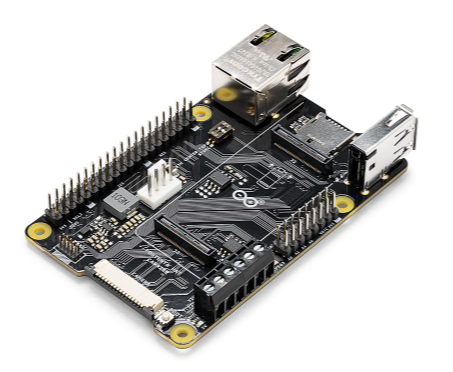
ASX00049

Arduino

* $45.72 - * $51.10

IN STOCK 2787
Buy

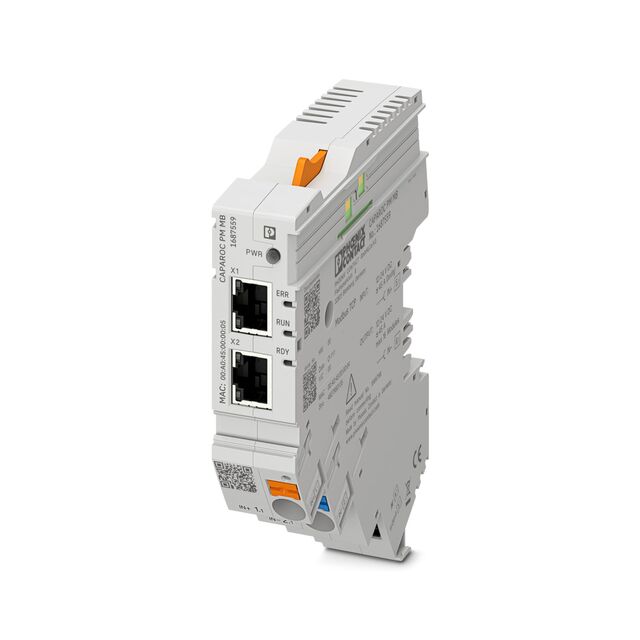
1687559

Phoenix Contact Ltd

[no prices available]

IN STOCK 3
Buy

Reference Designs

RD006

Wurth Elektronik

RD006 - 3 W Dual-output isolated auxiliary supply for communication interfaces and measurement systems

CN0583

Analog Devices Inc.

Multistandard Micropower Verified Smoke Detection System-on-Module

Technical Resources

EVALUATION KITS

EVAL-AD7124-8SDZ

Analog Devices Inc.

$0.00 - * $71.72

IN STOCK 792
Buy
View All