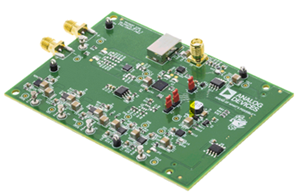
TRF1020 GSM Receiver EVM
Texas InstrumentsI2C Interfacing of the MSP430 to a 24xx Series EEPROM
Texas InstrumentsDN-27 UC1842/UC1842A Family - Summary of Functional Differences
Texas InstrumentsA Power Management Solution for Efficient, Multiple Output Applications
Texas InstrumentsLM5019 Buck Evaluation Board (Rev. A)
Texas InstrumentsData Flash Programing and Calibrating the bq20zxx Family of Gas Gauges (Rev. E)
Texas InstrumentsIEEE 1149.1 Use In Design For Verification And Testability
Texas InstrumentsLDC1000 Temperature Compensation
Texas InstrumentsAn Architectural Lighting Design Powered by All-in-One LED Driver TLC5970
Texas InstrumentsAM3517/05 Pwr Ref Design 3.6V to 6.3-V Input, Hi-Effic, Integratd 5-Output PMIC
Texas InstrumentsIncremental Encoder I/F Plus Interpolation
Texas InstrumentsSingle-Axis Motor Control With Integrated PFC Application Note
Texas InstrumentsImplementing DDR2 PCB Layout on the TMS320C6452 DMSoC (Rev. A)
Texas InstrumentsThe previous approach specified device timing in terms of data sheet specifications andsimulation models. The system designer was re
.jpg)
Isolate your CAN systems without compromising on performance or space (Rev. B)
Texas InstrumentsCAN interface has been a very popular serial communication standard in the industry due to its excellent prioritization and arbitration capabilities. In systems with different voltage domains, isolation is typically used to protect the low voltage side from the high voltage side in case of any faults. Isolation also breaks any ground loops allowing only the desired signals to be transmitted, thereby improving signal quality.
Isolated CAN is used for communication with the microcontroller in a wide range of applications such as solar inverters, circuit breakers, motor drives, PLC communication modules, telecom rectifiers, elevators, HVACs and EV charging infrastructures.

Debugging Communication Range
Texas InstrumentsIn a RF system having the best possible range is important in many cases. There are many factors that can cause poor range. This application report provides a step-by-step guide on which parts of the design could cause shorter range than desired.
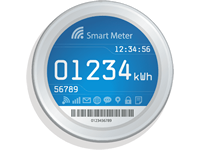
Predictive Maintenance in Smart Meters Using Real-Time Monitoring
Texas InstrumentsResidential smart meters are used for billing of electricity, gas, water, and heat. The technological advancements in these smart meters are being driven by the demand from utility companies to create a smarter and more efficient grid aimed at reducing non-revenue losses. More sensors are being added to collect more data about the status of the grid including pressure, temperature, etc. There is also a growing trend to incorporate higher precision measurements with newer technologies, such as ultrasonic flow measurements, which often end up adding to the overall complexity, reliability, and power consumption. These meters are also often part of radio-frequency (RF) communication networks that can draw a variable amount of power from the system depending on the required output power of their signal.

Thermal Considerations for Designing a GaN Power Stage
Texas InstrumentsThermal design is an important consideration in any power electronic converters. An optimized thermal design enables engineers to use GaN in a wide range of power levels, topologies, and applications. This application note discusses the most important tradeoffs and considerations for TI’s LMG341XRxxx GaN power stage family, including guidance for PCB layout, thermal interface, heat sink selection and mounting methods. Examples of designs using 50-m Ω and 70-m Ω GaN devices will also be provided.
AC195: Prototyping for the RT54SX-S Enhanced Aerospace FPGA
MicrosemiMicrosemi SoC Products Group provides radiation-tolerant FPGAs for space applications. However, since the enhanced environmental properties of radiation tolerant devices are not required during prototyping, inexpensive commercial equivalent devices can be substituted during this design phase. This application note describes the basic prototyping methodology for the space qualified RTSX-SU FPGA devices using the commercial equivalent SX-A FPGA devices. This application note includes the prototyping flow, prototyping package options, and other prototyping considerations.
AN4686 - Watchdog Timer (WDT) on ATSAM E70/S70/V70/V71 Devices Using MPLAB Harmony v3
Microchip Technology Inc.This document discusses the WDT theory of operations, modes, and clock sources. It also covers configuration and code generation using MPLAB Harmony v3.