Search results
Advanced Profiling with XDS560 Trace (Rev. A)

Texas Instruments
Advanced Profiling with XDS560 Trace (Rev. A)
Texas Instruments
While many developers consider XDS560 Trace a valuable tool for debugging difficult scenarios it also provides quick and effective profiling techniques. With the capability of Trace to capture timestamps on each sample and the flexibility of Advanced Event Triggering to capture data at the appropriate locations XDS560 Trace provides unique profiling capabilities. This application note focuses on
AN063: Using CC2591 RF Front End with CC2430
Texas Instruments
AN063: Using CC2591 RF Front End with CC2430
Texas Instruments
The CC2430 is a true System-on-Chip (SoC) specifically tailored for IEEE 802.15.4 and ZigBee applications. It enables ZigBee nodes to be built with very low total bill-of-material costs.
CC2591 is a range extender for all existing and future low-power 2.4-GHz RF transceivers, transmitters and SoC products from Texas Instruments.
CC2591 increases the link budget by providing a Power Amplifier (PA) for improved output power and a Low Noise Amplifier (LNA) with a low noise figure for improved receiver sensitivity. CC2591 further contains RF switches, RF matching and a balun for a seamless interface with the CC2430. This allows for simple design of high performance wireless applications.
This application note describes how to implement the CC2430 and the CC2591 in the same design. It further describes the expected performance from this combination as well as important factors to consider with respect to the layout and regulatory requirements. The combined CC2430 and CC2591 solution is suitable for systems targeting compliance with FCC CFR47 Part 15.
The RF front end of CC2430 is the same as the ones being used in CC2431 and in CC2480. The presented results in this application note are therefore also valid for CC2431 and CC2480.
CCFL to LED Conversion Power Supply

Texas Instruments
CCFL to LED Conversion Power Supply
Texas Instruments
Backlighting in portable device displays has historically utilized difficult-to-power cold cathode-fluorescent (CCFL) tubes. The tubes run on alternating current (AC) and need a large initial voltage of typically greater than 1 kV in order to fire them. Once they have fired: their operating voltage drops to under a kV. Because a notebook computer: for example: typically operates on low DC voltages (12V: 5V: 3.3V: etc.): a Royer oscillator must be used to transform this low voltage to the high-voltage AC required by the CCFL. The high voltages in the system are a potential safety hazard.The CCFL to LED conversion power supply reference design replaces the backlight CCFLs with strings of light-emitting diodes (LEDs). LEDs operate at low voltages of 3V TO 4V each and are extremely durable. They produce a brighter light whose spectral content can be more easily custom tailored to the needs of the backlight. Their brightness can be easily controlled to compensate for changes in ambient light. Also in contrast to the glass-tubed CCFLs: the physically small LEDs can be mounted on flexible strips: allowing the display to be more tolerant of and resistant to sudden shocks.The reference design: with National Semiconductor’s LM3431 three-channel: constant-current LED driver: uses two strings of six series-connected LEDs at a current of 30 mA per string. Each LED has a forward voltage drop of about 3.5V: making the total voltage across each string between 21V and 27V. With a 12V power source: the LM3431 is configured as a boost converter to generate this 21V to 27V output voltage.The design also includes a circuit utilizing a photodiode to make the brightness of the LEDs proportional to ambient light thus improving the readability of the display under all lighting conditions.
120VAC Input: 3.3V/1.2A Output: Non-Isolated Flyback

Texas Instruments
120VAC Input: 3.3V/1.2A Output: Non-Isolated Flyback
Texas Instruments
This reference design uses the UCC28C42 in a non-isolated flyback topology to generate 3.3V: 1.2V and 22V from a US line AC input. The total output power is 4W. The 3.3V output is regulated by the UCC28C42. A TLV1117LV LDO is used to generate the 1.2V output from the 3.3V output. The 22V output is unregulated and designed only to provide 20mA.
Altera Arria V GX FPGA Power Solution Reference Design

Texas Instruments
Altera Arria V GX FPGA Power Solution Reference Design
Texas Instruments
The PMP9449 reference design provides all the power supply rails necessary to power Altera's Arria® V GX family of FPGAs. It utilizes a TPS38600 to monitor the input supply and provide power on sequencing. This design features low cost: small footprint discrete ICs and is powered from a single 5V input.
LSP 1.20 DaVinci Linux Frame Buffer Device Driver Migration
Texas Instruments
LSP 1.20 DaVinci Linux Frame Buffer Device Driver Migration
Texas Instruments
This migration document provides information to developers who will be working with the LSP 1.20 Frame Buffer (FB) device for the TI DaVinci Video Processing Back End (VPBE) subsystem. The FB device d
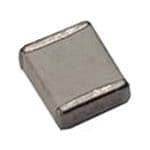
AQ12EA390FAJME\500
AVX
From $1.54 • 1 k+ units available from AVNET Express
| Distributor | SKU | Stock | MOQ | 1 | 10 | 50 | 100 | 1,000 | 10,000 | |
|---|---|---|---|---|---|---|---|---|---|---|
| DigiKey | AQ12EA390FAJME\500-ND | 0 | $1.72 | $1.72 | Buy | |||||
| Mouser Electronics | 581-AQ12EA390FAJME\5 | 0 | 1 | $3.94 | $3.18 | $2.86 | $2.48 | $1.55 | $1.39 | |
| AVNET Express | AQ12EA390FAJME\500 | 1,000 | 500 | $1.66 | $1.54 | Buy | ||||
| Newark | AQ12EA390FAJME\500 | 0 | 500 | $0.00 | $0.00 | $0.00 | $0.00 | $0.00 | $0.00 | Buy |
EVAL-ADATE320EBZ

Analog Devices Inc.
EVAL-ADATE320EBZ
Analog Devices Inc.
The ADATE320 is a complete, single-chip ATE solution that performs the pin electronics functions of a driver, comparator, and active load (DCL), and a four quadrant per pin parametric measurement unit (PPMU). Dedicated 16-bit digital-to-analog converters (DACs) with on-chip calibration registers provide all the necessary dc levels for operation of the device.The driver features three active modes: high, low, and terminate, as well as a high impedance inhibit state. The inhibit state, in conjunction with the integrated dynamic clamps, facilitates significant attenuation of transmission line reflections when the driver is not actively terminating the line. The open-circuit drive capability is ?1.5 V to +4.5 V to accommodate a standard range of ATE and instrumentation applications.The ADATE320 can be used as a dual, single-ended pin electronics channel or as a single differential channel. In addition to per channel high speed window comparators, the ADATE320 provides a programmable threshold differential comparator for differential ATE applications.All dc levels for DCL and PPMU functions are generated by dedicated, on-chip, 16-bit DACs. To facilitate the programming of accurate levels, the ADATE320 includes an integrated calibration function to correct for the gain and offset errors of each functional block. Correction coefficients can be stored on chip, and any values written to the DACs adjust automatically using the appropriate correction factors.The ADATE320 uses a serial programmable interface (SPI) bus to program all functional blocks, DACs, and on-chip calibration constants. It also has an on-chip temperature sensor and overvolt-age/undervoltage fault clamps that monitor and report the device temperature and any output pin or transient PPMU voltage faults that may occur during operation.The ADATE320 is available in two options. The standard option has high speed comparator outputs with 250 mV output swing. The ADATE320-1 has 400 mV output swing. See the Ordering Guide for more information.APPLICATIONSAutomatic test equipment (ATE)Semiconductor/board test systemsInstrumentation and characterization equipment
Interfacing the VCA8613 with High-Speed ADCs
Texas Instruments
Interfacing the VCA8613 with High-Speed ADCs
Texas Instruments
The VCA8613 is an 8-channel variable gain amplifier ideally suited for portable and mid-range ultrasound applications. Each channel consists of a Low Noise Amplifier (LNA) and a Variable Gain Amplifier (VGA). The VGA contains two parts: a voltage-controlled attenuator (VCA) and a programmable gain amplifier (PGA). The PGA output feeds directly into an integrated 2-pole low-pass Butterworth filter.
10 µA to 100 mA: 0.05% error: high-side current sensing reference design

Texas Instruments
10 µA to 100 mA: 0.05% error: high-side current sensing reference design
Texas Instruments
This TI Precision Verified Design provides the theory: component selection: simulation: complete PCB schematic and layout: bill of materials: and measured performance of a split-supply: high-side four decade current sensing solution that can accurately detect load currents from 10uA-100mA. The corresponding linear output is from 10mV to 4.9V which enables measurement by common 5V ADCs. The design utilizes the PGA281: an instrumentation amplifier with pin-programmable gain and a wide common-mode voltage range: to provide a more accurate and versatile solution than traditional op amps.See more TI Precision Designs
DN402 -- Simple Audio Loopback Using CC251X
Texas Instruments
DN402 -- Simple Audio Loopback Using CC251X
Texas Instruments
This design note shows how to implement <b>voice</b> quality <b>audio</b> applications without using an external codec using the <b>CC2510</b> and <b>CC2511</b> devices. It includes a code example for
LT3480 HV Buck Regulator Board with Plug in Interface

Analog Devices Inc.
LT3480 HV Buck Regulator Board with Plug in Interface
Analog Devices Inc.
Demonstration Circuit 1394A shows how the LT3480 high voltage step-down regulator can be used with the LTC4098 USB-compatible Li-Ion battery charger to design a 2 input source battery charger circuit that also provides power to the load from the LT3480, a 5V wall adapter or the batteries based on available power. The LTC4098 interfaces with a number of ADI switching regulators to provide a high efficiency, high voltage power path. The LT3480 operates from 8V to 38V (60V transients) and provides 2A with a voltage range that is mode and load dependent.
638114775
Molex
From $52.68 • 5 units available from AVNET Express
| Distributor | SKU | Stock | MOQ | 1 | 10 | 50 | 100 | 1,000 | 10,000 | |
|---|---|---|---|---|---|---|---|---|---|---|
| DigiKey | 0638114775-ND | 0 | $96.64 | $65.08 | $65.08 | $65.08 | $65.08 | $65.08 | Buy | |
| AVNET Express | 638114775 | 5 | 5 | $59.01 | $52.68 | $52.68 | $52.68 | $52.68 | Buy | |
| element14 APAC | 638114775 | 0 | 1 | $83.44 | $83.44 | $83.44 | $83.44 | $83.44 | $83.44 | Buy |
| Farnell | 638114775 | 0 | 5 | $40.24 | $40.24 | $40.24 | $40.24 | $40.24 | Buy |
bq78PL114 System Design Guidelines
Texas Instruments
bq78PL114 System Design Guidelines
Texas Instruments
This application report provides a system-level functional description of the bq78PL114 circuitry and describes recommended system design and printed-circuit board layout techniques to ensure best performance.