Vibration and Shock Sensitivity: A Comparative Study of Oscillators
Texas InstrumentsIWR1642 Bootloader Flow
Texas Instruments
MSP430FR6047 and Ultrasonic Software Based Water Flow Meter Measurement Results
Texas Instruments
LDO PSRR Measurement Simplified (Rev. A)
Texas Instruments
HiFi Audio Circuit Design
Texas Instruments
PGA460-Q1 in Automotive Ultrasonic Kick-to-open Liftgate Systems (Rev. A)
Texas InstrumentsAlso known as a Smart Trunk Opener (STO), the kick-to-open trunk application has grown significantly over recent years, especially in SUVs and high-end passenger vehicles. This feature allows the vehicle owner hands-free access to open the trunk with a simple kicking motion near the rear bumper.

Simplify Voltage and Current Measurement in Battery Test Equipment
Texas InstrumentsBattery test equipment is used to verify battery pack functionality and performance prior to shipment to the customer. This Tech Note outlines three major functional tests that a battery tester performs while showing how to achieve the desired level of regulated error.
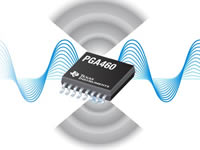
PGA460 Full-Bridge Driver Solutions for Ultrasonic Transducers
Texas InstrumentsThis document offers various implementations to achieve a full-bridge driver to excite an ultrasonic transducer when using the PGA460. Because the PGA460 was only designed to excite transducers in the transformer-driven or half-bridge driver modes, external circuitry is required to enable a full-bridge driver. The recommended solution is based on combining the functionality of the PGA460 with the DRV8870 to enable the excitation voltage to swing between ±45 V. Low-cost discrete alternatives are also discussed.

Ethernet PHY Configuration Using MDIO for Industrial Applications
Texas InstrumentsAs a bridge of the link layer device medium access controller (MAC) and physical medium such as copper cable, the Ethernet physical layer device (PHY) integrates all the physical-layer functions needed to transmit and receive data on standard twisted-pair cables. Proper PHY configuration using management data input/output (MDIO) is fundamental during the prototype stage, and also crucial to meeting the requirements of lowest deterministic latency and fastest link detection in industrial Ethernet applications such as EtherCAT. This application report provides guidance on the Ethernet PHY configuration using the MDIO module within the Programmable-Realtime Unit Industrial Communications Sub-System (PRUICSS) in the Sitara device from TI, for industrial applications, by dissecting the PHY DP83822 configuration in EtherCAT on the AMIC110 Industrial Communications Engine (ICE). The goal of this application report is to expedite the development of industrial Ethernet applications on custom boards with migration and troubleshooting guides for the PHYs.

Current Sense Amplifiers in Class-D Audio Subsystems
Texas InstrumentsCLASS-D audio amplifiers provide output power with an efficiency of over 90% as compared to CLASS-AB amplifiers that can provide an output efficiency of <50%. CLASS-D amplifiers are implemented in portable personal audio systems that provide quality sound output enabling longer battery life. A widely used CLASS-D amplifier in automotive systems are for E-call systems that provide critical audio feedback to the driver in case of a driver emergency. In E-call systems discrete current sensing is often implemented for continuous diagnostics to ensure speaker is operational at all times.

GPS Tracking Using Sub-1GHz Devices
Texas Instruments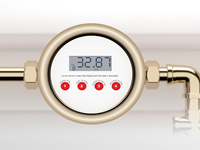
Waveform Capture Based Approach for Ultrasonic Sensing Technology for Flow Meter
Texas InstrumentsThis FAQ describes the ADC-based correlation techniques for time-of-flight measurements used in ultrasonic-sensing technology for flow metering. This document describes the design and engineering trade-offs when designing using the MSP430FR604x microcontrollers (MCUs), software based on the Ultrasonic Design Center, and key performance metrics.

Sensorless-FOC With Flux-Weakening and MTPA for IPMSM Motor Drives
Texas Instruments
Robust Isolated RS-485 enables new industrial applications
Texas InstrumentsRS-485 is one of the most widely used wired interface for industrial long-haul networks. TIA/EIA-485-A standard defines the physical layer of the RS-485 interface. End applications use RS-485 interface coupled with protocol such as Profibus, Modbus or BACnet.
The main benefits of this interface include:
- Balanced differential signaling allows for rejection of common mode noise and facilitates communications over long distances in noisy industrial environments.
- Support of -7 to 12V wide common mode range allows for multipoint data transmission between nodes located at different ground potential difference.
- Data rates up to 50 Mbps at short distances or communications distance up to 1000 meters at slower data rates is possible.
Applications for RS-485 include Energy Meters, Grid Protection relay, Solar inverter, Factory automation, Motor control and Heating, ventilation, air conditioning (HVAC) systems.

Two-channel, K-type thermocouple measurement circuit with internal temperature
Texas InstrumentsThis cookbook design describes a temperature measurement circuit with two thermocouples using the ADS1118. Thermocouple voltage measurements are made with the ADS1118 internal voltage reference, while cold-junction compensation (CJC) measurements are made with the onboard temperature sensor. Two channels of the ADC are used for two K-type thermocouples with a temperature measurement range from –270°C to 1370°C. Included in this design are ADC register settings to configure the device and pseudo code is provided to configure and read from the device. This circuit can be used in applications such as analog input modules for PLCs, lab instrumentation, and factory automation.
.jpg)
Inverting Application for the LMZM33604/6
Texas InstrumentsThe LMZM33606 is a 16 × 10 mm2 6-A rated synchronous step-down power module that features a wide operating input range from 3.5 V to 36 V with adjustable output voltage range from 1 V to 20 V. The LMZM33606 can be configured in an inverting buck-boost (IBB) topology with the output voltage inverted or negative with respect to input voltage. This application report shows how the conventional non-inverting evaluation board for the LMZM33606 can be configured for an inverting application. This application note also provides the additional level-shifter circuitry for EN and PGOOD pin if the feature is required. Note that the LMZM33604 is rated for 4A and pin-to-pin compatible with the LMZM33606.
ROMing Software Components: An RTS Use Case
Texas InstrumentsThere are however software considerations when ROMing components. For example 'C6000 direct accesses to .bss global variab