Standard Linear & Logic Semiconductor Marking Guidelines (Rev. C)
Texas InstrumentsThe Texas Instruments Standard Linear & Logic (SLL) business group uses complex methods to assign device topside marking. These methods ensure that correct component identification is applied at each factory location. End users of the standard components often need to peruse many TI and industry publications to understand the markings. This application report combines topside-marking guidelines and package-outline examples in one document.

RF Sampling ADC with 800MHz of IBW LTE
Texas InstrumentsThis document describes a candidate device, ADC32RFx5, for the next generation (5G) cellular system that shows a total of 800 MHz of Instantaneous Bandwidth (IBW) using Long Term Evolution (LTE) patterns (40 of LTE 20 MHz) processed from Matlab after being captured from TSW14J56 evaluation module out of ADC32RFx5.
There are many of key technologies to help the air interface of 5G deployed in the near future such as enhanced data rate, reduced latency, increased frequency bands with a ultra-wide bandwidth. Massive MIMO (Multi-Input Multi-Output) will give us improved spectral efficiency for multi mobile users within cell, and hybrid beamforming will increase cell coverage for multi users. But, those architectures will increase hardware complexity and power consumption of the system while requiring large number of power-hungry converters. At the same time, massive connectivity for uplink (UL) also should be supported with scalable data rates for 5G system. To show much better spectral efficiency, 800 MHz of IBW is fed into ADC32RFx5 which is a direct RF sampling analog to digital converter (ADC).
Another aspect of 5G is the specification of future waveform which is still under discussion. Orthogonal frequency division multiplexing (OFDM) has been a waveform for 4G system so far but the potential waveform of physical layer for 5G is not defined yet. There are some candidates to be deployed in 5G system in the future, which are filter bank multi carrier (FBMC), universal filtered multi carrier (UFMC), generalized frequency division multiplexing (GFDM) and filtered OFDM (f-OFDM). These kinds of future waveform will handle higher data rate with wider bandwidth than LTE pattern, and also have different filtering and windowing from 4G standards.
The ADC32RFx5 is a family of high performance dual channel 14-bit, 3-Gsps RF ADCs, capable of having input frequencies up to 2.5 GHz and beyond. Designed for high signal-to-noise ratio (SNR), the ADC32RFx5 delivers a noise floor of –155 dBFS/Hz. Together with its exceptional spurious free dynamic range (SFDR) performance, this device can cover even the toughest receiver requirements such as multicarrier GSM and 5G receiver in the future.
System-Level Tamper Protection Using MSP MCUs
Texas InstrumentsUsing Peripheral Boot and DFU for Rapid Development on Jacinto 6 Devices
Texas InstrumentsThis application report describes how to use peripheral boot and Device Firmware Upgrade (DFU) to reduce the time required to load updated binaries to various cores of a Jacinto 6 (DRA7xx) family device.

Power Cycling an IoT System with a Nano-power System Timer
Texas InstrumentsReducing power and cost are often two of the most crucial factors when designing a battery-powered system. Reducing power consumption plays an in important role to extend system life by reducing overall system current. Hence, as a result, power reduction paves the way to cut down system cost by reducing the required battery capacity.
This concept readily applies to Internet of Things (IoT) systems and connected products such as wearables, wireless sensors and building automation systems. The life of the growing number of wireless sensor endnodes in the system all are constrained by one thing: power consumption of the end-node. Such sensor end nodes are typically powered by batteries, which last from several months to several years, depending on the power consumption of each end node. Here the “shelf-life” of a given sensor node is purely dependent on the lifetime of the battery. Though it is possible to simply replace the battery towards the end of the node’s life, it is not always practical to do so as the replacement itself can become an expensive “total cost of ownership."
Common Noise Issues in Audio Codecs
Texas InstrumentsHigh-Speed Interface Layout Guidelines (Rev. G)
Texas InstrumentsAs modern bus interface frequencies scale higher, care must be taken in the printed circuit board (PCB) layout phase of a design to ensure a robust solution.

Achieving Optimum Radio Range (Rev. A)
Texas Instruments
Introduction to Magnetic Resonance Imaging (MRI)
Texas InstrumentsMagnetic Resonance Imaging is a non-invasive diagnostic technology that produces anatomical images. Unlike computed tomography (CT), MRI does not carry the risk of ionizing radiation exposure. The MRI system shown in this application note uses a superconducting magnet to align hydrogen atoms in the body; then excites the atoms with radio frequency (RF) energy from the transmitting RF coil. As the atoms return to equilibrium, energy is released in the form of radio waves which are recorded by the receiving RF coil. The rate at which the atoms return to equilibrium, as well as the energy released, is determined by the location and chemical makeup of the surrounding material. This information is processed to create images of the tissues present in the body.

SimpleLink Wi-Fi Enabled Electronic Smart Lock
Texas InstrumentsThis application report describes the development of Wi-Fi enabled electronic smart locks (e-locks). Specifically, the benefits of adding Wi-Fi to an e-lock design are examined.
Different Wi-Fi use cases are presented along with an estimate of system battery life for two main use cases. This application report demonstrates that SimpleLink Wi-Fi makes it possible to create a battery powered e-lock design that can be securely monitored and controlled from the cloud.

Simplifying 4K SDI Video Design with a Bidirectional I/O
Texas InstrumentsIn 4K serial digital interface (SDI) video designs, flexibility, scalability, and cost savings are essential to maximize design reuse and develop an extensive 12G-SDI portfolio. A bidirectional input/output (I/O) addresses these critical needs. This application note explains how the features and diagnostic tools of the LMH1297 12G-SDI bidirectional I/O enable various SDI design benefits. This application note also provides several application examples where the LMH1297's versatility simplifies 4K video design.

Spurs Analysis in the RF Sampling ADC
Texas Instruments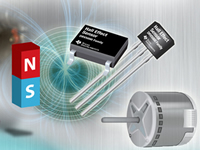
Angle Measurements With Linear Hall Effect Sensors
Texas InstrumentsThis application report discusses how linear Hall effect sensors can be used to measure 2D angles, including both limited-angle and 360° rotation measurements. This report provides details on some calibrated and uncalibrated implementations to help meet angle measurement accuracy requirements. This report also covers the number of sensors needed, and the preferred magnet types for each method.
Practical Thermal Design With DC/DC Power Modules
Texas InstrumentsAll DC/DC converters dissipate power in the form of heat. This heat has to be managed properly so that the converter maintains operation within the recommended temperature limits. Usually, the copper on the printed circuit board (PCB) is utilized to help dissipate the heat. This application note outlines a design procedure to quickly estimate the minimum required copper area on the PCB for a successful thermal design with DC/DC power modules.

Designing Connected CPAP Machines With SimpleLinkTM Wi-Fi® Wireless MCU
Texas Instruments_.png)
Understanding Smart Gate Drive (Rev. C)
Texas InstrumentsThe gate driver in a motor system design is an integrated circuit (IC) that primarily deals with enhancing external power MOSFETs to drive current to a electric motor. The gate driver acts as an intermediate stage between the logic-level control inputs and the power MOSFETs. The gate driver must be robust and flexible enough to accommodate a wide variety of external MOSFET selections and external system conditions.
Texas Instrument’s Smart Gate Drive provides an intelligent solution for driving and protecting the external power MOSFETs. This feature lets system designers adjust the MOSFET slew rate, optimize switching and EMI performance, decrease bill of materials (BOM) count, automatically generate dead-time, and provide additional protection for the external power MOSFETs and motor system.
This application report describes the theory and methods behind enhancing a power MOSFET, how the IDRIVE and TDRIVE features are implemented in TI Smart Gate Drivers, and details many of the systemlevel benefits.

System power architectures in body control modules
Texas InstrumentsFunctions of comfort and convenience available in all modern vehicles today (and in the foreseeable future) rely on body control modules (BCMs). BCMs work behind the scenes to operate headlights, rear lights, interior ambient lights, windshield wipers and more.
Both the quantity of BCMs in a car and the number of comfort and convenience loads that each BCM controls vary across vehicle models. From a BCM that only handles lighting functions to a BCM that includes gateway functionality and car-access support, the number of BCMs and their complexity depend on the underlying architecture of the vehicle body electronics.
BCM designs are also rapidly evolving. For example, junction boxes (also known as power distribution boxes), which distribute power to various loads using relays, are either being integrated into BCMs or converted to BCM-like modules to distribute power through semiconductor switches. More driver inputs and sensors are being connected to BCMs as the number of comfort and convenience features increases. And as the number of dedicated load-control modules (such as those for roof motor control) increases, BCM networking requirements also increase.