Top Manufacturers
Stock

Displaying 4101 - 4120 of 5453

Evaluation Kits from Analog Devices Inc.

AD9517-3A/PCBZ

Analog Devices Inc.
The AD9517-31 provides a multi-output clock distribution function with subpicosecond jitter performance, along with an on-chip PLL and VCO. The on-chip VCO tunes from 1.75 GHz to 2.25 GHz. Optionally, an external VCO/VCXO of up to 2.4 GHz can be used.The AD9517-3 emphasizes low jitter and phase noise to maximize data converter performance, and it can benefit other applications with demanding phase noise and jitter requirements.The AD9517-3 features four LVPECL outputs (in two pairs) and four LVDS outputs (in two pairs). Each LVDS output can be reconfigured as two CMOS outputs. The LVPECL outputs operate to 1.6 GHz, the LVDS outputs operate to 800 MHz, and the CMOS outputs operate to 250 MHz.For applications that require additional outputs, a crystal reference input, zero-delay, or EEPROM for automatic configuration at startup, the AD9520 and AD9522 are available. In addition, the AD9516 and AD9518 are similar to the AD9517 but have a different combination of outputs.Each pair of outputs has dividers that allow both the divide ratio and coarse delay (or phase) to be set. The range of division for the LVPECL outputs is 1 to 32. The LVDS/CMOS outputs allow a range of divisions up to a maximum of 1024.The AD9517-3 is available in a 48-lead LFCSP and can be operated from a single 3.3 V supply. An external VCO, which requires an extended voltage range, can be accommodated by connecting the charge pump supply (VCP) to 5 V. A separate LVPECL power supply can be from 2.5 V to 3.3 V (nominal).The AD9517-3 is specified for operation over the industrial range of ?40?C to +85?C.APPLICATIONS Low jitter, low phase noise clock distribution 10/40/100 Gb/sec networking line cards, including SONET, Synchronous Ethernet, OTU2/3/4 Forward error correction (G.710) Clocking high speed ADCs, DACs, DDSs, DDCs, DUCs, MxFEs High performance wireless transceivers ATE and high performance instrumentation 1 AD9517 is used throughout to refer to all the members of the AD9517 family. However, when AD9517-3 is used, it is referring to that specific member of the AD9517 family.

AD9520-5/PCBZ

Analog Devices Inc.
The AD9520-5 provides a multioutput clock distributionfunction with subpicosecond jitter performance, along withan on-chip PLL that can be used with an external VCO.The AD9520-5 serial interface supports both SPI and I2C ports.An in-package EEPROM, which can be programmed through theserial interface, can store user-defined register settings forpower-up and chip reset.The AD9520-5 features 12 LVPECL outputs in four groups. Anyof the 1.6 GHz LVPECL outputs can be reconfigured as two250 MHz CMOS outputs. If an application requires LVDSdrivers instead of LVPECL drivers, refer to the AD9522-5.Each group of three outputs has a divider that allows both thedivide ratio (from 1 to 32) and the phase offset or coarse timedelay to be set.The AD9520-5 is available in a 64-lead LFCSP and can be operatedfrom a single 3.3 V supply. The external VCO can have anoperating voltage of up to 5.5 V. A separate output driver powersupply can be from 2.375 V to 3.465 V.The AD9520-5 is specified for operation over the standardindustrial range of ?40?C to +85?C. Applications Low jitter, low phase noise clock distribution Clock generation and translation for SONET, 10Ge, 10GFC, Synchronous Ethernet, OTU2/3/4 Forward error correction (G.710) Clocking high speed ADCs, DACs, DDSs, DDCs, DUCs, MxFEs High performance wireless transceivers ATE and high performance instrumentation Broadband infrastructures

AD9522-0/PCBZ

Analog Devices Inc.
The AD9522-01 provides a multioutput clock distribution function with subpicosecond jitter performance, along with an on-chip PLL and VCO. The on-chip VCO tunes from 2.53 GHz to 2.95 GHz. An external 3.3 V/5 V VCO/VCXO of up to 2.4 GHz can also be used.The AD9522 serial interface supports both SPI and I2C? ports. An in-package EEPROM can be programmed through the serial interface and store user-defined register settings for power-up and chip reset.The AD9522 features 12 LVDS outputs in four groups. Any of the 800 MHz LVDS outputs can be reconfigured as two 250 MHz CMOS outputs.Each group of outputs has a divider that allows both the divide ratio (from 1 to 32) and the phase (coarse delay) to be set.The AD9522 is available in a 64-lead LFCSP and can be operated from a single 3.3 V supply. The external VCO can have an operating voltage up to 5.5 V.The AD9522 is specified for operation over the standard industrial range of ?40?C to +85?C.The AD9520-0 is an equivalent part to the AD9522-0 featuring LVPECL/CMOS drivers instead of LVDS/CMOS drivers.ApplicationsLow jitter, low phase noise clock distributionClock generation and translation for SONET, 10Ge, 10G FC, and other 10 Gbps protocolsForward error correction (G.710)Clocking high speed ADCs, DACs, DDSs, DDCs, DUCs, MxFEsHigh performance wireless transceiversATE and high performance instrumentationBroadband infrastructures1The AD9522 is used throughout this data sheet to refer to all the members of the AD9522 family. However, when AD9522-0 is used, it is referring to that specificmember of the AD9522 family.Data Sheet, Rev. 0, 10/08

AD9525/PCBZ-VCO

Analog Devices Inc.
The AD9525 is designed to support converter clock requirements for long-term evolution (LTE) and multicarrier GSM base station designs.The AD9525 provides a low power, multioutput, clock distribution function with low jitter performance, along with an on-chip PLL that can be used with an external VCO or VCXO. The VCO input and eight LVPECL outputs can operate up to a frequency of 3.6 GHz. All outputs share a common divider that can provide a division of 1 to 6.The AD9525 offers a dedicated output that can be used to provide a programmable signal for resetting or synchronizing a data converter. The output signal is activated by a SPI write.The AD9525 is available in a 48-lead LFCSP and can be operated from a single 3.3 V supply. The external VCXO or VCO can have an operating voltage of up to 5.5 V.The AD9525 operates over the extended industrial temperature range of ?40?C to +85?C.Applications LTE and multicarrier GSM base stations Clocking high speed ADCs, DACs ATE and high performance instrumentation 40/100Gb/s OTN Line Side Clocking Cable/DOCSIS CMTS Clocking Test and Measurement

AD9528/PCBZ

Analog Devices Inc.
The AD9528 is a two-stage PLL with an integrated JESD204B SYSREF generator for multiple device synchronization. The first stage phase-locked loop (PLL) (PLL1) provides input reference conditioning by reducing the jitter present on a system clock. The second stage PLL (PLL2) provides high frequency clocks that achieve low integrated jitter as well as low broadband noise from the clock output drivers. The external VCXO provides the low noise reference required by PLL2 to achieve the restrictive phase noise and jitter requirements necessary to achieve acceptable performance. The on-chip VCO tunes from 3.450 GHz to 4.025 GHz. The integrated SYSREF generator outputs single shot, N-shot, or continuous signals synchronous to the PLL1 and PLL2 outputs to time align multiple devices.The AD9528 generates six outputs (Output 0 to Output 3, Output 12, and Output 13) with a maximum frequency of 1.25 GHz, and eight outputs with a maximum frequency of up to 1 GHz. Each output can be configured to output directly from PLL1, PLL2, or the internal SYSREF generator. Each of the 14 output channels contains a divider with coarse digital phase adjustment and an analog fine phase delay block that allows complete flexibility in timing alignment across all 14 outputs. The AD9528 can also be used as a dual input flexible buffer to distribute 14 device clock and/or SYSREF signals. At power-up, the AD9528 sends the VCXO signal directly to Output 12 and Output 13 to serve as the power-up ready clocks.Note that, throughout this data sheet, the dual function pin names are referenced by the relevant function where applicable.Applications High performance wireless transceivers LTE and multicarrier GSM base stations Wireless and broadband infrastructure Medical instrumentation Clocking high speed ADCs, DACs, DDSs, DDCs, DUCs, MxFEs; supports JESD204B Low jitter, low phase noise clock distribution ATE and high performance instrumentation

AD9547/PCBZ

Analog Devices Inc.
The AD9547 provides synchronization for many systems, including synchronous optical networks (SONET/SDH). The AD9547 generates an output clock that is synchronized to one of two differential or four single-ended external input references. The digital PLL allows for reduction of input time jitter or phase noise associated with the external references. The AD9547 con-tinuously generates a clean (low jitter), valid output clock, even when all references fail, by means of digitally controlled loop and holdover circuitry.The AD9547 operates over an industrial temperature range of ?40?C to +85?C.ApplicationsNetwork synchronizationCleanup of reference clock jitterSONET/SDH clocks up to OC-192, including FECStratum 2 holdover, jitter cleanup, and phase transient controlStratum 3E and Stratum 3 reference clocksWireless base stations, controllersCable infrastructureData communications

AD9554-1/PCBZ

Analog Devices Inc.
The AD9554-1 is a low loop bandwidth clock translator that provides jitter cleanup and synchronization for many systems,including synchronous optical networks (SONET/SDH). The AD9554-1 generates an output clock synchronized to up to four external input references. The digital PLLs (DPLLs) allowreduction of input time jitter or phase noise associated with the external references. The digitally controlled loop and holdovercircuitry of the AD9554-1 continuously generates a low jitteroutput clock even when all reference inputs have failed.The AD9554-1 operates over an industrial temperature range of ?40?C to +85?C. The AD9554 is a version of this device with two outputs per PLL. If a single or dual DPLL version of thisdevice is needed, refer to the AD9557 or AD9559, respectively.Applications Network synchronization, including synchronous Ethernet and synchronous digital hierarchy (SDH) to optical transport network (OTN) mapping/demapping Cleanup of reference clock jitter SONET/SDH clocks up to OC-192, including FEC Stratum 3 holdover, jitter cleanup, and phase transient control Cable infrastructure? Data communications? Professional video

AD9557/PCBZ

Analog Devices Inc.
The AD9557 is a low loop bandwidth clock multiplier that provides jitter cleanup and synchronization for many systems, including synchronous optical networks (OTN/SONET/SDH). The AD9557 generates an output clock synchronized to up to four external input references. The digital PLL allows for reduction of input time jitter or phase noise associated with the external references. The digitally controlled loop and holdover circuitry of the AD9557 continuously generates a low jitter output clock even when all reference inputs have failed.The AD9557 operates over an industrial temperature range of ?40?C to +85?C. If more inputs/outputs are needed, refer to the AD9558 for the four-input/six-output version of the samedevice.Applications Network synchronization, including synchronous Ethernet and SDH to OTN mapping/demapping Cleanup of reference clock jitter SONET/SDH/OTN clocks up to 100 Gbps, including FEC Stratum 3 holdover, jitter cleanup, and phase transient control Wireless base station controllers Cable infrastructure Data communications

AD9575-EVALZ-PEC

Analog Devices Inc.
The AD9575 provides a highly integrated, dual output clockgenerator function including an on-chip PLL core that isoptimized for network clocking. The integer-N PLL design isbased on the Analog Devices, Inc., proven portfolio of high performance, low jitter frequency synthesizers to maximize linecard performance. Other applications with demanding phasenoise and jitter requirements also benefit from this part.The PLL section consists of a low noise phase frequency detector (PFD), a precision charge pump, a low phase noise voltagecontrolled oscillator (VCO), and pin selectable feedback and output dividers.By connecting an external crystal, popular network output frequencies can be locked to the input reference. The output divider and feedback divider ratios are pin programmable for therequired output rates. No external loop filter components are required, thus conserving valuable design time and board space.The AD9575 is available in a 16-lead, 4.4 mm ? 5.0 mm TSSOP and can be operated from a single 3.3 V supply. The temperature range is ?40?C to +85?C. APPLICATIONS GbE/FC/SONET line cards, switches, and routers CPU/PCI-E applications Low jitter, low phase noise clock generation

AD9609-40EBZ

Analog Devices Inc.
The AD9609 is a monolithic, single channel 1.8 V supply, 10-bit,20/40/65/80 MSPS analog-to-digital converter (ADC). It featuresa high performance sample-and-hold circuit and on-chip voltagereference.The product uses multistage differential pipeline architecturewith output error correction logic to provide 10-bit accuracy at80 MSPS data rates and to guarantee no missing codes over thefull operating temperature range.The ADC contains several features designed to maximize flexibilityand minimize system cost, such as programmable clock and dataalignment and programmable digital test pattern generation. Theavailable digital test patterns include built-in deterministic andpseudorandom patterns, along with custom user-defined testpatterns entered via the serial port interface (SPI).A differential clock input with selectable internal 1 to 8 divide ratiocontrols all internal conversion cycles. An optional duty cyclestabilizer (DCS) compensates for wide variations in the clock dutycycle while maintaining excellent overall ADC performance.The digital output data is presented in offset binary, gray code, ortwos complement format. A data output clock (DCO) is providedto ensure proper latch timing with receiving logic. Both 1.8 V and3.3 V CMOS levels are supported.The AD9609 is available in a 32-lead RoHS-compliant LFCSPand is specified over the industrial temperature range (?40?Cto +85?C).APPLICATIONS Communications Diversity radio systems Multimode digital receivers GSM, EDGE, W-CDMA, LTE, CDMA2000, WiMAX, TD-SCDMA Smart antenna systems Battery-powered instruments Handheld scope meters Portable medical imaging Ultrasound Radar/LIDAR PET/SPECT imagingPRODUCT HIGHLIGHTS1. The AD9609 operates from a single 1.8 V analog powersupply and features a separate digital output driver supplyto accommodate 1.8 V to 3.3 V logic families.2. The sample-and-hold circuit maintains excellent performancefor input frequencies up to 200 MHz and is designed for lowcost, low power, and ease of use.3. A standard serial port interface supports various productfeatures and functions, such as data output formatting,internal clock divider, power-down, DCO and data output(D9 to D0) timing and offset adjustments, and voltagereference modes.4. The AD9609 is packaged in a 32-lead RoHS compliantLFCSP that is pin compatible with the AD9629 12-bit ADCand the AD9649 14-bit ADC, enabling a simple migrationpath between 10-bit and 14-bit converters sampling from20 MSPS to 80 MSPS.

AD9609-65EBZ

Analog Devices Inc.
The AD9609 is a monolithic, single channel 1.8 V supply, 10-bit,20/40/65/80 MSPS analog-to-digital converter (ADC). It featuresa high performance sample-and-hold circuit and on-chip voltagereference.The product uses multistage differential pipeline architecturewith output error correction logic to provide 10-bit accuracy at80 MSPS data rates and to guarantee no missing codes over thefull operating temperature range.The ADC contains several features designed to maximize flexibilityand minimize system cost, such as programmable clock and dataalignment and programmable digital test pattern generation. Theavailable digital test patterns include built-in deterministic andpseudorandom patterns, along with custom user-defined testpatterns entered via the serial port interface (SPI).A differential clock input with selectable internal 1 to 8 divide ratiocontrols all internal conversion cycles. An optional duty cyclestabilizer (DCS) compensates for wide variations in the clock dutycycle while maintaining excellent overall ADC performance.The digital output data is presented in offset binary, gray code, ortwos complement format. A data output clock (DCO) is providedto ensure proper latch timing with receiving logic. Both 1.8 V and3.3 V CMOS levels are supported.The AD9609 is available in a 32-lead RoHS-compliant LFCSPand is specified over the industrial temperature range (?40?Cto +85?C).APPLICATIONS Communications Diversity radio systems Multimode digital receivers GSM, EDGE, W-CDMA, LTE, CDMA2000, WiMAX, TD-SCDMA Smart antenna systems Battery-powered instruments Handheld scope meters Portable medical imaging Ultrasound Radar/LIDAR PET/SPECT imagingPRODUCT HIGHLIGHTS1. The AD9609 operates from a single 1.8 V analog powersupply and features a separate digital output driver supplyto accommodate 1.8 V to 3.3 V logic families.2. The sample-and-hold circuit maintains excellent performancefor input frequencies up to 200 MHz and is designed for lowcost, low power, and ease of use.3. A standard serial port interface supports various productfeatures and functions, such as data output formatting,internal clock divider, power-down, DCO and data output(D9 to D0) timing and offset adjustments, and voltagereference modes.4. The AD9609 is packaged in a 32-lead RoHS compliantLFCSP that is pin compatible with the AD9629 12-bit ADCand the AD9649 14-bit ADC, enabling a simple migrationpath between 10-bit and 14-bit converters sampling from20 MSPS to 80 MSPS.

AD9609-80EBZ

Analog Devices Inc.
The AD9609 is a monolithic, single channel 1.8 V supply, 10-bit,20/40/65/80 MSPS analog-to-digital converter (ADC). It featuresa high performance sample-and-hold circuit and on-chip voltagereference.The product uses multistage differential pipeline architecturewith output error correction logic to provide 10-bit accuracy at80 MSPS data rates and to guarantee no missing codes over thefull operating temperature range.The ADC contains several features designed to maximize flexibilityand minimize system cost, such as programmable clock and dataalignment and programmable digital test pattern generation. Theavailable digital test patterns include built-in deterministic andpseudorandom patterns, along with custom user-defined testpatterns entered via the serial port interface (SPI).A differential clock input with selectable internal 1 to 8 divide ratiocontrols all internal conversion cycles. An optional duty cyclestabilizer (DCS) compensates for wide variations in the clock dutycycle while maintaining excellent overall ADC performance.The digital output data is presented in offset binary, gray code, ortwos complement format. A data output clock (DCO) is providedto ensure proper latch timing with receiving logic. Both 1.8 V and3.3 V CMOS levels are supported.The AD9609 is available in a 32-lead RoHS-compliant LFCSPand is specified over the industrial temperature range (?40?Cto +85?C).APPLICATIONS Communications Diversity radio systems Multimode digital receivers GSM, EDGE, W-CDMA, LTE, CDMA2000, WiMAX, TD-SCDMA Smart antenna systems Battery-powered instruments Handheld scope meters Portable medical imaging Ultrasound Radar/LIDAR PET/SPECT imagingPRODUCT HIGHLIGHTS1. The AD9609 operates from a single 1.8 V analog powersupply and features a separate digital output driver supplyto accommodate 1.8 V to 3.3 V logic families.2. The sample-and-hold circuit maintains excellent performancefor input frequencies up to 200 MHz and is designed for lowcost, low power, and ease of use.3. A standard serial port interface supports various productfeatures and functions, such as data output formatting,internal clock divider, power-down, DCO and data output(D9 to D0) timing and offset adjustments, and voltagereference modes.4. The AD9609 is packaged in a 32-lead RoHS compliantLFCSP that is pin compatible with the AD9629 12-bit ADCand the AD9649 14-bit ADC, enabling a simple migrationpath between 10-bit and 14-bit converters sampling from20 MSPS to 80 MSPS.

AD9627-125EBZ

Analog Devices Inc.
The AD9627 is a dual, 12-bit, 80 MSPS/105 MSPS/125 MSPS/150 MSPS analog-to-digital converter (ADC). The AD9627 is designed to support communications applications where low cost, small size and versatility are desired.The dual ADC core features a multistage, differential pipelined architecture with integrated output error correction logic. Each ADC features wide bandwidth differential sample-and-hold analog input amplifiers supporting a variety of user-selectable input ranges. An integrated voltage reference eases design considerations. A duty cycle stabilizer is provided to compensate for variations in the ADC clock duty cycle, allowing the converters to maintain excellent performance. The AD9627 has several functions that simplify the automatic gain control (AGC) function in the system receiver. The fast detect feature allows fast overrange detection by outputting four bits of input level information with very short latency. In addition, the programmable threshold detector allows monitoring of the incoming signal power, using the four fast detect bits of the ADC with very low latency. If the input signal level exceeds the programmable threshold, the coarse upper threshold indicator goes high. Because this threshold indicator has very low latency, the user can quickly turn down the system gain to avoid an overrange condition. The second AGC-related function is the signal monitor. This block allows the user to monitor the composite magnitude of the incoming signal, which aids in setting the gain to optimize the dynamic range of the overall system. The ADC output data can be routed directly to the two external 12-bit output ports. These outputs can be set from 1.8 V to 3.3 V CMOS or 1.8 V LVDS. Flexible power-down options allow significant power savings, when desired.Programming for setup and control is accomplished using a 3-bit SPI-compatible serial interface.The AD9627 is available in a 64-lead LFCSP and is specified over the industrial temperature range of ?40?C to +85?C.PRODUCT HIGHLIGHTS Integrated dual, 12-bit, 80 MSPS/105 MSPS/125 MSPS/150 MSPS ADC. Fast overrange detect and signal monitor with serial output. Signal monitor block with dedicated serial output mode. Proprietary differential input that maintains excellent SNR performance for input frequencies up to 450 MHz. Operation from a single 1.8 V supply and a separate digital output driver supply to accommodate 1.8 V to 3.3 V logic families. Standard serial port interface (SPI) that supports various product features and functions, such as data formatting (offset binary, twos complement, or gray coding), enabling the clock DCS, power-down, test modes, and voltage reference mode. Pin compatibility with the AD9640, AD9627-11, and AD9600 for a simple migration from 12 bits to 14 bits, 11 bits, or 10 bits.APPLICATIONS Communications Diversity radio systems Multimode digital receivers (3G) GSM, EDGE, WCDMA, CDMA2000, WiMAX, TD-SCDMA I/Q demodulation systems Smart antenna systems General-purpose software radios Broadband data applications

AD9628-125EBZ

Analog Devices Inc.
The AD9628 is a monolithic, dual-channel, 1.8 V supply, 12-bit, 125 MSPS/105 MSPS analog-to-digital converter (ADC). It features a high performance sample-and-hold circuit and on-chip voltage reference.The product uses multistage differential pipeline architecture with output error correction logic to provide 12-bit accuracy at 125 MSPS data rates and to guarantee no missing codes over the full operating temperature range.The ADC contains several features designed to maximize flexibility and minimize system cost, such as programmable clock and data alignment and programmable digital test pattern generation. The available digital test patterns include built-in deterministic and pseudorandom patterns, along with custom user-defined test patterns entered via the serial port interface (SPI).A differential clock input controls all internal conversion cycles. An optional duty cycle stabilizer (DCS) compensates for wide variations in the clock duty cycle while maintaining excellent overall ADC performance.The digital output data is presented in offset binary, Gray code, or twos complement format. A data output clock (DCO) is provided for each ADC channel to ensure proper latch timing with receiving logic. 1.8 V CMOS or LVDS output logic levels are supported. Output data can also be multiplexed onto a single output bus.APPLICATIONS Communications Diversity radio systems Multimode digital receivers GSM, EDGE, W-CDMA, LTE, CDMA2000, WIMAX, TD-SCDMA I/Q demodulation systems Smart antenna systems Broadband data applications Battery-powered instruments Hand-held scope meters Portable medical imaging Ultrasound Radar/LIDARPRODUCT HIGHLIGHTS The AD9628 operates from a single 1.8 V analog power supply and features a separate digital output driver supply to accommodate 1.8 V CMOS or LVDS logic families.? The patented sample-and-hold circuit maintains excellent performance for input frequencies up to 200 MHz and is designed for low cost, low power, and ease of use.? A standard serial port interface supports various product features and functions, such as data output formatting, internal clock divider, power-down, DCO/data timing and offset adjustments.? The AD9628 is packaged in a 64-lead RoHS-compliant LFCSP that is pin compatible with the AD9650?/ AD9269?/ AD9268?16-bit ADC, the AD9258?/ AD9251?/ AD9648?14-bit ADCs, the AD9231 12-bit ADC, and the AD9608?/ AD9204?10-bit ADCs, enabling a simple migration path between 10-bit and 16-bit converters sampling from 20MSPS to 125MSPS.

AD9629-40EBZ

Analog Devices Inc.
The AD9629 is a monolithic, single channel 1.8 V supply, 12-bit, 20 MSPS/40 MSPS/65MSPS/80 MSPS analog-to-digital converter (ADC). It features a high performance sample-and-hold circuit and on-chip voltage reference.The product uses multistage differential pipeline architecture with output error correction logic to provide 12-bit accuracy at 80 MSPS data rates and to guarantee no missing codes over the full operating temperature range.The ADC contains several features designed to maximize flexibility and minimize system cost, such as programmable clock and data alignment and programmable digital test pattern generation. The available digital test patterns include built-in deterministic and pseudorandom patterns, along with custom user-defined test patterns entered via the serial port interface (SPI).A differential clock input with optional 1, 2, or 4 divide ratios controls all internal conversion cycles.The digital output data is presented in offset binary, gray code, or twos complement format. A data output clock (DCO) is provided to ensure proper latch timing with receiving logic. Both 1.8 V and 3.3 V CMOS levels are supported.The AD9629 is available in a 32-lead RoHS compliant LFCSP and is specified over the industrial temperature range (?40?C to +85?C).Applications Communications Diversity radio systems Multimode digital receivers GSM, EDGE, W-CDMA, LTE, CDMA2000, WiMAX, TD-SCDMA Smart antenna systems Battery-powered instruments Hand held scope meters Portable medical imaging Ultrasound Radar/LIDAR PET/SPECT imagingProduct Highlights1. The AD9629 operates from a single 1.8 V analog power supply and features a separate digital output driver supply to accommodate 1.8 V to 3.3 V logic families.2. The sample-and-hold circuit maintains excellent performance for input frequencies up to 200 MHz and is designed for low cost, low power, and ease of use.3. A standard serial port interface (SPI) supports various product features and functions, such as data output formatting, internal clock divider, power-down, DCO and data output (D11 to D0) timing and offset adjustments, and voltage reference modes.4. The AD9629 is packaged in a 32-lead RoHS compliant LFCSP that is pin compatible with the AD9609 10-bit ADC and the AD9649 14-bit ADC, enabling a simple migration path between 10-bit and 14-bit converters sampling from 20 MSPS to 80 MSPS.

AD9634-250EBZ

Analog Devices Inc.
The AD9634 is a 12-bit, analog-to-digital converter (ADC) with sampling speeds of up to 250 MSPS. The AD9634 is designed to support communications applications where low cost, small size, wide bandwidth, and versatility are desired.The ADC core features a multistage, differential pipelined architecture with integrated output error correction logic. The ADC features wide bandwidth inputs that can support a variety of user-selectable input ranges. An integrated voltage reference eases design considerations. A duty cycle stabilizer (DCS) is provided to compensate for variations in the ADC clock duty cycle, allowing the converter to maintain excellent performance.The ADC output data are routed directly to the external 12-bit LVDS output port.Flexible power-down options allow significant power savings, when desired.Programming for setup and control is accomplished using a 3-wire, SPI-compatible serial interface.The AD9634 is available in a 32-lead LFCSP and is specified over the industrial temperature range of ?40?C to +85?C. This product is protected by a U.S. patent.PRODUCT HIGHLIGHTS Integrated 12-bit, 170 MSPS/210 MSPS/250 MSPS ADC. Fast overrange and threshold detect. Proprietary differential input maintains excellent SNR performance for input frequencies up to 350 MHz. 3-pin, 1.8V SPI port for register programming and readback. Pin compatibility with the?AD9642, allowing a simple migration up to 14 bits, and with the?AD6672. APPLICATIONS Communications Diversity radio systems Multimode digital receivers (3G) TD-SCDMA, WiMax, WCDMA, CDMA2000, GSM, EDGE, LTE I/Q demodulation systems Smart antenna systems General-purpose software radios Ultrasound equipment Broadband data applications

AD9642-250EBZ

Analog Devices Inc.
The AD9642 is a 14-bit analog-to-digital converter (ADC) with sampling speeds of up to 250 MSPS. The AD9642 is designed to support communications applications, where low cost, small size, wide bandwidth, and versatility are desired.The ADC core features a multistage, differential pipelined architecture with integrated output error correction logic. The ADC features wide bandwidth inputs that can support a variety of user-selectable input ranges. An integrated voltage reference eases design considerations. A duty cycle stabilizer (DCS) is provided to compensate for variations in the ADC clock duty cycle, allowing the converter to maintain excellent performance.The ADC output data is routed directly to the external 14-bit LVDS output port.Flexible power-down options allow significant power savings, when desired.Programming for setup and control is accomplished using a 3-wire SPI-compatible serial interface.The AD9642 is available in a 32-lead LFCSP and is specified over the industrial temperature range of ?40?C to +85?C. This product is protected by a U.S. patent. APPLICATIONS Communications Diversity radio systems Multimode digital receivers (3G) TD-SCDMA, WiMax, WCDMA, CDMA2000, GSM, EDGE, LTE I/Q demodulation systems Smart antenna systems General-purpose software radios Ultrasound equipment Broadband data applicationsPRODUCT HIGHLIGHTS Integrated 14-bit, 170 MSPS/210 MSPS/250 MSPS ADC. Operation from a single 1.8 V supply and a separate digital output driver supply accommodating LVDS outputs. Proprietary differential input maintains excellent SNR performance for input frequencies of up to 350 MHz. 3-pin, 1.8 V SPI port for register programming and readback. Pin compatibility with the AD9634, allowing a simple migration from 14 bits to 12 bits, and with the AD6672.

AD9643-250EBZ

Analog Devices Inc.
The AD9643 is a dual, 14-bit analog-to-digital converter (ADC) with sampling speeds of up to 250 MSPS. The AD9643 is designed to support communications applications, where low cost, small size, wide bandwidth, and versatility are desired.The dual ADC cores feature a multistage, differential pipelined architecture with integrated output error correction logic. Each ADC features wide bandwidth inputs supporting a variety of user-selectable input ranges. An integrated voltage reference eases design considerations. A duty cycle stabilizer is provided to compensate for variations in the ADC clock duty cycle, allowing the converters to maintain excellent performance.The ADC output data is routed directly to the external, 14-bit, LVDS output port and formatted as either interleaved or channel multiplexed.Flexible power-down options allow significant power savings, when desired.Programming for setup and control are accomplished using a 3-wire SPI-compatible serial interface.The AD9643 is available in a 64-lead LFCSP and is specified over the industrial temperature range of ?40?C to +85?C. Thisproduct is protected by a U.S. patent.Product Highlights Integrated dual, 14-bit, 170 MSPS/210 MSPS/250 MSPS ADCs. Operation from a single 1.8 V supply and a separate digital output driver supply accommodating LVDS outputs. Proprietary differential input maintains excellent SNR performance for input frequencies of up to 400 MHz. SYNC input allows synchronization of multiple devices. 3-pin, 1.8 V SPI port for register programming and register readback. Pin compatibility with the AD9613, allowing a simple migration down from 14 bits to 12 bits. This part is also pin compatible with the AD6649 and the AD6643.Applications Communications Diversity radio systems Multimode digital receivers (3G) TD-SCDMA, WiMax, WCDMA, CDMA2000, GSM, EDGE, LTE I/Q demodulation systems Smart antenna systems General-purpose software radios Ultrasound equipment Broadband data applications

AD9650-105EBZ

Analog Devices Inc.
The AD9650 is a dual, 16-bit, 25 MSPS/65 MSPS/80 MSPS/ 105 MSPS analog-to-digital converter (ADC) designed for digitizing high frequency, wide dynamic range signals with input frequencies of up to 300 MHz.The dual ADC core features a multistage, differential pipelined architecture with integrated output error correction logic. Each ADC features wide bandwidth, differential sample-and-hold analog input amplifiers, and shared integrated voltage reference, which eases design considerations. A duty cycle stabilizer is provided to compensate for variations in the ADC clock duty cycle, allowing the converters to maintain excellent performance.The ADC output data can be routed directly to the two external 16-bit output ports or multiplexed on a single 16-bit bus. These outputs can be set to either 1.8 V CMOS or LVDS.Flexible power-down options allow significant power savings, when desired.Programming for setup and control is accomplished using a 3-wire SPI-compatible serial interface.The AD9650 is available in a 64-lead LFCSP and is specified over the industrial temperature range of ?40?C to +85?C.PRODUCT HIGHLIGHTS On-chip dither option for improved SFDR performance with low power analog input. Proprietary differential input that maintains excellent SNR performance for input frequencies up to 300 MHz. Operation from a single 1.8 V supply and a separate digital output driver supply accommodating 1.8 V CMOS or LVDS outputs. Standard serial port interface (SPI) that supports various product features and functions, such as data formatting (offset binary, twos complement, or gray coding), enabling the clock DCS, power-down, and test modes. Pin compatible with the AD9268 and other dual families, AD9269, AD9251, AD9231, and AD9204. This allows a simple migration across resolutions and bandwidth.?APPLICATIONS Industrial instrumentation X-Ray, MRI, and ultrasound equipment High speed pulse acquisition Chemical and spectrum analysis Direct conversion receivers Multimode digital receivers Smart antenna systems General-purpose software radios

AD9655-125EBZ

Analog Devices Inc.
The AD9655 is a dual, 16-bit, 125 MSPS analog-to-digital converter (ADC) with an on-chip sample-and-hold circuit designed for low cost, low power, small size, and ease of use. The product operates at a conversion rate of up to 125 MSPS and is optimized for outstanding dynamic performance and low power in applications where a small package size is critical.The ADC requires a single 1.8 V power supply and an LVPECL-/CMOS-/LVDS-compatible sample rate clock for full performance operation. External reference or driver components are not required for many applications.The ADC automatically multiplies the sample rate clock for the appropriate LVDS serial data rate. A data clock output (DCO) for capturing data on the output and a frame clock output (FCO) for signaling a new output byte are provided. Individual channel power-down is supported.The AD9655 typically consumes less than 2 mW in SPI powerdown mode. The available digital test patterns include built-in deterministic and pseudorandom patterns, along with custom user-defined test patterns entered via the serial port interface (SPI).The AD9655 is available in a RoHS-compliant, 32-lead LFCSP. It is specified over the industrial temperature range of ?40?C to +85?C. This device is protected by a U.S. patent.PRODUCT HIGHLIGHTS Small Footprint. Two ADCs are contained in a small, spacesaving package. Pin compatible to the AD9645 14-bit and AD9635 12-bit dual ADCs. Ease of use. A DCO operates at frequencies of up to 500 MHz and supports double data rate (DDR) operation. User Flexibility. The SPI control offers a wide range of flexible features to meet specific system requirements.APPLICATIONS Communications Diversity radio systems Multimode digital receivers GSM, EDGE, W-CDMA, LTE, CDMA2000, WiMAX, TD-SCDMA I/Q demodulation systems Smart antenna systems Broadband data applications Battery-powered instruments Hand held scope meters Portable medical imaging Radar/LIDAR

Displaying 4101 - 4120 of 5453

Latest Parts

IN STOCK 13664
Buy

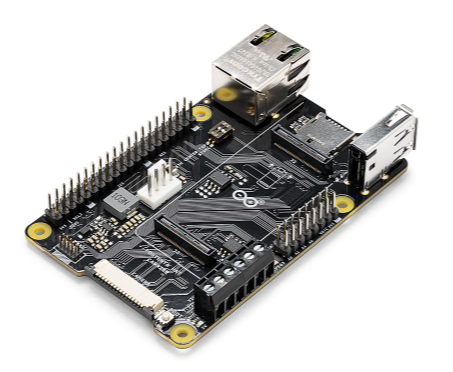
ASX00049

Arduino

* $41.52 - * $50.58

IN STOCK 2867
Buy

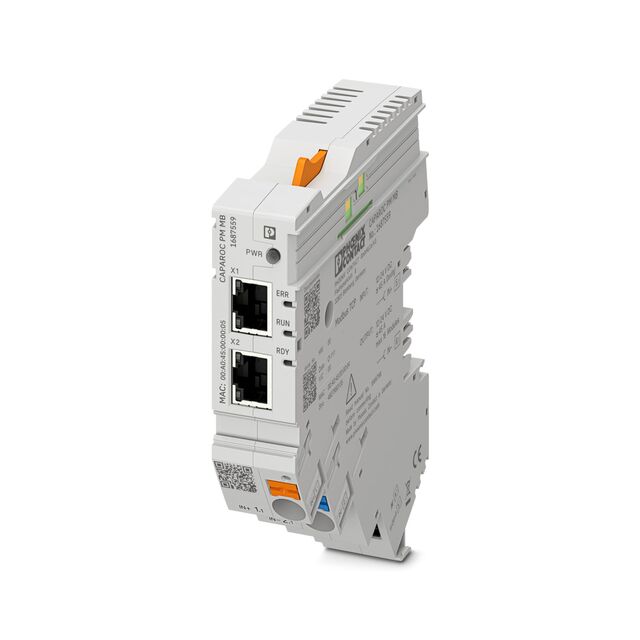
1687559

Phoenix Contact Ltd

[no prices available]

IN STOCK 2
Buy

Reference Designs

RD006

Wurth Elektronik

RD006 - 3 W Dual-output isolated auxiliary supply for communication interfaces and measurement systems

CN0583

Analog Devices Inc.

Multistandard Micropower Verified Smoke Detection System-on-Module

Technical Resources

EVALUATION KITS

EVAL-AD7124-8SDZ

Analog Devices Inc.

$0.00 - * $82.04

IN STOCK 792
Buy
View All