Top Manufacturers
Stock

Displaying 4081 - 4100 of 5453

Evaluation Kits from Analog Devices Inc.

EVAL-SSM2377Z

Analog Devices Inc.
The SSM2377 is a fully integrated, high efficiency, Class-D audioamplifier. It is designed to maximize performance for mobilephone applications. The application circuit requires a minimumof external components and operates from a single 2.5 V to 5.5 Vsupply. It is capable of delivering 2.5 W of continuous output powerwith 100 dB.Spread-spectrum pulse density modulation (PDM) is used toprovide lower EMI-radiated emissions compared with otherClass-D architectures. The inherent randomized nature ofspread-spectrum PDM eliminates the clock intermodulation(beating effect) of several amplifiers in close proximity.The SSM2377 produces ultralow EMI emissions that significantlyreduce the radiated emissions at the Class-D outputs,particularly above 100 MHz. The SSM2377 passes FCC Class Bradiated emission testing with 50 cm, unshielded speaker cablewithout any external filtering. The ultralow EMI emissions of theSSM2377 are also helpful for antenna and RF sensitivity problems.The device is configured for either a 6 dB or a 12 dB gain settingby connecting the GAIN pin to the VDD pin or the GND pin,respectively. Input impedance is a fixed value of 80 k?, independentof the gain select operation.The SSM2377 has a micropower shutdown mode with a typicalshutdown current of 100 nA. Shutdown is enabled by applyinga logic low to the SD pin.The device also includes pop-and-click suppression circuitry,which minimizes voltage glitches at the output during turn-onand turn-off, reducing audible noise on activation and deactivation.Built-in input low-pass filtering is also included to suppress outof-bandnoise interference to the PDM modulator.The SSM2377 is specified over the industrial temperature rangeof ?40?C to +85?C. It has built-in thermal shutdown and outputshort-circuit protection. It is available in a halide-free, 9-ball, 0.4 mmpitch, 1.2 mm ? 1.2 mm wafer level chip scale package (WLCSP). Applications Mobile phones MP3 players Portable electronics

EVAL-SSM3515Z

Analog Devices Inc.
The SSM3515 is a fully integrated, high efficiency, mono Class-D audio amplifier with digital inputs. The application circuit requires a minimum of external components and can operate from a single 4.5 V to 17 V supply. It can deliver 8.4 W of output power into an 8 ? load or 15.8 W into an 4 ? load from a 12 V power supply, or 31.3 W into an 4 ? load from a 17 V power supply, all with 1% THD + N.The SSM3515 features a high efficiency, low noise modulation scheme that requires no external LC output filters. This scheme provides high efficiency even at low output power. It operates with 92% efficiency at 7 W into an 8 ? load or 88% efficiency at 15 W into 4 ? from a 12 V supply.Spread spectrum pulse density modulation provides lower EMI radiated emissions compared with other Class-D architectures, particularly above 100 MHz.The digital input eliminates the need for an external digital-to-analog converter (DAC). The SSM3515 has a micropower shutdown mode with a typical shutdown current of 39 nA at the 12 V PVDD supply. The device also includes pop and click suppression circuitry that minimizes voltage glitches at the output during turn on and turn off.The SSM3515 operates with or without an I2C control interface. The SSM3515 is specified over the commercial temperature range (?40?C to +85?C). It has built in thermal shutdown and output short-circuit protection. It is available in a halide-free, 20-ball, 1.8 mm ? 2.2 mm wafer-level chip scale package (WLCSP).APPLICATIONS Notebooks Portable electronics Home audio

EVAL-TMP05/06EBZ

Analog Devices Inc.
The TMP05 / TMP06?are monolithic temperature sensors that generate a modulated serial digital output (PWM), which varies in direct proportion to the temperature of the devices. The high period (TH ) of the PWM remains static over all temperatures, while the low period (TL) varies. The B Grade version offers a high temperature accuracy of ?1?C from 0?C to 70?C with excellent transducer linearity. The digital output of the TMP05 / TMP06?is CMOS-/TTL-compatible and is easily interfaced to the serial inputs of most popular microprocessors. The flexible open-drain output of the TMP06 is capable of sinking 5 mA.The TMP05 / TMP06?are specified for operation at supply voltages from 3 V to 5.5 V. Operating at 3.3 V, the supply current is typically 370 ?A. The TMP05 / TMP06?are rated for operation over the ?40?Cto +150?C temperature range. It is not recommended to operate these devices at temperatures above 125?C for more than a total of 5% (5,000 hours) of the lifetime of the devices. They are packaged in low cost, low area SC-70 and SOT-23 packages.The TMP05 / TMP06?have three modes of operation: continuously converting mode, daisy-chain mode, and one shot mode. A three-state FUNC input determines the mode in which the TMP05 / TMP06?operate.The CONV/IN input pin is used to determine the rate at which the TMP05 / TMP06?measures temperature in continuously converting mode and one shot mode. In daisy-chain mode the, CONV/IN pin operates as the input to the daisy chain.PRODUCT HIGHLIGHTS The TMP05 / TMP06?have an on-chip temperature sensor that allows an accurate measurement of the ambient temperature. The measurable temperature range is ?40?C to +150?C. Supply voltage is 3 V to 5.5 V. Space-saving 5-lead SOT-23 and SC-70 packages. Temperature accuracy is typically ?0.5?C. Each part needs a decoupling capacitor to achieve this accuracy. Temperature resolution of 0.025?C. The TMP05/TMP06 feature a one shot mode that reduces the average power consumption to 102 ?W at 1 SPS.APPLICATIONS Isolated sensors Environmental control systems Computer thermal monitoring Thermal protection Industrial process control Power-system monitors

EV-COG-AD3029LZ

Analog Devices Inc.
The ADuCM3027/ADuCM3029 microcontroller units (MCUs) are ultra low power microcontroller systems with integrated power management for processing, control, and connectivity. The MCU system is based on the ARM? Cortex?-M3 processor, a collection of digital peripherals, embedded SRAM and flash memory, and an analog subsystem which provides clocking, reset, and power management capability in addition to an analog-to-digital converter (ADC) subsystem. For a feature comparison across the ADuCM3027/ADuCM3029 product offerings, see Table 1. Table 1. Product Flash Memory Options Device Embedded Flash Memory Size ADuCM3029 256 kB ADuCM3027 128 kB System features that are common across the ADuCM3027/ADuCM3029/ADuCM3029-1/ADuCM3029-2 MCUs include the following: Up to 26 MHz ARM Cortex-M3 processor Up to 256 kB of embedded flash memory with error correction code (ECC) Optional 4 kB cache for lower active power 64 kB system SRAM with parity Power management unit (PMU) Multilayer advanced microcontroller bus architecture (AMBA) bus matrix Central direct memory access (DMA) controller Beeper interface Serial port (SPORT), serial peripheral interface (SPI), inter-integrated circuit (I2C), and universal asynchronous receiver/transmitter (UART) peripheral interfaces Cryptographic hardware support with advanced encryption standard (AES) and secure hash algorithm (SHA)-256 Real-time clock (RTC) General-purpose and watchdog timers Programmable general-purpose input/output (GPIO) pins Hardware cyclic redundancy check (CRC) calculator with programmable generator polynomial Power-on reset (POR) and power supply monitor (PSM) 12-bit successive approximation register (SAR) ADC True random number generator (TRNG)To support low dynamic and hibernate power management, the ADuCM3027/ADuCM3029 MCUs provide a collection of power modes and features, such as dynamic and software controlled clock gating and power gating.The ADuCM3029-1 and ADuCM3029-2 MCU models share the same features and functionality as that of the ADuCM3029 MCU. All specifications pertaining to the ADuCM3027 and ADuCM3029 are also applicable to the ADuCM3029-1 and ADuCM3029-2.For full details on the ADuCM3027/ADuCM3029 MCUs, refer to the ADuCM302x Ultra Low Power ARM Cortex-M3 MCU with Integrated Power Management Hardware Reference Manual.Product Highlights Industry leading ultralow power consumption. Robust operation, including full voltage monitoring in deep sleep modes, ECC support on flash, and parity error detection on SRAM memory. Leading edge security. Fast encryption provides read protection to customer algorithms. Write protection prevents device reprogramming by unauthorized code. Failure detection of 32 kHz LFXTAL via interrupt. SensorStrobe? for precise time synchronized sampling of external sensors. Works in hibernate mode, resulting in drastic current reduction in system solutions. Current consumption reduces by 10 times when using, for example, the ADXL363 accelerometer. Software intervention is not required after setup. No pulse drift due to software execution.Applications Internet of Things (IoT) Electronic shelf label (ESL) and signage Smart infrastructure Smart lock Asset tracking Smart machine, smart metering, smart building, smart city, and smart agriculture Wearables Fitness and clinical Machine learning and neural network?

EV-COG-AD4050LZ

Analog Devices Inc.
The ADuCM4050 microcontroller unit (MCU) is an ultra low power integrated microcontroller system with integrated power management for processing, control, and connectivity. The MCU system is based on the ARM? Cortex?-M4F processor. The MCU also has a collection of digital peripherals, embedded static random access memory (SRAM) and embedded flash memory, and an analog subsystem that provides clocking, reset, and power management capabilities in addition to an analog-to-digital converter (ADC) subsystem.This data sheet describes the ARM Cortex-M4F core and memory architecture used on the ADuCM4050 MCU. It does not provide detailed programming information about the ARM processor.The system features include an up to 52 MHz ARM Cortex-M4F processor, 512 kB of embedded flash memory with error correction code (ECC), an optional 4 kB cache for lower active power, and 128 kB system SRAM with parity. The ADuCM4050 features a power management unit (PMU), multilayer advanced microcontroller bus architecture (AMBA) bus matrix, central direct memory access (DMA) controller, and beeper interface.The ADuCM4050 features cryptographic hardware supporting advanced encryption standard (AES)-128 and AES-256 with secure hash algorithm (SHA)-256 and the following modes: electronic code book (ECB), cipher block chaining (CBC), counter (CTR), and cipher block chaining-message authentication code (CCM/CCM*) modes.The ADuCM4050 has protected key storage with key wrap/ unwrap, and keyed hashed message authentication code (HMAC) with key unwrap.The ADuCM4050 supports serial port (SPORT), serial peripheral interface (SPI), I2C, and universal asynchronous receiver/ transmitter (UART) peripheral interfaces.The ADuCM4050 features a real-time clock (RTC), general-purpose and watchdog timers, and programmable general-purpose input/output (GPIO) pins. There is a hardware cyclic redundancy check (CRC) calculator with programmable generator polynomial. The device also features a power on reset (POR) and power supply monitor (PSM), a 12-bit successive approximation register (SAR) ADC, a red/green/blue (RGB) timer for driving RGB LED, and a true random number generator (TRNG).To support low dynamic and hibernate power management, the ADuCM4050 MCU provides a collection of power modes and features such as dynamic- and software-controlled clock gating and power gating.For full details on the ADuCM4050 MCU, refer to the ADuCM4050 Ultra Low Power ARM Cortex-M4F MCU with Integrated Power Management Hardware Reference.Product Highlights Ultra low power consumption. Robust operation. Full voltage monitoring in deep sleep modes. ECC support on flash. Parity error detection on SRAM memory. Leading edge security. Fast encryption provides read protection to user algorithms. Write protection prevents device reprogramming by unauthorized code. Failure detection of 32 kHz low frequency external crystal oscillator (LFXTAL) via interrupt. SensorStrobe? for precise time synchronized sampling of external sensors. Works in hibernate mode, resulting in drastic current reduction in system solutions. Current consumption reduces by 10 times when using, for example, the ADXL363 accelerometer. Software intervention is not required after setup. No pulse drift due to software execution.Applications Internet of Things (IoT) Smart agriculture, smart building, smart metering, smart city, smart machine, and sensor network Wearables Fitness and clinical Machine learning and neural networks

EV-COG-LTP5902Z

Analog Devices Inc.
SmartMesh IP wireless sensor networks are self managing, low power internet protocol (IP) networks built from wireless nodes called motes.The LTP5902-IPM is printed circuit board assembly (PCBA) product with on-board chip antenna in the Eterna? family of IEEE 802.15.4e solutions, featuring a highly integrated, low power radio design as well as an ARM Cortex-M3 32-bit microprocessor running SmartMesh IP embedded networking software. The LTP5902-IPM, at 37mm ? 24mm, is built for surface-mount assembly.With SmartMesh IP time-synchronized networks, all motes in the network may route, source or terminate data, while providing many years of battery powered operation. SmartMesh IP is a highly flexible network with proven reliability and low power performance in an easy-to-integrate platform.The LTP5902-IPM?s behavior in a SmartMesh IP network is determined by the choice of SmartMesh IP network software loaded: Wireless Mote, EManager, Access Point Mote in a SmartMesh IP network. The SmartMesh IP software provided with the LTP5902-IPM is fully tested and validated, and is readily configured via a software Application Programming Interface. Once you have purchased SmartMesh IP products, the SmartMesh IP stack binaries may be downloaded via your myAnalog account. The pin signaling behavior of the LTP5902IPC-IPMA hardware is determined by the software loaded and is described in detail in the following product datasheets: LTP5902-IPM = LTP5902IPC-IPMA hardware + SmartMesh IP ?Mote? Software ? LTP5902-IPM Datasheet LTP5902-IPR = LTP5902IPC-IPMA hardware + SmartMesh IP EManager Software ? LTP5902-IPR Datasheet LTP5902-IPA = LTP5902IPC-IPMA hardware + SmartMesh IP Access Point Software ? LTP5902-IPA Datasheet Network Features Feature Benefit >99.999% Network Reliability Avoids communications dropouts common with other wireless networks NIST-certified AES-128 bit Encryption Data protected by end-to-end encryption, message integrity checking and device authentication Scalable Uses time-slotted channel-hopping protocol to avoid in-network collisions to maximize scale while minimizing power and latency-hungry transmission retries due to congestion Bidirectional Communications Ideal for both monitoring and control applications Up to 10 messages/second/node Time-slotted communications avoids contention. This data rate includes built-in margin for packet retries. Device Features Feature Benefit Industry-Leading Low Power Radio Technology ? 4.5mA to Receive a Packet ? 5.4mA to Transmit at 0dBm ? 9.7mA to Transmit at 8dBm Pre-engineered RF RF elements include an on-chip power amplifier and are pre-tuned for optimized performance, including temperature compensation, saving development time. RF Modular Certifications Pre-certified in USA, Canada, EU, Australia/New Zealand, India, Japan, Korea, Taiwan Energy Harvesting Support Very low power design enables motes to be powered by a wide variety of energy harvesters. Click here to see a demonstration circuit of a SmartMesh IP mote powered by indoor light. Integrated Temperature Sensor Precise temperature sensor is integrated directly into the mote. ApplicationsSmartMesh IP is ideally suited for wireless Industrial Internet of Things (IoT) applications. To learn more about SmartMesh applications, click here.

EV-DNG-AGILE-900Z

Analog Devices Inc.
The ADuCM4050 microcontroller unit (MCU) is an ultra low power integrated microcontroller system with integrated power management for processing, control, and connectivity. The MCU system is based on the ARM? Cortex?-M4F processor. The MCU also has a collection of digital peripherals, embedded static random access memory (SRAM) and embedded flash memory, and an analog subsystem that provides clocking, reset, and power management capabilities in addition to an analog-to-digital converter (ADC) subsystem.This data sheet describes the ARM Cortex-M4F core and memory architecture used on the ADuCM4050 MCU. It does not provide detailed programming information about the ARM processor.The system features include an up to 52 MHz ARM Cortex-M4F processor, 512 kB of embedded flash memory with error correction code (ECC), an optional 4 kB cache for lower active power, and 128 kB system SRAM with parity. The ADuCM4050 features a power management unit (PMU), multilayer advanced microcontroller bus architecture (AMBA) bus matrix, central direct memory access (DMA) controller, and beeper interface.The ADuCM4050 features cryptographic hardware supporting advanced encryption standard (AES)-128 and AES-256 with secure hash algorithm (SHA)-256 and the following modes: electronic code book (ECB), cipher block chaining (CBC), counter (CTR), and cipher block chaining-message authentication code (CCM/CCM*) modes.The ADuCM4050 has protected key storage with key wrap/ unwrap, and keyed hashed message authentication code (HMAC) with key unwrap.The ADuCM4050 supports serial port (SPORT), serial peripheral interface (SPI), I2C, and universal asynchronous receiver/ transmitter (UART) peripheral interfaces.The ADuCM4050 features a real-time clock (RTC), general-purpose and watchdog timers, and programmable general-purpose input/output (GPIO) pins. There is a hardware cyclic redundancy check (CRC) calculator with programmable generator polynomial. The device also features a power on reset (POR) and power supply monitor (PSM), a 12-bit successive approximation register (SAR) ADC, a red/green/blue (RGB) timer for driving RGB LED, and a true random number generator (TRNG).To support low dynamic and hibernate power management, the ADuCM4050 MCU provides a collection of power modes and features such as dynamic- and software-controlled clock gating and power gating.For full details on the ADuCM4050 MCU, refer to the ADuCM4050 Ultra Low Power ARM Cortex-M4F MCU with Integrated Power Management Hardware Reference.Product Highlights Ultra low power consumption. Robust operation. Full voltage monitoring in deep sleep modes. ECC support on flash. Parity error detection on SRAM memory. Leading edge security. Fast encryption provides read protection to user algorithms. Write protection prevents device reprogramming by unauthorized code. Failure detection of 32 kHz low frequency external crystal oscillator (LFXTAL) via interrupt. SensorStrobe? for precise time synchronized sampling of external sensors. Works in hibernate mode, resulting in drastic current reduction in system solutions. Current consumption reduces by 10 times when using, for example, the ADXL363 accelerometer. Software intervention is not required after setup. No pulse drift due to software execution.Applications Internet of Things (IoT) Smart agriculture, smart building, smart metering, smart city, smart machine, and sensor network Wearables Fitness and clinical Machine learning and neural networks

EV-GEAR-EXPANDER1Z

Analog Devices Inc.
The ADuCM3027/ADuCM3029 microcontroller units (MCUs) are ultra low power microcontroller systems with integrated power management for processing, control, and connectivity. The MCU system is based on the ARM? Cortex?-M3 processor, a collection of digital peripherals, embedded SRAM and flash memory, and an analog subsystem which provides clocking, reset, and power management capability in addition to an analog-to-digital converter (ADC) subsystem. For a feature comparison across the ADuCM3027/ADuCM3029 product offerings, see Table 1. Table 1. Product Flash Memory Options Device Embedded Flash Memory Size ADuCM3029 256 kB ADuCM3027 128 kB System features that are common across the ADuCM3027/ADuCM3029/ADuCM3029-1/ADuCM3029-2 MCUs include the following: Up to 26 MHz ARM Cortex-M3 processor Up to 256 kB of embedded flash memory with error correction code (ECC) Optional 4 kB cache for lower active power 64 kB system SRAM with parity Power management unit (PMU) Multilayer advanced microcontroller bus architecture (AMBA) bus matrix Central direct memory access (DMA) controller Beeper interface Serial port (SPORT), serial peripheral interface (SPI), inter-integrated circuit (I2C), and universal asynchronous receiver/transmitter (UART) peripheral interfaces Cryptographic hardware support with advanced encryption standard (AES) and secure hash algorithm (SHA)-256 Real-time clock (RTC) General-purpose and watchdog timers Programmable general-purpose input/output (GPIO) pins Hardware cyclic redundancy check (CRC) calculator with programmable generator polynomial Power-on reset (POR) and power supply monitor (PSM) 12-bit successive approximation register (SAR) ADC True random number generator (TRNG)To support low dynamic and hibernate power management, the ADuCM3027/ADuCM3029 MCUs provide a collection of power modes and features, such as dynamic and software controlled clock gating and power gating.The ADuCM3029-1 and ADuCM3029-2 MCU models share the same features and functionality as that of the ADuCM3029 MCU. All specifications pertaining to the ADuCM3027 and ADuCM3029 are also applicable to the ADuCM3029-1 and ADuCM3029-2.For full details on the ADuCM3027/ADuCM3029 MCUs, refer to the ADuCM302x Ultra Low Power ARM Cortex-M3 MCU with Integrated Power Management Hardware Reference Manual.Product Highlights Industry leading ultralow power consumption. Robust operation, including full voltage monitoring in deep sleep modes, ECC support on flash, and parity error detection on SRAM memory. Leading edge security. Fast encryption provides read protection to customer algorithms. Write protection prevents device reprogramming by unauthorized code. Failure detection of 32 kHz LFXTAL via interrupt. SensorStrobe? for precise time synchronized sampling of external sensors. Works in hibernate mode, resulting in drastic current reduction in system solutions. Current consumption reduces by 10 times when using, for example, the ADXL363 accelerometer. Software intervention is not required after setup. No pulse drift due to software execution.Applications Internet of Things (IoT) Electronic shelf label (ESL) and signage Smart infrastructure Smart lock Asset tracking Smart machine, smart metering, smart building, smart city, and smart agriculture Wearables Fitness and clinical Machine learning and neural network?

EV-RADAR-MMIC2

Analog Devices Inc.
The ADF5901 is a 24 GHz Tx monolithic microwave integrated circuit (MMIC) with an on-chip, 24 GHz VCO with PGA and dual Tx channels for radar systems. The on-chip, 24 GHz VCO generates the 24 GHz signal for the two Tx channels and the LO output. Each Tx channel contains a power control circuit. There is also an on-chip temperature sensor.Control of all the on-chip registers is through a simple 4-wire interface.The ADF5901 comes in a compact 32-lead, 5 mm ? 5 mm LFCSP package.Applications Automotive radars Industrial radars Microwave radar sensors Industrial sensors Precision instrumentation Tank level sensors Smart sensors Door opening Energy saving Commercial sensors: object detection and tracking Cars, boats, aircraft, and UAVs (drones): collision avoidance Intelligent transportation systems: intelligent traffic monitoring and control Surveillance and security

EV-RAPID-ESL2-433Z

Analog Devices Inc.
The ADuCM3027/ADuCM3029 microcontroller units (MCUs) are ultra low power microcontroller systems with integrated power management for processing, control, and connectivity. The MCU system is based on the ARM? Cortex?-M3 processor, a collection of digital peripherals, embedded SRAM and flash memory, and an analog subsystem which provides clocking, reset, and power management capability in addition to an analog-to-digital converter (ADC) subsystem. For a feature comparison across the ADuCM3027/ADuCM3029 product offerings, see Table 1. Table 1. Product Flash Memory Options Device Embedded Flash Memory Size ADuCM3029 256 kB ADuCM3027 128 kB System features that are common across the ADuCM3027/ADuCM3029/ADuCM3029-1/ADuCM3029-2 MCUs include the following: Up to 26 MHz ARM Cortex-M3 processor Up to 256 kB of embedded flash memory with error correction code (ECC) Optional 4 kB cache for lower active power 64 kB system SRAM with parity Power management unit (PMU) Multilayer advanced microcontroller bus architecture (AMBA) bus matrix Central direct memory access (DMA) controller Beeper interface Serial port (SPORT), serial peripheral interface (SPI), inter-integrated circuit (I2C), and universal asynchronous receiver/transmitter (UART) peripheral interfaces Cryptographic hardware support with advanced encryption standard (AES) and secure hash algorithm (SHA)-256 Real-time clock (RTC) General-purpose and watchdog timers Programmable general-purpose input/output (GPIO) pins Hardware cyclic redundancy check (CRC) calculator with programmable generator polynomial Power-on reset (POR) and power supply monitor (PSM) 12-bit successive approximation register (SAR) ADC True random number generator (TRNG)To support low dynamic and hibernate power management, the ADuCM3027/ADuCM3029 MCUs provide a collection of power modes and features, such as dynamic and software controlled clock gating and power gating.The ADuCM3029-1 and ADuCM3029-2 MCU models share the same features and functionality as that of the ADuCM3029 MCU. All specifications pertaining to the ADuCM3027 and ADuCM3029 are also applicable to the ADuCM3029-1 and ADuCM3029-2.For full details on the ADuCM3027/ADuCM3029 MCUs, refer to the ADuCM302x Ultra Low Power ARM Cortex-M3 MCU with Integrated Power Management Hardware Reference Manual.Product Highlights Industry leading ultralow power consumption. Robust operation, including full voltage monitoring in deep sleep modes, ECC support on flash, and parity error detection on SRAM memory. Leading edge security. Fast encryption provides read protection to customer algorithms. Write protection prevents device reprogramming by unauthorized code. Failure detection of 32 kHz LFXTAL via interrupt. SensorStrobe? for precise time synchronized sampling of external sensors. Works in hibernate mode, resulting in drastic current reduction in system solutions. Current consumption reduces by 10 times when using, for example, the ADXL363 accelerometer. Software intervention is not required after setup. No pulse drift due to software execution.Applications Internet of Things (IoT) Electronic shelf label (ESL) and signage Smart infrastructure Smart lock Asset tracking Smart machine, smart metering, smart building, smart city, and smart agriculture Wearables Fitness and clinical Machine learning and neural network?

EV-RPG2-PLZ

Analog Devices Inc.
The ADIN2299 is a complete, pretested solution that manages the industrial protocol and network traffic for an applications processor.The module contains everything needed to participate in a Ether-CAT, PROFINET? real-time (RT) and isochronous real time (IRT), EtherNet/IP network, including a communications controller, protocol stack, flash, RAM, follower controller, and physical layer (PHY). An applications processor connects via a universal asynchronousreceiver transmitter (UART), serial peripheral interface (SPI), or Ethernet interface.At the software layer, the applications processor connects to a unified interface so the supported industrial protocols can be used without changing the applications processor software. The ADIN2299 platform was precertified so that the field device can operate in any of the supported industrial Ethernet networks.PRODUCT HIGHLIGHTSMultiprotocol supportSmall form factor for embedded applicationsLow power and low latencyRobust network policing ensures passing PROFINET Netload Class 3APPLICATIONS Factory and process automation Motion control Building automation Transportation

GM-HX07609AA

Analog Devices Inc.
SmartMesh IP wireless sensor networks are self managing, low power internet protocol (IP) networks built from wireless nodes called motes. The LTC5800-IPM is the SmartMesh IP integrated circuit in the Eterna? family of IEEE 802.15.4e System-on-Chip (SoC) solutions, featuring a highly integrated, low power radio design as well as an ARM Cortex-M3 32-bit microprocessor running SmartMesh IP embedded networking software.With SmartMesh IP time-synchronized networks, all motes in the network may route, source or terminate data, while providing many years of battery powered operation. SmartMesh IP is a highly flexible network with proven reliability and low power performance in an easy-to-integrate platform.The LTC5800-IPM?s behavior in a SmartMesh IP network is determined by the choice of SmartMesh IP network software loaded: Wireless Mote, EManager, or Access Point Mote in a SmartMesh IP network. The SmartMesh IP software provided with the LTC5800-IPM is fully tested and validated, and is readily configured via a software Application Programming Interface. Once you have purchased SmartMesh IP products, the SmartMesh IP stack binaries may be downloaded via your myAnalog account.The pin signaling behavior of the LTC5800*WR-IPMA hardware is determined by the software loaded and is described in detail in the following product datasheets: LTC5800-IPM = LTC5800*WR-IPMA hardware + SmartMesh IP ?Mote? Software ? LTC5800-IPM Datasheet LTC5800-IPR = LTC5800*WR-IPMA hardware + SmartMesh IP EManager Software ? LTC5800-IPR Datasheet LTC5800-IPA = LTC5800*WR-IPMA hardware + SmartMesh IP Access Point Software ? LTC5800-IPA Datasheet Network Features Feature Benefit >99.999% Network Reliability Avoids communications dropouts common with other wireless networks NIST-certified AES-128 bit Encryption Data protected by end-to-end encryption, message integrity checking and device authentication Scalable Uses time-slotted channel-hopping protocol to avoid in-network collisions to maximize scale while minimizing power and latency-hungry transmission retries due to congestion Bidirectional Communications Ideal for both monitoring and control applications Up to 10 messages/second/node Time-slotted communications avoids contention. This data rate includes built-in margin for packet retries. Device Features Feature Benefit Industry-Leading Low Power Radio Technology ? 4.5mA to Receive a Packet ? 5.4mA to Transmit at 0dBm ? 9.7mA to Transmit at 8dBm Pre-engineered RF RF elements include an on-chip power amplifier and are pre-tuned for optimized performance, including temperature compensation, saving development time. Energy Harvesting Support Very low power design enables motes to be powered by a wide variety of energy harvesters. Click here to see a demonstration circuit of a SmartMesh IP mote powered by indoor light. Integrated Temperature Sensor Precise temperature sensor is integrated directly into the mote. ApplicationsSmartMesh IP is ideally suited for wireless Industrial Internet of Things (IoT) applications. Learn more about SmartMesh applications.?

LT1962 Signal Chain Evaluation Board | 300mA Low Noise Positive LDO

Analog Devices Inc.
Demonstration circuit SCP-LT1962-EVALZ is a 20V, 300mA Low Dropout (LDO) regulator designed to allow low noise operation in noise sensitive circuits. It is easily configured for a wide output range and can provide extremely quiet operation with its high PSRR. Like all boards in the Signal Chain Power series, this board is designed to be easily plugged into other SCP boards to form a complete signal chain power system, enabling fast evaluation of low power signal chains. To evaluate this board, some universal SCP hardware is required, namely: SCP-INPUT-EVALZ SCP-OUTPUT-EVALZ SCP-1X5BKOUT-EVALZ SCP-THRUBRD-EVALZ SCP-FILTER-EVALZ SCP-1X2BKOUT-EVALZ SCP-5X1-EVALZ   To properly evaluate SCP series demo boards, you will need the SCP Configurator companion software. SCP Configurator can help you choose the right board and topology for your design. Note that the Demo Manual does not cover details important to the operation and configuration regarding the LT1962. Please refer to the LT1962 data sheet for a complete description of the part.

LT3045-1 Signal Chain Evaluation Board | 500mA Ultra Low Noise Positive LDO

Analog Devices Inc.
Demonstration circuit SCP-LT3045-1-EVALZ is a 20V, 500mA Low Dropout (LDO) regulator designed best in class low noise operation in noise sensitive circuits. It is easily configured for a wide output range and can provide extremely quiet operation with its high PSRR. Like all boards in the Signal Chain Power series, this board is designed to be easily plugged into other SCP boards to form a complete signal chain power system, enabling fast evaluation of low power signal chains. To evaluate this board, some universal SCP hardware is required, namely: SCP-INPUT-EVALZ SCP-OUTPUT-EVALZ SCP-1X5BKOUT-EVALZ SCP-THRUBRD-EVALZ SCP-FILTER-EVALZ SCP-1X2BKOUT-EVALZ SCP-5X1-EVALZ   To properly evaluate SCP series demo boards, you will need the SCP Configurator companion software. SCP Configurator can help you choose the right board and topology for your design. Note that the Demo Manual does not cover details important to the operation and configuration regarding the LT3045-1. Please refer to the LT3045-1 data sheet for a complete description of the part.

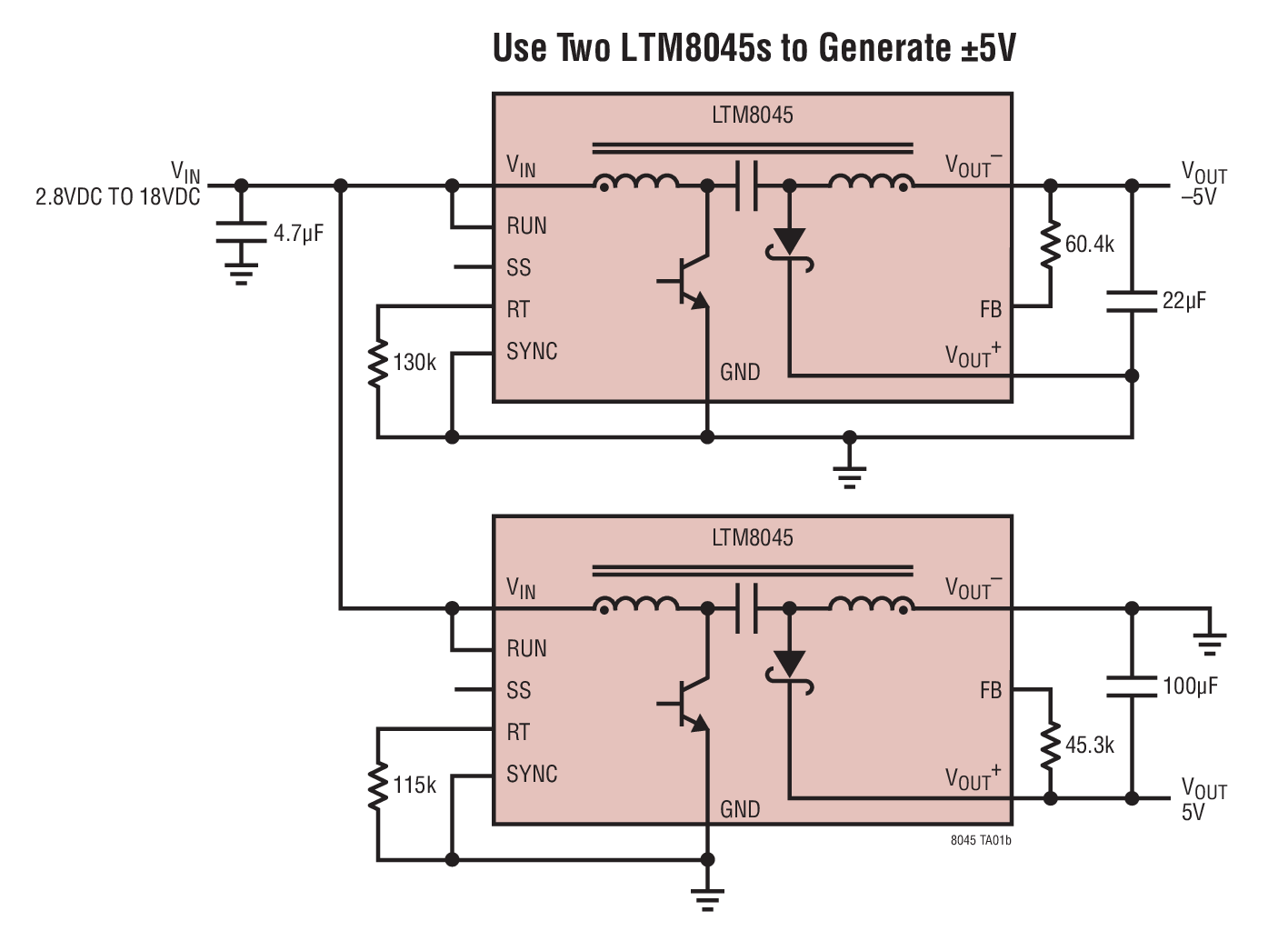
LT3471 Signal Chain Evaluation Board | Dual Boost/Inverting Converter

Analog Devices Inc.
Demonstration circuit SCP-LT3471-EVALZ is a dual output converter featuring the LT3471EDD in boost and inverter configurations. Both converters are powered from the same 4.5V to 10V input source. The Boost converter puts out 12V at 300mA and the Inverter –12V at 200mA. Like all boards in the Signal Chain Power series, this board is designed to be easily plugged into other SCP boards to form a complete signal chain power system, enabling fast evaluation of low power signal chains. To evaluate this board, some universal SCP hardware is required, namely: SCP-INPUT-EVALZ SCP-OUTPUT-EVALZ SCP-1X5BKOUT-EVALZ SCP-THRUBRD-EVALZ SCP-FILTER-EVALZ SCP-1X2BKOUT-EVALZ SCP-5X1-EVALZ   To properly evaluate SCP series demo boards, you will need the SCP Configurator companion software. SCP Configurator can help you choose the right board and topology for your design. Note that the Demo Manual does not cover details important to the operation and configuration regarding the LT3471. Please refer to the LT3471 data sheet for a complete description of the part.

MAX5391LEVMINIQU+

Analog Devices Inc.
Digital Potentiometer Development Tools Eval Kit/System MAX5386M, MAX5388, MAX5391, and MAX5393 (Dual 256-Tap,Volatile, Low-Voltage Linear Taper Digital Potentiometers)

MX7545ALP+

Analog Devices Inc.
Digital to Analog Converters - DAC 12-Bit Precision DAC

MAX5391NEVMINIQU+

Analog Devices Inc.
Digital Potentiometer Development Tools Eval Kit/System MAX5386M, MAX5388, MAX5391, and MAX5393 (Dual 256-Tap,Volatile, Low-Voltage Linear Taper Digital Potentiometers)

AD-SYNCHRONA14-EBZ

Analog Devices Inc.
The AD-SYNCHRONA14-EBZ is an ideal self-contained device to use in evaluation and prototyping of applications that need a highly accurate frequency and phase-controlled source clock. It is designed around the Analog Devices AD9545 and HMC7044 and greatly simplifies clock distribution and multi-channel synchronization in complex systems. It is intended to be used by trained professionals in a laboratory environment, and not intended as an end product for commercial use. It can be taken as a complete reference design and customised as required for any end customer applications. Full design details are made available free of charge. The AD-SYNCHRONA14-EBZ comes in a 1U mechanical form factor. Using popular industry connector SMA and TwinAX interfaces most labs will already have the needed cables. With its internal OCXO it can operate in standalone mode or be fed from a choice of external sources, such as 3 separate high speed differential clock inputs, a 10MHz reference and 1PPS. This flexibility combined with the capability to select either of the internal VCXO options of 100MHz or 122.88MHz, gives almost unlimited choice for the frequency of interest and accuracy needed for a wide variety of application areas. 

MX7545ALP+

Analog Devices Inc.
Digital to Analog Converters - DAC 12-Bit Precision DAC

Displaying 4081 - 4100 of 5453

Latest Parts

IN STOCK 13664
Buy

ASX00049

Arduino

* $43.65 - * $50.61

IN STOCK 2835
Buy

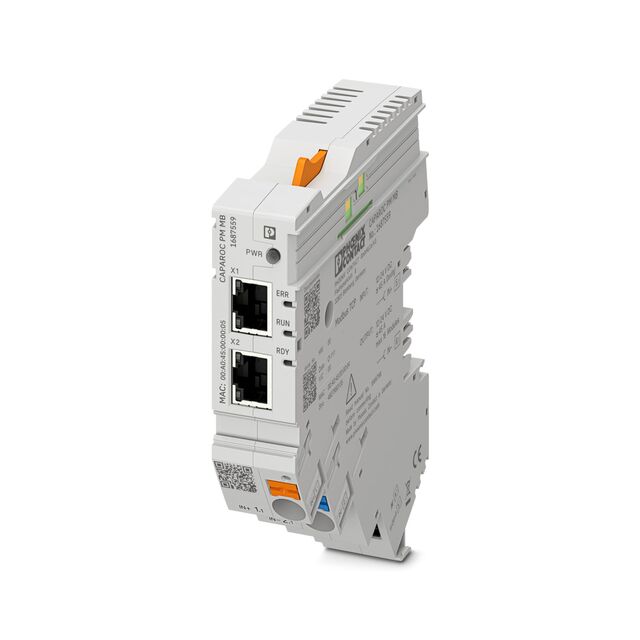
1687559

Phoenix Contact Ltd

[no prices available]

IN STOCK 2
Buy

Reference Designs

RD006

Wurth Elektronik

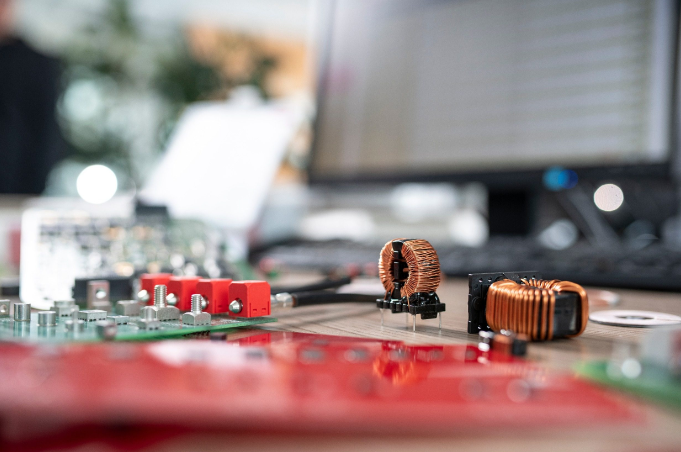
RD006 - 3 W Dual-output isolated auxiliary supply for communication interfaces and measurement systems

CN0583

Analog Devices Inc.

Multistandard Micropower Verified Smoke Detection System-on-Module

Technical Resources

EVALUATION KITS

EVAL-AD7124-8SDZ

Analog Devices Inc.

$0.00 - * $82.08

IN STOCK 792
Buy
View All