Top Manufacturers
MORE
Stock

Displaying 5281 - 5300 of 12848

Evaluation Kits

EVAL-ADXRS645Z

Analog Devices Inc.
The ADXRS645 is a high performance angular rate sensor with excellent vibration immunity for use in high temperature environments. The ADXRS645 is manufactured using the Analog Devices, Inc., patented high volume BiMOS surface-micromachining process with years of proven field reliability. An advanced, differential, quad sensor design provides superior acceleration and vibration rejection.The output signal, RATEOUT, is a voltage proportional to the angular rate about the axis normal to the package lid. The measurement range is a minimum of ?2000?/sec, and may be extended to ?5000?/sec with the addition of a single external resistor. The output is ratiometric with respect to a provided reference supply. Other external capacitors are required for operation.A temperature output is provided for compensation techniques. Two digital self-test inputs electromechanically excite the sensor to test proper operation of both the sensor and the signal conditioning circuits. The ADXRS645 is available in a 8 mm ? 9 mm ? 3 mm, 15-lead brazed lead tri in-line package.APPLICATIONS Down hole measurements for geological exploration Extreme high temperature industrial applications Severe mechanical environments

EVAL-ADXRS646Z

Analog Devices Inc.
The ADXRS646 is a high performance angular rate sensor(gyroscope) that offers excellent vibration immunity. Biasstability is a widely-recognized figure of merit for highperformance gyroscopes, but in real-world applications,vibration sensitivity is often a more significant performancelimitation and should be considered in gyroscope selection. TheADXRS646 offers superior vibration immunity and accelerationrejection as well as a low bias drift of 12?/hr (typical), enabling itto offer rate sensing in harsh environments where shock andvibration are present.The ADXRS646 is manufactured using the Analog Devices,Inc., patented high volume BiMOS surface-micromachiningprocess. An advanced, differential, quad sensor design providesthe improved acceleration and vibration rejection. The outputsignal, RATEOUT, is a voltage proportional to angular rateabout the axis normal to the top surface of the package. Themeasurement range is a minimum of ?250?/sec. The output isratiometric with respect to a provided reference supply. Otherexternal capacitors are required for operation.A temperature output is provided for compensation techniques.Two digital self-test inputs electromechanically excite the sensorto test proper operation of both the sensor and the signal conditioningcircuits.The ADXRS646 is available in a 7 mm ? 7 mm ? 3 mm CBGAchip-scale package.APPLICATIONS Industrial applications Severe mechanical environments Platform stabilization

EVAL-ADXRS649Z

Analog Devices Inc.
The ADXRS64x family of low noise, vibration rejecting yaw rate gyroscopes are drop-in performance upgrades to existing designs using the ADXRS62x family.The ADXRS649 is pin- and package-compatible to the ADXRS62x family and offers the highest rate of rotation sensing available with ?20,000?/sec and fast 3 millisecond (ms) startup for quick power cycling. This measurement range is extendable to ?50,000?/sec with the addition of an external resistor. It is ideally suited for applications where exceptionally wide measurement ranges are needed.The ADXRS649 is a complete angular rate sensor (gyroscope) that uses the Analog Devices, Inc., patented high volume BiMOS surface-micromachining process to make a complete gyro on one chip. An advanced, differential, quad sensor design rejects the influence of linear acceleration, enabling the ADXRS649 to offer rate sensing in harsh environments where shock and vibration are present.The output signal, RATEOUT (B1, A2), is a voltage proportional to the angular rate about the axis normal to the top surface of the package. The output is ratiometric with respect to a provided reference supply. An external capacitor is used to set the band-width. The measurement range is extendable to ?50,000?/sec by adding an external resistor. Low power consumption (3.5 mA) enables very low power consumption, and ultrafast startup (3 ms) allows for quick power cycling of the gyro. At 10 samples per second, a pair of CR2032 coin cells can power the ADXRS649 for three months.A temperature output is provided for compensation techniques. Two digital self-test inputs electromechanically excite the sensor to test proper operation of both the sensor and the signal condi-tioning circuits. The ADXRS649 is available in a 7 mm ? 7 mm ? 3 mm CBGA chip scale package.Applications Sports equipment Industrial applications Form stabilization High speed tachometry

EVAL-ADXRS800Z-RG

Analog Devices Inc.
The ADXRS800 is an angular rate sensor (gyroscope) intended for automotive electronic stability control, vehicle rollover detection, and other high performance applications. An advanced, differential, quad-sensor design rejects the influence of linear acceleration, enabling the ADXRS800 to operate in exceedingly harsh environments where shock and vibration are present.The ADXRS800 uses an internal, continuous self-test archi-tecture. The integrity of the electromechanical system is checked by applying a high frequency electrostatic force to the sense structure to generate a rate signal that can be differentiated from the baseband rate data and internally analyzed.The ADXRS800 is capable of sensing an angular rate of up to ?300?/sec. Angular rate data is presented as a 16-bit word, as part of a 32-bit SPI message.The ADXRS800 is available in a cavity plastic SOIC-16 and an SMT-compatible vertical mount package and is capable of operating across both a wide voltage range (3.3 V to 5 V) and temperature range (?40?C to 105?C).APPLICATIONS Electronic stability control High performance platform stabilization

EVAL-LT3960-AZ

Analog Devices Inc.
The LT3960 is a robust high speed transceiver that extends a single-master I2C bus through harsh or noisy environments at up to 400kbps using the CAN-physical layer. One LT3960 sits near the I2C master, creating from SCL and SDA equivalent differential buses (I2CAN) on two twisted pairs. At the other end of the twisted pairs, a second LT3960 recreates the I2C bus locally for any slave I2C devices. A built-in 3.3V LDO powers both the I2C and I2CAN buses from a single input supply from 4V to 60V. Alternatively, the LT3960 can be powered directly from a 3.3V or 5V supply.The LT3960 is available in a 10-lead MSOP package.APPLICATIONSIndustrial NetworkingAutomotive NetworkingRemote Sensors

LT8333 | Low IQ Boost/SEPIC/Inverting Converter with 3A, 40V Switch

Analog Devices Inc.
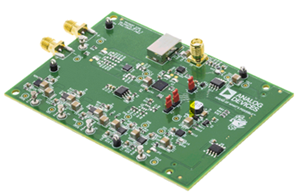
Evaluation circuit EVAL-LT8333-AZ features the LT8333 in a SEPIC configuration. It operates with a switching frequency of 2MHz and is designed to convert a 3V to 26V source to 12V output. The converter can output up to 1.25A depending on the input voltage (see Figure 3 in the demo manual, maximum output current vs VIN curve). This evaluation circuit features Spread Spectrum Frequency Modulation (SSFM) and EMI filters to provide optimum EMI performance. This PCB layout is optimized for good EMI performance and small solution size. The evaluation board contains a selectable jumper, JP1, to aid in the selection of the desired SYNC pin mode of operation. At light load, either pulse-skipping (PULSE SKIP) or low-ripple Burst Mode® operation (BURST) can be selected to improve the efficiency. The LT8333 boost/SEPIC/inverting converter IC operates over an input range of 2.8V to 40V, suitable for automotive, telecom, and industrial applications. The converter provides adjustable and synchronizable operation from 300kHz to 2MHz with SSFM option. The LT8333 packs other popular features such as soft-start, bias pin, input undervoltage lockout. The IC can exhibit a low quiescent current down to 9μA in BURST mode and 1μA in shutdown, which makes it ideal for battery-operated systems. The LT8333 is assembled in a thermally enhanced 10-lead 3mm × 3mm DFN package. The data sheet gives a complete description of the device, operation, and application information. The data sheet must be read in conjunction with the demo manual for EVAL-LT8333-AZ.

Microphone Canvas Evaluation Board

Analog Devices Inc.
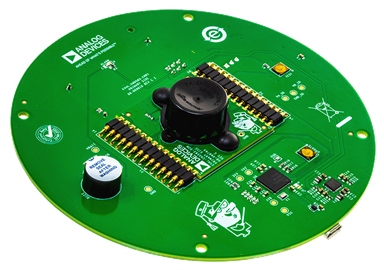
The EVAL-MICCANVASZ microphone canvas provides a platform for the development and evaluation of microphone beamforming arrays. 15 microphones, arranged as a ring of eight, a ring of six, and a single in the center, provide flexibility and symmetry suitable to many applications.

EVAL-SSM2517Z

Analog Devices Inc.
The SSM2517 is a PDM digital input Class-D power amplifierthat offers higher performance than existing DAC plus Class-Dsolutions. The SSM2517 is ideal for power sensitive applications,such as mobile phones and portable media players, where systemnoise can corrupt the small analog signal sent to the amplifier.The SSM2517 combines an audio digital-to-analog converter(DAC), a power amplifier, and a PDM digital interface on a singlechip. The integrated DAC plus analog ?-? modulator architectureenables extremely low real-world power consumption fromdigital audio sources with excellent audio performance. Usingthe SSM2517, audio can be transmitted digitally to the audioamplifier, significantly reducing the effect of noise sources such asGSM interference or other digital signals on the transmitted audio.The SSM2517 is capable of delivering 2.4 W of continuous outputpower with

EVAL-SSM2529Z

Analog Devices Inc.
The SSM2529 is a digital input, Class-D power amplifier that combinesa digital-to-analog converter (DAC), a low power audio specificdigital signal processor, and a sigma-delta (?-?) Class-D modulator.This unique architecture enables extremely low real-world powerconsumption from digital audio sources with excellent audioperformance. The SSM2529 is ideal for power sensitive applications,such as mobile phones and portable media players, where systemnoise can the corrupt small analog signals that are sent to ananalog input audio amplifier.Using the SSM2529, audio data can be transmitted to the amplifierover a standard digital audio serial interface, thereby significantlyreducing the effect of noise sources such as GSM interference orother digital signals on the transmitted audio. The closed-loopdigital input design retains the benefits of an all-digital amplifier, yetenables very good PSRR and audio performance. The three-level,?-? Class-D modulator is designed to provide the least amount ofEMI, the lowest quiescent power dissipation, and the highestaudio efficiency without sacrificing audio quality.The audio input is provided via a serial audio interface that can beprogrammed to accept all common audio formats, including I2S,TDM, and PDM. Control of the IC is provided via an I2C controlinterface. An alternative to I2C control is standalone operationmode, which allows several settings that are adjusted by off-chipexternal resistors. The SSM2529 can accept a variety of input MCLKfrequencies and can use BCLK as the clock source in someconfigurations. An integrated PLL can also provide the devicemaster clock.The integrated DSP includes soft digital volume control circuits; ade-emphasis, high-pass filter; a seven-band programmable equalizer;and a programmable digital dynamic range compressor. In addition,the part includes a feedforward speaker temperature predictionmodule to protect the loudspeaker.The SSM2529 supports single-supply mode, where DVDD isprovided by the on-chip LDO regulator, eliminating the need for anexternal digital core supply.The digital interface is very flexible and convenient. It can offer abetter system solution for other products whose sole audio sourceis digital, such as wireless speakers, laptop PCs, portable digitaltelevisions, and navigation systems.The SSM2529 is specified over the industrial temperature range of?40?C to +85?C. It has built-in thermal shutdown and output shortcircuitprotection. It is available in a 16-ball, 1.92 mm ? 1.94 mmwafer level chip scale package (WLCSP).Applications Mobile phones Portable media players Laptop PCs Wireless speakers Portable gaming Navigation systems

EVAL-SSM2537Z

Analog Devices Inc.
The SSM2537 is a PDM digital input Class D power amplifier that offers higher performance than existing DAC plus Class D solutions. The SSM2537 is ideal for power sensitive applications where system noise can corrupt the small analog signal sent to the amplifier, such as mobile phones and portable media players.The SSM2537 combines an audio digital-to-analog converter (DAC), a power amplifier, and a PDM digital interface on a single chip. The integrated DAC plus analog ?-? modulator architecture enables extremely low real-world power consumption from digital audio sources with excellent audio performance. Using the SSM2537, audio can be transmitted digitally to the audio amplifier, significantly reducing the effect of noise sources such as GSM interference or other digital signals on the transmitted audio. The SSM2537 is capable of delivering 2.5 W of continuous output power with

EVAL-SSM3302Z

Analog Devices Inc.
The SSM3302 is a fully integrated, high efficiency, stereo Class-D audio amplifier. The application circuit requires minimal externalcomponents and operates from a single 7 V to 18 V supply. The device is capable of delivering 2 ? 10 W of continuous output power into a 4 ? load (or 2 ? 8 W into 8 ?) with 98 dB. Spread spectrum pulse density modulation (PDM) is used toprovide lower EMI radiated emissions compared with other Class-D architectures. The SSM3302 includes an optional modulation select pin (ultralow EMI emission mode) that significantly reduces the radiated emissions at the Class-D outputs, particularly above 100 MHz. The SSM3302 can pass FCC Class-B emissions testing with an unshielded 20 inch cable using common-mode choke-based filtering.The fully differential input of the SSM3302 provides excellent rejection of common-mode noise on the input. The device also includes a highly flexible gain select pin that only requires one series resistor to choose a gain between 9 dB and 24 dB, with no change to the input impedance. The benefit of this is to improve gain matching between multiple SSM3302 devices within a single application compared with using external resistors to set gain.The SSM3302 includes an integrated voltage regulator thatgenerates a 5 V rail.The SSM3302 has a micropower shutdown mode with a typical shutdown current of 10 ?A. Shutdown is enabled by applying a logic low to the SD pin. The device also includes pop-and-click suppression circuitry that minimizes voltage glitches at the output during turn on and turn off, reducing audible noise during activation and deactivation.Other included features to simplify system level integration of the SSM3302 are input low-pass filtering to suppress out-ofband DAC noise interference to the pulse density modulator, fixed input impedance to simplify component selection across multiple platform production builds, and a thermal warning indicator pin.The SSM3302 is specified over the commercial temperaturerange (?40?C to +85?C). It has built-in thermal shutdown andoutput short-circuit protection. It is available in a halide-free,40-lead, 6 mm ? 6 mm lead frame chip scale package (LFCSP).APPLICATIONS Mobile computing Flat panel televisions Media docking stations Portable electronics Sound bars

EVAL-SSM3525Z

Analog Devices Inc.
The SSM3525 is a fully integrated, high efficiency, mono Class D audio amplifier with digital input and digitized output of output voltage, output current, and PVDD supply. The application circuit requires few external components and can operate from 4.5 V to 17 V (PVDD) and 1.8 V (IOVDD) supplies. It is capable of delivering 8.3 W of continuous output power into an 8 ? load (or 15.3 W into 4 ?) with

EVAL-SSM4567MINIZ

Analog Devices Inc.
The SSM4567 is a digital input Class-D power amplifier that includes an integrated boost converter, allowing higher output power than with a normal battery supply. This means that maximum output power is constant across the battery voltage range. The SSM4567 is ideal for power sensitive applications where system noise can corrupt the small analog signal sent to the amplifier, such as mobile phones, tablets, and portable media players.The SSM4567 combines an audio digital-to-analog converter (DAC), a power amplifier, and PDM or PCM (I2S/TDM) digital audio interfaces on a single chip. Using the SSM4567, audio can be transmitted digitally to the audio amplifier, significantly reducing the effect of noise sources on the transmitted audio and eliminate the need for input coupling capacitors. The SSM4567 is capable of delivering 2.5 W of continuous output power with

EVAL-SSM4567Z

Analog Devices Inc.
The SSM4567 is a digital input Class-D power amplifier that includes an integrated boost converter, allowing higher output power than with a normal battery supply. This means that maximum output power is constant across the battery voltage range. The SSM4567 is ideal for power sensitive applications where system noise can corrupt the small analog signal sent to the amplifier, such as mobile phones, tablets, and portable media players.The SSM4567 combines an audio digital-to-analog converter (DAC), a power amplifier, and PDM or PCM (I2S/TDM) digital audio interfaces on a single chip. Using the SSM4567, audio can be transmitted digitally to the audio amplifier, significantly reducing the effect of noise sources on the transmitted audio and eliminate the need for input coupling capacitors. The SSM4567 is capable of delivering 2.5 W of continuous output power with

EVALZ-ADPD2212

Analog Devices Inc.
The ADPD2212 is an optical sensor optimized for biomedical applications. Very low power consumption and near theoretical signal-to-noise ratio (SNR) are achieved by packaging an ultralow capacitance deep junction silicon photodiode operated in zero bias photoconductive mode with a low noise current amplifier. The ADPD2212 offers a typical 400 kHz bandwidth performance, which is well suited for use with pulsed excitation. The ADPD2212 uses very little power during operation and incorporates a power-down pin, enabling power cycling to optimize battery life in portable applications. The ADPD2212 provides shot noise limited performance, making it an excellent choice for measuring signals with the highest possible fidelity in low light conditions. This combination of low power, very high SNR, and electromagnetic interference (EMI) immunity enables low power system solutions not possible with traditional photodiode (PD) and transimpedance amplifier (TIA) systems.Applications Heart rate, pulse oximetry monitoring (photoplethysmography) Battery-powered medical sensors Chemical analysis

EVALZ-ADPD2214

Analog Devices Inc.
The ADPD2214 is an optical sensor optimized for biomedical applications. Very low power consumption and near theoretical signal-to-noise ratio (SNR) are achieved by packaging an ultralow capacitance deep junction silicon photodiode operated in zero bias photoconductive mode with a low noise current amplifier. The ADPD2214 offers a typical 75 kHz bandwidth performance, which is well suited for use with pulsed excitation. The ADPD2214 uses very little power during operation and incorporates a power-down pin, enabling power cycling to optimize battery life in portable applications. The ADPD2214 provides shot noise limited performance, making it an excellent choice for measuring signals with the highest possible fidelity in low light conditions. This combination of low power, very high SNR, and electromagnetic interference (EMI) immunity enables low-power system solutions not possible with traditional photodiode (PD) and transimpedance amplifier (TIA) systems.Applications Heart rate, pulse oximetry monitoring (photoplethysmography) Battery-powered medical sensors Chemical analysis

EV-BURN-GATEWAY-1Z

Analog Devices Inc.
The ADuCM4050 microcontroller unit (MCU) is an ultra low power integrated microcontroller system with integrated power management for processing, control, and connectivity. The MCU system is based on the ARM? Cortex?-M4F processor. The MCU also has a collection of digital peripherals, embedded static random access memory (SRAM) and embedded flash memory, and an analog subsystem that provides clocking, reset, and power management capabilities in addition to an analog-to-digital converter (ADC) subsystem.This data sheet describes the ARM Cortex-M4F core and memory architecture used on the ADuCM4050 MCU. It does not provide detailed programming information about the ARM processor.The system features include an up to 52 MHz ARM Cortex-M4F processor, 512 kB of embedded flash memory with error correction code (ECC), an optional 4 kB cache for lower active power, and 128 kB system SRAM with parity. The ADuCM4050 features a power management unit (PMU), multilayer advanced microcontroller bus architecture (AMBA) bus matrix, central direct memory access (DMA) controller, and beeper interface.The ADuCM4050 features cryptographic hardware supporting advanced encryption standard (AES)-128 and AES-256 with secure hash algorithm (SHA)-256 and the following modes: electronic code book (ECB), cipher block chaining (CBC), counter (CTR), and cipher block chaining-message authentication code (CCM/CCM*) modes.The ADuCM4050 has protected key storage with key wrap/ unwrap, and keyed hashed message authentication code (HMAC) with key unwrap.The ADuCM4050 supports serial port (SPORT), serial peripheral interface (SPI), I2C, and universal asynchronous receiver/ transmitter (UART) peripheral interfaces.The ADuCM4050 features a real-time clock (RTC), general-purpose and watchdog timers, and programmable general-purpose input/output (GPIO) pins. There is a hardware cyclic redundancy check (CRC) calculator with programmable generator polynomial. The device also features a power on reset (POR) and power supply monitor (PSM), a 12-bit successive approximation register (SAR) ADC, a red/green/blue (RGB) timer for driving RGB LED, and a true random number generator (TRNG).To support low dynamic and hibernate power management, the ADuCM4050 MCU provides a collection of power modes and features such as dynamic- and software-controlled clock gating and power gating.For full details on the ADuCM4050 MCU, refer to the ADuCM4050 Ultra Low Power ARM Cortex-M4F MCU with Integrated Power Management Hardware Reference.Product Highlights Ultra low power consumption. Robust operation. Full voltage monitoring in deep sleep modes. ECC support on flash. Parity error detection on SRAM memory. Leading edge security. Fast encryption provides read protection to user algorithms. Write protection prevents device reprogramming by unauthorized code. Failure detection of 32 kHz low frequency external crystal oscillator (LFXTAL) via interrupt. SensorStrobe? for precise time synchronized sampling of external sensors. Works in hibernate mode, resulting in drastic current reduction in system solutions. Current consumption reduces by 10 times when using, for example, the ADXL363 accelerometer. Software intervention is not required after setup. No pulse drift due to software execution.Applications Internet of Things (IoT) Smart agriculture, smart building, smart metering, smart city, smart machine, and sensor network Wearables Fitness and clinical Machine learning and neural networks

EV-COG-BLEINTP1Z

Analog Devices Inc.
The ADuCM3027/ADuCM3029 microcontroller units (MCUs) are ultra low power microcontroller systems with integrated power management for processing, control, and connectivity. The MCU system is based on the ARM? Cortex?-M3 processor, a collection of digital peripherals, embedded SRAM and flash memory, and an analog subsystem which provides clocking, reset, and power management capability in addition to an analog-to-digital converter (ADC) subsystem. For a feature comparison across the ADuCM3027/ADuCM3029 product offerings, see Table 1. Table 1. Product Flash Memory Options Device Embedded Flash Memory Size ADuCM3029 256 kB ADuCM3027 128 kB System features that are common across the ADuCM3027/ADuCM3029/ADuCM3029-1/ADuCM3029-2 MCUs include the following: Up to 26 MHz ARM Cortex-M3 processor Up to 256 kB of embedded flash memory with error correction code (ECC) Optional 4 kB cache for lower active power 64 kB system SRAM with parity Power management unit (PMU) Multilayer advanced microcontroller bus architecture (AMBA) bus matrix Central direct memory access (DMA) controller Beeper interface Serial port (SPORT), serial peripheral interface (SPI), inter-integrated circuit (I2C), and universal asynchronous receiver/transmitter (UART) peripheral interfaces Cryptographic hardware support with advanced encryption standard (AES) and secure hash algorithm (SHA)-256 Real-time clock (RTC) General-purpose and watchdog timers Programmable general-purpose input/output (GPIO) pins Hardware cyclic redundancy check (CRC) calculator with programmable generator polynomial Power-on reset (POR) and power supply monitor (PSM) 12-bit successive approximation register (SAR) ADC True random number generator (TRNG)To support low dynamic and hibernate power management, the ADuCM3027/ADuCM3029 MCUs provide a collection of power modes and features, such as dynamic and software controlled clock gating and power gating.The ADuCM3029-1 and ADuCM3029-2 MCU models share the same features and functionality as that of the ADuCM3029 MCU. All specifications pertaining to the ADuCM3027 and ADuCM3029 are also applicable to the ADuCM3029-1 and ADuCM3029-2.For full details on the ADuCM3027/ADuCM3029 MCUs, refer to the ADuCM302x Ultra Low Power ARM Cortex-M3 MCU with Integrated Power Management Hardware Reference Manual.Product Highlights Industry leading ultralow power consumption. Robust operation, including full voltage monitoring in deep sleep modes, ECC support on flash, and parity error detection on SRAM memory. Leading edge security. Fast encryption provides read protection to customer algorithms. Write protection prevents device reprogramming by unauthorized code. Failure detection of 32 kHz LFXTAL via interrupt. SensorStrobe? for precise time synchronized sampling of external sensors. Works in hibernate mode, resulting in drastic current reduction in system solutions. Current consumption reduces by 10 times when using, for example, the ADXL363 accelerometer. Software intervention is not required after setup. No pulse drift due to software execution.Applications Internet of Things (IoT) Electronic shelf label (ESL) and signage Smart infrastructure Smart lock Asset tracking Smart machine, smart metering, smart building, smart city, and smart agriculture Wearables Fitness and clinical Machine learning and neural network?

EV-GEAR-EINK1Z

Analog Devices Inc.
The ADuCM3027/ADuCM3029 microcontroller units (MCUs) are ultra low power microcontroller systems with integrated power management for processing, control, and connectivity. The MCU system is based on the ARM? Cortex?-M3 processor, a collection of digital peripherals, embedded SRAM and flash memory, and an analog subsystem which provides clocking, reset, and power management capability in addition to an analog-to-digital converter (ADC) subsystem. For a feature comparison across the ADuCM3027/ADuCM3029 product offerings, see Table 1. Table 1. Product Flash Memory Options Device Embedded Flash Memory Size ADuCM3029 256 kB ADuCM3027 128 kB System features that are common across the ADuCM3027/ADuCM3029/ADuCM3029-1/ADuCM3029-2 MCUs include the following: Up to 26 MHz ARM Cortex-M3 processor Up to 256 kB of embedded flash memory with error correction code (ECC) Optional 4 kB cache for lower active power 64 kB system SRAM with parity Power management unit (PMU) Multilayer advanced microcontroller bus architecture (AMBA) bus matrix Central direct memory access (DMA) controller Beeper interface Serial port (SPORT), serial peripheral interface (SPI), inter-integrated circuit (I2C), and universal asynchronous receiver/transmitter (UART) peripheral interfaces Cryptographic hardware support with advanced encryption standard (AES) and secure hash algorithm (SHA)-256 Real-time clock (RTC) General-purpose and watchdog timers Programmable general-purpose input/output (GPIO) pins Hardware cyclic redundancy check (CRC) calculator with programmable generator polynomial Power-on reset (POR) and power supply monitor (PSM) 12-bit successive approximation register (SAR) ADC True random number generator (TRNG)To support low dynamic and hibernate power management, the ADuCM3027/ADuCM3029 MCUs provide a collection of power modes and features, such as dynamic and software controlled clock gating and power gating.The ADuCM3029-1 and ADuCM3029-2 MCU models share the same features and functionality as that of the ADuCM3029 MCU. All specifications pertaining to the ADuCM3027 and ADuCM3029 are also applicable to the ADuCM3029-1 and ADuCM3029-2.For full details on the ADuCM3027/ADuCM3029 MCUs, refer to the ADuCM302x Ultra Low Power ARM Cortex-M3 MCU with Integrated Power Management Hardware Reference Manual.Product Highlights Industry leading ultralow power consumption. Robust operation, including full voltage monitoring in deep sleep modes, ECC support on flash, and parity error detection on SRAM memory. Leading edge security. Fast encryption provides read protection to customer algorithms. Write protection prevents device reprogramming by unauthorized code. Failure detection of 32 kHz LFXTAL via interrupt. SensorStrobe? for precise time synchronized sampling of external sensors. Works in hibernate mode, resulting in drastic current reduction in system solutions. Current consumption reduces by 10 times when using, for example, the ADXL363 accelerometer. Software intervention is not required after setup. No pulse drift due to software execution.Applications Internet of Things (IoT) Electronic shelf label (ESL) and signage Smart infrastructure Smart lock Asset tracking Smart machine, smart metering, smart building, smart city, and smart agriculture Wearables Fitness and clinical Machine learning and neural network?

EV-MOD-AGILE-900Z

Analog Devices Inc.
The ADuCM4050 microcontroller unit (MCU) is an ultra low power integrated microcontroller system with integrated power management for processing, control, and connectivity. The MCU system is based on the ARM? Cortex?-M4F processor. The MCU also has a collection of digital peripherals, embedded static random access memory (SRAM) and embedded flash memory, and an analog subsystem that provides clocking, reset, and power management capabilities in addition to an analog-to-digital converter (ADC) subsystem.This data sheet describes the ARM Cortex-M4F core and memory architecture used on the ADuCM4050 MCU. It does not provide detailed programming information about the ARM processor.The system features include an up to 52 MHz ARM Cortex-M4F processor, 512 kB of embedded flash memory with error correction code (ECC), an optional 4 kB cache for lower active power, and 128 kB system SRAM with parity. The ADuCM4050 features a power management unit (PMU), multilayer advanced microcontroller bus architecture (AMBA) bus matrix, central direct memory access (DMA) controller, and beeper interface.The ADuCM4050 features cryptographic hardware supporting advanced encryption standard (AES)-128 and AES-256 with secure hash algorithm (SHA)-256 and the following modes: electronic code book (ECB), cipher block chaining (CBC), counter (CTR), and cipher block chaining-message authentication code (CCM/CCM*) modes.The ADuCM4050 has protected key storage with key wrap/ unwrap, and keyed hashed message authentication code (HMAC) with key unwrap.The ADuCM4050 supports serial port (SPORT), serial peripheral interface (SPI), I2C, and universal asynchronous receiver/ transmitter (UART) peripheral interfaces.The ADuCM4050 features a real-time clock (RTC), general-purpose and watchdog timers, and programmable general-purpose input/output (GPIO) pins. There is a hardware cyclic redundancy check (CRC) calculator with programmable generator polynomial. The device also features a power on reset (POR) and power supply monitor (PSM), a 12-bit successive approximation register (SAR) ADC, a red/green/blue (RGB) timer for driving RGB LED, and a true random number generator (TRNG).To support low dynamic and hibernate power management, the ADuCM4050 MCU provides a collection of power modes and features such as dynamic- and software-controlled clock gating and power gating.For full details on the ADuCM4050 MCU, refer to the ADuCM4050 Ultra Low Power ARM Cortex-M4F MCU with Integrated Power Management Hardware Reference.Product Highlights Ultra low power consumption. Robust operation. Full voltage monitoring in deep sleep modes. ECC support on flash. Parity error detection on SRAM memory. Leading edge security. Fast encryption provides read protection to user algorithms. Write protection prevents device reprogramming by unauthorized code. Failure detection of 32 kHz low frequency external crystal oscillator (LFXTAL) via interrupt. SensorStrobe? for precise time synchronized sampling of external sensors. Works in hibernate mode, resulting in drastic current reduction in system solutions. Current consumption reduces by 10 times when using, for example, the ADXL363 accelerometer. Software intervention is not required after setup. No pulse drift due to software execution.Applications Internet of Things (IoT) Smart agriculture, smart building, smart metering, smart city, smart machine, and sensor network Wearables Fitness and clinical Machine learning and neural networks

Displaying 5281 - 5300 of 12848

Latest Parts

IN STOCK 13664
Buy

ASX00049

Arduino

* $43.33 - * $50.43

IN STOCK 2835
Buy

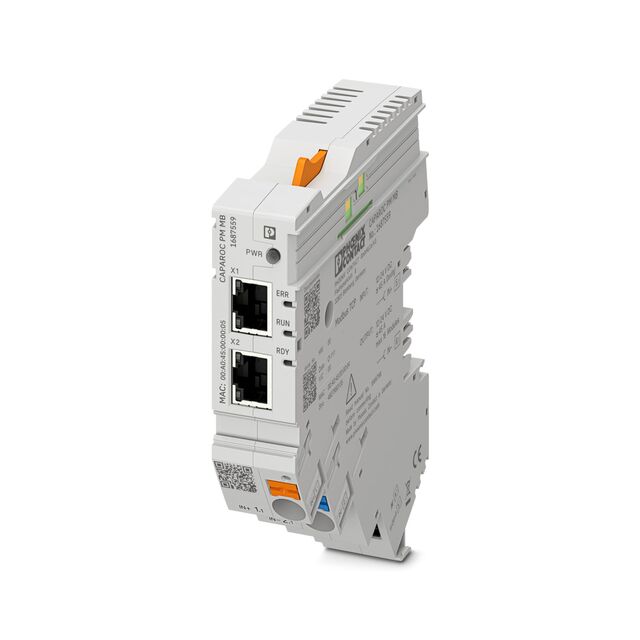
1687559

Phoenix Contact Ltd

[no prices available]

IN STOCK 4
Buy

Reference Designs

RD006

Wurth Elektronik

RD006 - 3 W Dual-output isolated auxiliary supply for communication interfaces and measurement systems

CN0583

Analog Devices Inc.

Multistandard Micropower Verified Smoke Detection System-on-Module

Technical Resources

EVALUATION KITS

EVAL-AD7124-8SDZ

Analog Devices Inc.

$0.00 - * $79.23

IN STOCK 792
Buy
View All