Using the TPS62125 in an Inverting Buck-Boost Topology (Rev. B)
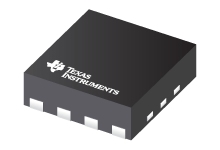
Texas InstrumentsThe TPS62125 is a DCS-Control™ topology synchronous buck dc-to-dc converter designed for low-power applications. It features a wide operating input voltage range from 3 V to 17 V, 300-mA output current, and adjustable output voltage of 1.2 V to 10 V. This device is well-suited for applications such as ultra lowpower microprocessors, energy harvesting, and low-power RF applications. Moreover, the TPS62125 can be configured in an inverting buck-boost topology, where the output voltage is inverted or negative with respect to ground. This application note describes the TPS62125 in an inverting buck-boost topology for use in low current negative rails for operational amplifier or optical module biasing and other low-power applications.
Using Execute, Write/Erase Flash Protection on Stellaris MCUs Using CCS (Rev. A)
Texas Instruments
Choosing Standard Recovery Diode or Ultra-Fast Diode in Snubber
Texas InstrumentsWhile using a Snubber circuit is very common for flyback design, suppressing the stress of MOSFET is not the only design consideration for snubber. The Snubber circuit will also impact the efficiency, standby power, and EMI performance. This paper reviews the working principle of snubber and illustrates the diode selection for RCD/R2CD and TVS Snubber.
TMS320VC5409 Bootloader Technical Reference (Rev. A)
Texas InstrumentsUsing CAN Arbitration for Electrical Layer Testing
Texas InstrumentsImplementing DDR2/mDDR PCB Layout on the TMS320DM35x DMSoC (Rev. D)
Texas InstrumentsThe previous approach specified device timing in terms of data sheet specifications and simulation models. The system designer was required to obtain compatible memory devices as well as the device-specific data sheet
LMZ31710, LMZ31707, LMZ31704 Parallel
Texas InstrumentsAN-1286 Compensation For The LM3478 Boost Controller (Rev. C)
Texas InstrumentsMigrating from the MSP430F4xx to Family to the MSP430FR4xx Family
Texas InstrumentsAN-1591 The LM49370 PCM/I 2 S Bridge (Rev. A)
Texas InstrumentsM-LVDS Signaling Rate Versus Distance
Texas InstrumentsHow to Handle Different Interrupts of TMS320F241, TMS320F243, TMS320C242
Texas InstrumentsOptimizing Memory on MSP430 for uC/OS-II
Texas Instruments
DN-104 UCC3585,Low Voltage Synchronous Buck Controller, Evaluation Board, Schematic, and List of Materials
Texas InstrumentsThe UCC3585 is a voltage mode synchronous step down (BUCK) controller that provides the functionality required to obtain high efficiency, low cost, regulated power from a low input voltage rail. High efficiency is obtained through the use of synchronous rectification. The UCC3585 runs off a supply voltage as low as 2.5V. It incorporates an innovative tracking feature which allows the converter output to track the input voltage during power-up. This feature is essential for certain dual-rail microprocessors such as PowerPC 603 and 604 and GTL bus voltage ICs. The tracking feature is enhanced by a user configurable “track-and-hold” threshold that prevents overshoot of the output voltage during power-up.