Low-Level Output Voltage vs. Sinking Current of a Bipolar Output Amplifier
Texas InstrumentsConfiguring the bq27505 Data Flash
Texas InstrumentsSensorless Control of a Trapezoidal Brushless DC Motor Using the TMS320C25 DSP
Texas InstrumentsAN-982 COP888GW Features and Applications
Texas InstrumentsTMS320C54x Interface With SDRAM
Texas InstrumentsECC/EDC on TDAxx
Texas InstrumentsTDA2x and TDA3x series of automotive processor are designed to be used in automotive safety systems. To enable safety, these processors come with error detection and correction (EDC) support for vario
Class-D Amplifier External Load Diagnostics
Texas InstrumentsVibration and Shock Sensitivity: A Comparative Study of Oscillators
Texas InstrumentsIWR1642 Bootloader Flow
Texas Instruments
Capacitive technology in wearable devices
Infineon Technologies AGLow-power, high-accuracy pressure sensing for battery operated wearable devices
With more and more applications requiring high-accuracy atmospheric pressure data, engineers are seeking ever-more sensitive pressure sensing methods. New sensor technologies that are based on capacitive sensing enable engineers to create miniaturized and very accurate devices while satisfying demanding energy constraints and addressing reliability challenges.
Fitness monitoring wearables are a large part of a growing variety of products and applications require the high-accuracy sensing of static and dynamic air pressure. As these applications are typically found in batteryoperated devices, it is also essential to combine the high accuracy with optimized low-power operation and reliability across a broad range of operating conditions.
Many existing small form-factor MEMS (Micro Electro-Mechanical System) pressure sensors are built around piezo-resistive measurement techniques. In these cases, the flexing of a diaphragm in relation to changes in pressure is sensed via a strain sensor. However, piezo-resistive sensing elements are particularly susceptible to variation with temperature changes and they do not respond linearly to temperature. For this reason, piezoresistive sensors have a need for more complex calibration compared to a capacitive element. In addition, resistive measurement can represent a significant drain on power – a particularly important consideration when the target application is battery-powered and operating lifetime is critical.
By Sampo Härkönen, Senior Manager Pressure Sensor Marketing, Infineon Technologies
Download and read the full whitepaper below.

MSP430FR6047 and Ultrasonic Software Based Water Flow Meter Measurement Results
Texas Instruments
LDO PSRR Measurement Simplified (Rev. A)
Texas Instruments
HiFi Audio Circuit Design
Texas Instruments
PGA460-Q1 in Automotive Ultrasonic Kick-to-open Liftgate Systems (Rev. A)
Texas InstrumentsAlso known as a Smart Trunk Opener (STO), the kick-to-open trunk application has grown significantly over recent years, especially in SUVs and high-end passenger vehicles. This feature allows the vehicle owner hands-free access to open the trunk with a simple kicking motion near the rear bumper.
Simplify Voltage and Current Measurement in Battery Test Equipment
Texas InstrumentsBattery test equipment is used to verify battery pack functionality and performance prior to shipment to the customer. This Tech Note outlines three major functional tests that a battery tester performs while showing how to achieve the desired level of regulated error.
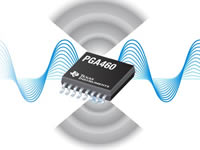
PGA460 Full-Bridge Driver Solutions for Ultrasonic Transducers
Texas InstrumentsThis document offers various implementations to achieve a full-bridge driver to excite an ultrasonic transducer when using the PGA460. Because the PGA460 was only designed to excite transducers in the transformer-driven or half-bridge driver modes, external circuitry is required to enable a full-bridge driver. The recommended solution is based on combining the functionality of the PGA460 with the DRV8870 to enable the excitation voltage to swing between ±45 V. Low-cost discrete alternatives are also discussed.

Ethernet PHY Configuration Using MDIO for Industrial Applications
Texas InstrumentsAs a bridge of the link layer device medium access controller (MAC) and physical medium such as copper cable, the Ethernet physical layer device (PHY) integrates all the physical-layer functions needed to transmit and receive data on standard twisted-pair cables. Proper PHY configuration using management data input/output (MDIO) is fundamental during the prototype stage, and also crucial to meeting the requirements of lowest deterministic latency and fastest link detection in industrial Ethernet applications such as EtherCAT. This application report provides guidance on the Ethernet PHY configuration using the MDIO module within the Programmable-Realtime Unit Industrial Communications Sub-System (PRUICSS) in the Sitara device from TI, for industrial applications, by dissecting the PHY DP83822 configuration in EtherCAT on the AMIC110 Industrial Communications Engine (ICE). The goal of this application report is to expedite the development of industrial Ethernet applications on custom boards with migration and troubleshooting guides for the PHYs.

Current Sense Amplifiers in Class-D Audio Subsystems
Texas InstrumentsCLASS-D audio amplifiers provide output power with an efficiency of over 90% as compared to CLASS-AB amplifiers that can provide an output efficiency of <50%. CLASS-D amplifiers are implemented in portable personal audio systems that provide quality sound output enabling longer battery life. A widely used CLASS-D amplifier in automotive systems are for E-call systems that provide critical audio feedback to the driver in case of a driver emergency. In E-call systems discrete current sensing is often implemented for continuous diagnostics to ensure speaker is operational at all times.