Search results
Passing CISPR25 Radiated Emissions Using TPS54362B-Q1

Texas Instruments
Passing CISPR25 Radiated Emissions Using TPS54362B-Q1
Texas Instruments
This application note provides a summary of CISPR25 Radiated Emissions test results using the TPS54362B-Q1 device. This buck converter is capable of passing CISPR25 and other automotive EMC test specifications. The TPS54362B-Q1 device does not require use of programmable frequency modulation. The device can pass EMC tests by optimizing external components selection placement andboard layout.
DC2019B

Analog Devices Inc.
DC2019B
Analog Devices Inc.
The LT8614 step-down regulator features Silent Switcher architecture designed to minimize EMI emissions while delivering high efficiency at frequencies up to 3MHz. Assembled in a 3mm ? 4mm QFN, the monolithic construction with integrated power switches and inclusion of all necessary circuitry yields a solution with a minimal PCB footprint. An ultralow 2.5?A quiescent current?with the output in full regulation? enables applications requiring highest efficiency at very small load currents. Transient response remains excellent and output voltage ripple is below 10mVP-P at any load, from zero to full current.The LT8614 allows high VIN to low VOUT conversion at high frequency with a fast minimum top switch on-time of 30ns. Operation is safe in overload even with a saturated inductor.Essential features are included and easy to use: An open-drain PG pin signals when the output is in regulation. The SYNC pin allows clock synchronization and choice of Burst Mode operation or pulse-skipping mode. Soft-start and tracking functionality is accessed via the TR/SS pin. An accurate enable threshold can be set using the EN/UV pin and a resistor at the RT pin programs switch frequency.Applications Automotive and Industrial Supplies General Purpose Step-Down GSM Power Supplies
LTM4660 | High Density Hybrid Step-Down Synchronous Converter

Analog Devices Inc.
LTM4660 | High Density Hybrid Step-Down Synchronous Converter
Analog Devices Inc.
Demonstration circuit 2879A is a high efficiency, high power density hybrid converter. It can deliver 12V/25A with an input voltage from 36V to 60V (up to 65V during transients). This demo board features the LTM4660, which uses an architecture that merges soft-switching switched capacitor topology with a traditional step-down converter to provide superior efficiency compared to the traditional switching architectures. It offers a high efficiency/high density and cost effective solution for nonisolated intermediate bus applications in power distribution, datacom and telecom. Due to its current mode control architecture, multiple LTM4660s can be operated in a parallel, multiphase configuration with excellent current sharing and low output voltage ripple to enable much higher power applications. Other benefits include low EMI emissions due to a soft-switched front end and reduced MOSFET stress. The LTM4660 design eliminates the inrush current typically associated with switched capacitor circuits by pre-balancing the capacitors on start-up. The LTM4660 also monitors system voltage, current and temperature for faults. It stops switching and pulls the FAULT pin low when a fault condition occurs. An onboard timer can be set for appropriate restart/retry times. Additional features include ±1.5% output voltage accuracy over temperature, a clock output for multiphase operation, a power good output signal, short-circuit protection, monotonic output voltage start-up, optional external reference, undervoltage lockout and internal charge balance circuitry. The LTM4660 data sheet must be used in conjunction with this demo board manual.
CY7C1021V33L-15BACT

Cypress Semiconductor
From $4.79 • 10 k+ units available from multiple sources
CY7C1021V33L-15BACT
Cypress Semiconductor
Standard SRAM, 64KX16, 15ns PBGA48
| Distributor | SKU | Stock | MOQ | 1 | 10 | 50 | 100 | 1,000 | 10,000 | |
|---|---|---|---|---|---|---|---|---|---|---|
| DigiKey | 2156-CY7C1021V33L-15BACT-ND | 10,000 | 50 | $5.99 | $5.99 | $5.99 | $5.99 | Buy | ||
| Verical Marketplace | CY7C1021V33L-15BACT | 10,000 | 63 | $5.69 | $5.09 | $4.79 |
Boost Converter LED Driver Using 9V – 24V Input Range

Texas Instruments
Boost Converter LED Driver Using 9V – 24V Input Range
Texas Instruments
This reference design uses the TPS40211 current mode controller in a boost converter to regulate the current in a series string of 12 LEDs (42V) at 0.35A. Efficiency is greater than 94%.
LTC3851AUED Demo Board with Adjustable ILIMIT | 4.5V ≤ VIN ≤ 14V, VOUT = 1.5V @ 15A

Analog Devices Inc.
LTC3851AUED Demo Board with Adjustable ILIMIT | 4.5V ≤ VIN ≤ 14V, VOUT = 1.5V @ 15A
Analog Devices Inc.
Demonstration circuit 1432A is a synchronous buck controller featuring the LTC3851AEUD/LTC3851AEUD-1. It operates with an input voltage from 4.5V to 14V and provides 1.5V at up to 15A at the output. The demo circuit is available in two versions. DC1432A-A is configured with LTC3851AEUD which provides ISET function, while the DC1432A-B is configured with LTC3851AEUD-1 which provides PGOOD function.
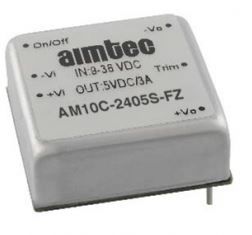
Two-Phase Interleaved Power Factor Correction Converter Reference Design with Power Metering

Texas Instruments
Two-Phase Interleaved Power Factor Correction Converter Reference Design with Power Metering
Texas Instruments
This design is a digitally controlled: two phase interleaved: 700W power factor correction converter with added power metering functionality. A C2000™ Piccolo™ microcontroller is the controller for the two 180 ° phase shifted boost power stages that comprise the power factor correction converter: and: additionally: it monitors the line and neutral voltage waveforms to implement power metering functions. This design is able to achieve 97% efficiency and 1.5% THD at full load with power factor greater than 0.98. By minimizing power loss in the power stage: reducing reliability impacts of harmonic distortion: and providing near unity power factor: this design is a great choice for off-line applications and AC/DC power supplies.
Bluetooth Low Energy Light Reference Design

Texas Instruments
Bluetooth Low Energy Light Reference Design
Texas Instruments
This reference design is an example of using the SimpleLink™ Bluetooth low energy CC2540T high temperature range wireless microcontroller in lighting applications. The board includes RGBW LEDs controlled by the CC2540T and is USB powered. The board can be controlled out-of-the-box by the TI BLE Multitool smart phone app.
Standalone Synchronous Switch-mode Li-Ion Charger with 2A FET Reference Design

Texas Instruments
Standalone Synchronous Switch-mode Li-Ion Charger with 2A FET Reference Design
Texas Instruments
This reference design is a solution for a Li-Ion charge management IC. It has a highly integrated battery charge IC utilizing synchronous switch mode power conversion for efficient and comprehensive charge control of a single cell Li-Ion battery. The solutionprovides a convenient method to evaluate the operation and performance of the IC.
ADRF5549-EVALZ

Analog Devices Inc.
ADRF5549-EVALZ
Analog Devices Inc.
The ADRF5549 is a dual-channel, integrated, RF front-end multichip module designed for time division duplexing (TDD) applications that operates from 1.8 GHz to 2.8 GHz. The ADRF5549 is configured in dual channels with a cascading, two-stage, low noise amplifier (LNA) and a high power, silicon single-pole, double-throw (SPDT) switch.In high gain mode, the cascaded two-stage LNA and switch offer a low noise figure of 1.4 dB and a high gain of 35 dB with an output third-order intercept point (OIP3) of 32 dBm typical.In low gain mode, one stage of the two-stage LNA is in bypass mode providing 17 dB of gain at a lower current of 35 mA. In power-down mode, the LNAs are turned off, and the device draws 12 mA.In transmit operation, when RF inputs are connected to a termination pin (TERM-ChA or TERM-ChB), the switch provides a low insertion loss of 0.6 dB and handles a long-term evolution (LTE) full lifetime average (9 dB peak to average ratio (PAR)) of 40 dBm and 43 dBm for a 9 dB PAR LTE single event (ApplicationsWireless InfrastructureTDD massive multiple input and multiple output (MIMO) and active antenna systemsTDD-based communication systems