
Search results
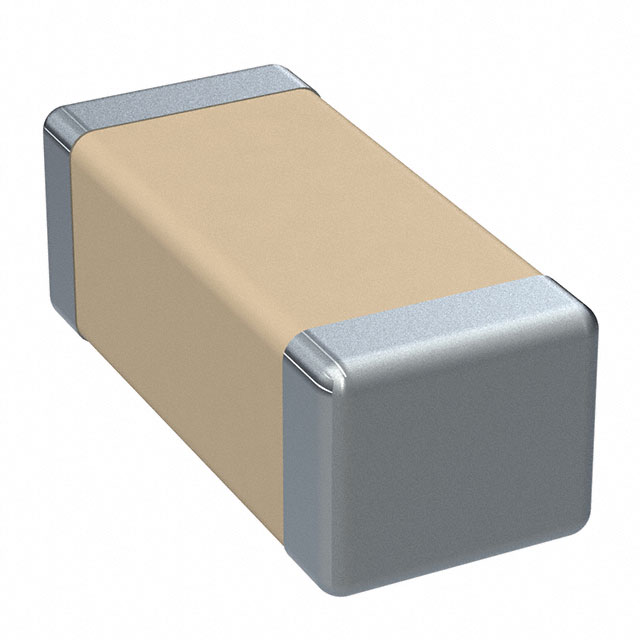
995315
Kemet
1 µF ±10% 16V Ceramic Capacitor X7R 1206 (3216 Metric)
| Distributor | SKU | Stock | MOQ | 1 | 10 | 50 | 100 | 1,000 | 10,000 | |
|---|---|---|---|---|---|---|---|---|---|---|
| DigiKey | 399-C1206X105K4RACTUDKR-ND | 6,710 | $0.61 | $0.41 | $0.41 | $0.25 | $0.20 | $0.17 | Buy |
Universal AC Input 14V/2.4A Flyback With 88% Efficiency Reference Design

Texas Instruments
Universal AC Input 14V/2.4A Flyback With 88% Efficiency Reference Design
Texas Instruments
This reference design provides an isolated 14.5V/35W output from a universal 85-265VAC input. It uses the UCC28740 flyback controller to provide high efficiency and minimize light load losses. Maximum load efficiency is over 88%. The average efficiency (measured at 25%: 50%: 75%: and 100% load) is 87.9%. The UCC28740 also provides accurate current limiting which eliminates the need for a load protecting switch on the output.
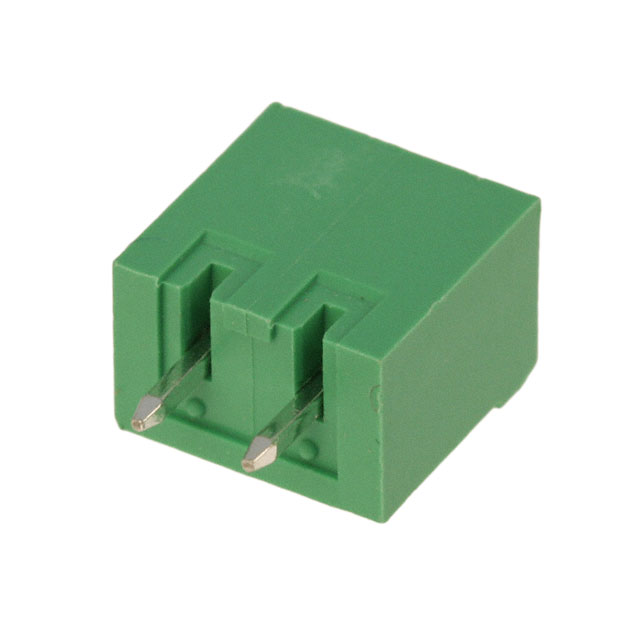
Set Up and Use TSC Timings

Texas Instruments
Set Up and Use TSC Timings
Texas Instruments
This application report helps users to understand set up and use the programming timings in the register-based touch screen controller (TSC) devices. It displays the timings functions and discusses the effect on the system interface traffic and on the system power consumption.
Managing Code Development Using the CCS Project Manager
Texas Instruments
Managing Code Development Using the CCS Project Manager
Texas Instruments
This application report presents the new features available in Code Composer Studio?(CCS) v2 that facilitate efficient project management. The CCS Project Management system has been broadened and improved to include: multi-project/multi-configuration support source code control as well as the ability to interface to external build processes.The material presented in this application note foc
ADMV1013-EVALZ

Analog Devices Inc.
ADMV1013-EVALZ
Analog Devices Inc.
The ADMV1013 is a wideband, microwave upconverter optimized for point to point microwave radio designs operating in the 24 GHz to 44 GHz radio frequency (RF) range.The upconverter offers two modes of frequency translation. The device is capable of direct conversion to RF from baseband in-phase quadrature (I/Q) input signals, as well as single-sideband (SSB) upconversion from complex intermediate frequency (IF) inputs. The baseband I/Q input path can be disabled and modulated complex IF signals, anywhere from 0.8 GHz to 6.0 GHz, can be inserted in the IF path and upconverted to 24 GHz to 44 GHz while suppressing the unwanted sideband by typically better than 26 dBc. The serial port interface (SPI) allows adjustment of the quadrature phase and mixer gate voltage to allow optimum sideband suppression and local oscillator (LO) nulling. In addition, the SPI interface allows powering down the output envelope detector to reduce power consumption.The ADMV1013 upconverter comes in a 40-terminal land grid array package (LGA) package. The ADMV1013 operates over the ?40?C to +85?C case temperature range.Applications Point to point microwave radios Radar, electronic warfare systems Instrumentation, automatic test equipment (ATE)
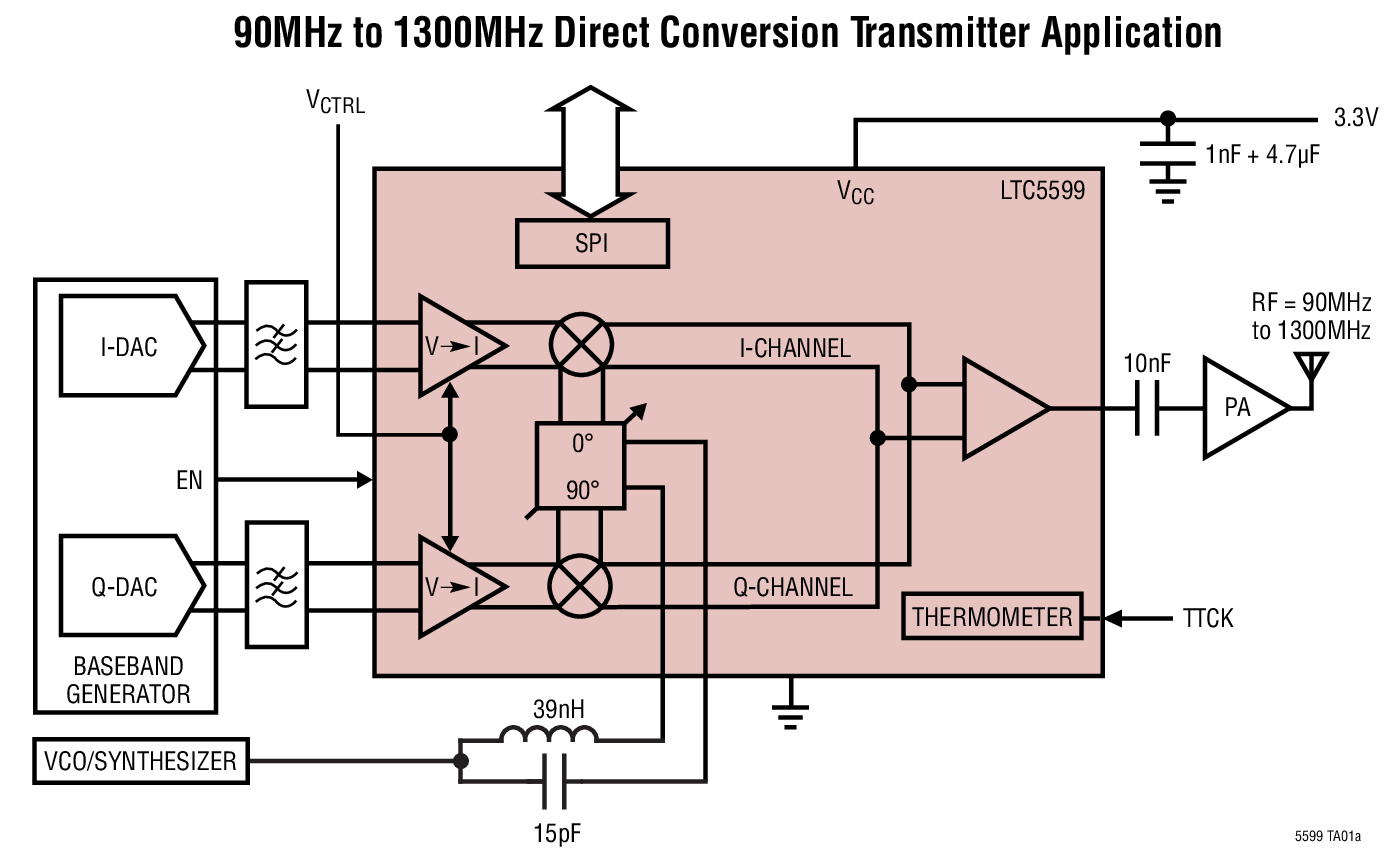
LTC5599 | 30MHz to 1300MHz Low Power Direct I/Q Modulator - DC590B Serial Board Required
Analog Devices Inc.
LTC5599 | 30MHz to 1300MHz Low Power Direct I/Q Modulator - DC590B Serial Board Required
Analog Devices Inc.
Demonstration circuit 2091A is optimized for evaluation of the LTC5599 low power direct quadrature modulator. The balanced I and Q baseband input ports can be either AC- or DC-coupled to a source with a common mode voltage level of about 1.4V. Fixed LC networks on the LO and RF ports cover a continuous 90MHz to 1300MHz range. The SPI interface controls the supply current, modulator gain, and allows optimization of the LO carrier feedthrough and side-band suppression.
CCFL to LED Conversion Power Supply

Texas Instruments
CCFL to LED Conversion Power Supply
Texas Instruments
Backlighting in portable device displays has historically utilized difficult-to-power cold cathode-fluorescent (CCFL) tubes. The tubes run on alternating current (AC) and need a large initial voltage of typically greater than 1 kV in order to fire them. Once they have fired: their operating voltage drops to under a kV. Because a notebook computer: for example: typically operates on low DC voltages (12V: 5V: 3.3V: etc.): a Royer oscillator must be used to transform this low voltage to the high-voltage AC required by the CCFL. The high voltages in the system are a potential safety hazard.The CCFL to LED conversion power supply reference design replaces the backlight CCFLs with strings of light-emitting diodes (LEDs). LEDs operate at low voltages of 3V TO 4V each and are extremely durable. They produce a brighter light whose spectral content can be more easily custom tailored to the needs of the backlight. Their brightness can be easily controlled to compensate for changes in ambient light. Also in contrast to the glass-tubed CCFLs: the physically small LEDs can be mounted on flexible strips: allowing the display to be more tolerant of and resistant to sudden shocks.The reference design: with National Semiconductor’s LM3431 three-channel: constant-current LED driver: uses two strings of six series-connected LEDs at a current of 30 mA per string. Each LED has a forward voltage drop of about 3.5V: making the total voltage across each string between 21V and 27V. With a 12V power source: the LM3431 is configured as a boost converter to generate this 21V to 27V output voltage.The design also includes a circuit utilizing a photodiode to make the brightness of the LEDs proportional to ambient light thus improving the readability of the display under all lighting conditions.
18Vdc-30Vdc Input: 20V @ 4.5A Output: 94% Efficient Active Clamp Forward

Texas Instruments
18Vdc-30Vdc Input: 20V @ 4.5A Output: 94% Efficient Active Clamp Forward
Texas Instruments
The PMP6797 reference design provides an isolated 20V at 4.5A from an 18V-30V input with greater than 94% efficiency. This design uses the UCC2897A active clamp controller with self-driven synchronous rectifiers.
26-515
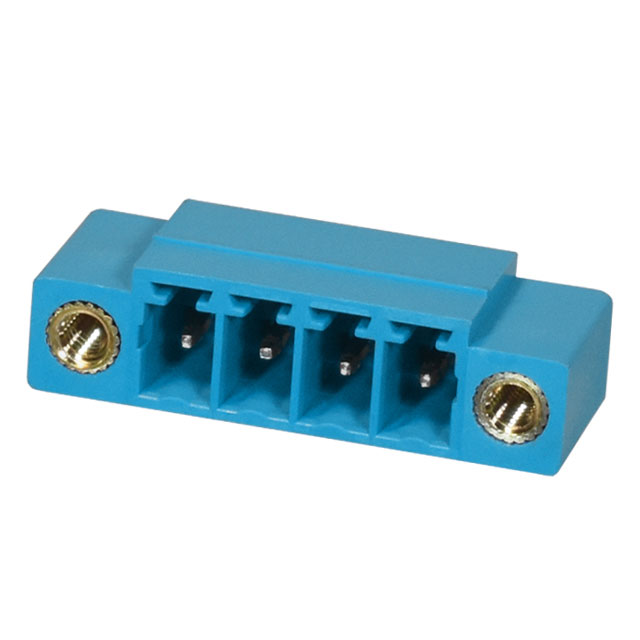
Same Sky (formerly CUI Devices)
From $0.27 • 1 k+ units available from DigiKey
26-515
Same Sky (formerly CUI Devices)
4 Position Terminal Block Header, Male Pins, Shrouded (4 Side) 0.150" (3.81mm) 90°, Right Angle Through Hole
| Distributor | SKU | Stock | MOQ | 1 | 10 | 50 | 100 | 1,000 | 10,000 | |
|---|---|---|---|---|---|---|---|---|---|---|
| DigiKey | 102-6515-ND | 3,055 | $0.77 | $0.57 | $0.45 | $0.40 | $0.32 | $0.27 | Buy |
LTC3851AUED Demo Board with Adjustable ILIMIT | 4.5V ≤ VIN ≤ 14V, VOUT = 1.5V @ 15A

Analog Devices Inc.
LTC3851AUED Demo Board with Adjustable ILIMIT | 4.5V ≤ VIN ≤ 14V, VOUT = 1.5V @ 15A
Analog Devices Inc.
Demonstration circuit 1432A is a synchronous buck controller featuring the LTC3851AEUD/LTC3851AEUD-1. It operates with an input voltage from 4.5V to 14V and provides 1.5V at up to 15A at the output. The demo circuit is available in two versions. DC1432A-A is configured with LTC3851AEUD which provides ISET function, while the DC1432A-B is configured with LTC3851AEUD-1 which provides PGOOD function.
Compensation Made SIMPLE With LM4360x, LM4600x
Texas Instruments
Compensation Made SIMPLE With LM4360x, LM4600x
Texas Instruments
Compensating a DC-DC buck converter is challenging if the designer is not familiar with the loop control theory. To achieve a stable design under all corner and adverse conditions, the user must prope

LM158N

National Semiconductor
From $10.55 • 100+ units available from DigiKey
LM158N
National Semiconductor
General Purpose Amplifier 2 Circuit TO-99-8
| Distributor | SKU | Stock | MOQ | 1 | 10 | 50 | 100 | 1,000 | 10,000 | |
|---|---|---|---|---|---|---|---|---|---|---|
| DigiKey | 2156-LM158AH-ND | 635 | $10.55 | $10.55 | $10.55 | $10.55 | Buy |
Boost Converter LED Driver Using 9V – 24V Input Range

Texas Instruments
Boost Converter LED Driver Using 9V – 24V Input Range
Texas Instruments
This reference design uses the TPS40211 current mode controller in a boost converter to regulate the current in a series string of 12 LEDs (42V) at 0.35A. Efficiency is greater than 94%.
12 Cell 4A Stackable Slave Bidirectional Active Cell Balancer Featuring LTC6804-2 and LTC3300-1(x2)

Analog Devices Inc.
12 Cell 4A Stackable Slave Bidirectional Active Cell Balancer Featuring LTC6804-2 and LTC3300-1(x2)
Analog Devices Inc.
Demonstration Circuit DC2100B-D is a stackable, bidirectional cell balancer slave board using the LTC6804-2 and the LTC3300-1 ICs to achieve active balancing of up to 12 Li-Ion cells. It requires the DC2100B-C for proper operation. The DC2100B-D uses a single LTC6804-2 Multi-Cell Addressable Battery Stack Monitor IC to measure cell voltages and two LTC3300-1 Synchronous Flyback ICs to provide active cell balancing. The DC2100B-C controller board contains a PIC18F47J53 microcontroller, the LTM2884 isolated USB transceiver, the LTC6804-2, two LTC3300-1 ICs, and the LTC6820 isoSPI Interface IC to facilitate isolated communication. Up to seven DC2100B-D boards can be connected to a DC2100B-C to build a stacked system of eight total boards.