Top Manufacturers
Stock

Displaying 2001 - 2020 of 5453

Evaluation Kits from Analog Devices Inc.

AD8195-EVALZ

Analog Devices Inc.
The AD8195 is an HDMI?/DVI buffer featuring equalized TMDS inputs and preemphasized TMDS outputs, ideal for systems with long cable runs. The AD8195 includes bidirectional buffering for the DDC bus and bidirectional buffering with integrated pull-up resistors for the CEC bus. The DDC and CEC buffers are powered independently of the TMDS buffers so that DDC/CEC functionality can be maintained when the system is powered off.The AD8195 is specified to operate over the ?40?C to +85?C temperature range.PRODUCT HIGHLIGHTS Enables a fully HDMI 1.3a-compliant front panel input. Supports data rates up to 2.25 Gbps, enabling 1080p deep color (12-bit color)? HDMI formats and greater than UXGA (1600 ? 1200) DVI resolutions. Input cable equalizer enables use of long cables; more than 20 meters (24 AWG) at data rates up to 2.25 Gbps. Auxiliary buffer isolates and buffers the DDC bus and CEC line for a single chip,? fully HDMI 1.3a-compliant solution. Auxiliary buffer is powered independently from the TMDS link so that DDC/CEC? functionality can be maintained when the system is powered off.APPLICATIONS Front panel buffers for advanced television (HDTV) sets

AD8225-EVALZ

Analog Devices Inc.
The AD8225 is an instrumentation amplifier with fixed gain of 5 that sets new standards of performance.The superior CMRR of the AD8225 enables rejection of high frequency common mode voltage (80 dB Min @10 kHz).As a result,higher ambient levels of noise from utility lines,industrial equipment and other radiating sources,are rejected. Extended CMV range enables the AD8225 to extract low-level differential signals in the presence of high common-mode dc voltage levels even at low supply voltages.

AD8277-EVALZ

Analog Devices Inc.
The AD8276/AD8277?are general-purpose, unity-gain difference amplifiers intended for precision signal conditioning in power critical applications that require both high performance and low power. They provide exceptional 86 dB common-mode rejection ratio (CMRR) and high bandwidth while amplifying signals well beyond the supply rails. The on-chip resistors are laser trimmed for gain drift of 1 ppm/?C and high CMRR. The AD8276/AD8277 also have extremely low gain drift vs. temperature.The common-mode range of the amplifiers extends to almost double the supply voltage, making these amplifiers ideal for single-supply applications that require a high common-mode voltage range. The internal resistors and electrostatic discharge (ESD) circuitry at the inputs also provide overvoltage protection to the op amps.The AD8276/AD8277 are unity-gain stable. Although they are optimized for use as difference amplifiers, they can also be connected in high precision, single-ended configurations with G = ?1, +1, or +2. The AD8276/AD8277 provide an integrated precision solution that has smaller size, lower cost, and improved performance than a discrete alternative.The AD8276/AD8277 operate on single supplies (2.0 V to 36 V) or dual supplies (?2 V to ?18 V). The maximum quiescent supply current is 200 ?A per channel, which is ideal for battery-operated and portable systems.The AD8276 is available in the space-saving 8-lead mini small outline package (MSOP) and the standard small outline (SOIC) package, as well as in die form, and the AD8277 is offered in a 14-lead SOIC package. Both are specified for performance over the industrial temperature range of ?40?C to +85?C and are fully RoHS compliant.Applications Voltage measurement and monitoring Current measurement and monitoring Differential output instrumentation amplifier Portable, battery-powered equipment Test and measurement

AD8304-EVALZ

Analog Devices Inc.
The AD8304 is a monolithic logarithmic detector optimized for the measurement of low frequency signal power in fiber optic systems. It uses an advanced translinear technique to provide an exceptionally large dynamic range in a versatile and easily used form. Its wide measurement range and accuracy are achieved using proprietary design techniques and precise laser trimming. In most applications only a single positive supply, VP, of 5 V will be required, but 3.0 V to 5.5 V can be used, and certain applications benefit from the added use of a negative supply, VN. When using low supply voltages, the log slope is readily altered to fit the available span. The low quiescent current and chip disable features facilitate use in battery-operated applications.The AD8304 is available in a 14-lead TSSOP package and specified for operation from -40?C to +85?C.

AD8305-EVALZ

Analog Devices Inc.
The AD8305 is an inexpensive microminiature logarithmic converter optimized for determining optical power in fiber optic systems. It uses an advanced implementation of a classic translinear (junction based) technique to provide a large dynamic range in a versatile and easily used form. A single-supply voltage of between 3 V and 12 V is adequate; dual supplies may optionally be used. The low quiescent current (typically 5 mA) permits use in battery-operated applications.The input current, IPD, of 10 nA to 1 mA applied to the INPT pin is the collector current of an optimally scaled NPN transistor, which converts this current to a voltage (VBE) with a precise logarithmic relationship. A second such converter is used to handle the reference current (IREF) applied to pin IREF. These input nodes are biased slightly above ground (0.5 V). This is generally acceptable for photodiode applications where the anode does not need to be grounded. Similarly, this bias voltage is easily accounted for in generating IREF. The output of the logarithmic front end is available at Pin VLOG.The basic logarithmic slope at this output is nominally 200 mV/decade (10 mV/dB). Thus, a 100 dB range corresponds to an output change of 1 V. When this voltage (or the buffer output) is applied to an ADC that permits an external reference voltage to be employed, the AD8305 voltage reference output of 2.5 V at Pin VREF can be used to improve the scaling accuracy. Suitable ADCs include the AD7810 (serial 10-bit), AD7823 (serial 8-bit), and AD7813 (parallel, 8-bit or 10-bit). Other values of the logarithmic slope can be provided using a simple external resistor network.The logarithmic intercept (also known as the reference current) is nominally positioned at 1 nA by the use of the externally generated current, IREF, of 10 ?A, provided by a 200 k? resistor connected between VREF, at 2.5 V, and the reference input, IREF, at 0.5 V. The intercept can be adjusted over a wide range by varying this resistor. The AD8305 can also operate in a log ratio mode, with the numerator current applied to INPT and the denominator current applied to IREF.A buffer amplifier is provided for driving a substantial load, for use in raising the basic slope of 10 mV/dB to higher values, as a precision comparator (threshold detector), or in implementing low-pass filters. Its rail-to-rail output stage can swing to within 100 mV of the positive and negative supply rails, and its peak current sourcing capacity is 25 mA.It is a fundamental aspect of translinear logarithmic converters that the small signal bandwidth falls as the current level diminishes, and the low frequency noise-spectral density increases. At the 10 nA level, the bandwidth of the AD8305 is about 50 kHz and increases in proportion to IPD up to a maximum value of about 15 MHz. Using the buffer amplifier, the increase in noise level at low currents can be addressed by using it to realize lowpass filters of up to three poles.The AD8305 is available in a 16-lead LFCSP package and is specified for operation from ?40?C to +85?C.Applications? Optical power measurement Wide range baseband logarithmic compression Measurement of current and voltage ratios Optical absorbance measurement

AD8306-EVALZ

Analog Devices Inc.
The AD8306 is a complete IF limiting amplifier, providing bothan accurate logarithmic (decibel) measure of the input signal(the RSSI function) over a dynamic range of 100 dB, and aprogrammable limiter output, useful from 5 MHz to 400 MHz.An evaluation board is available for this product and may be ordered using the following product number: AD8306-EVAL. Schematic and layout for this evaluation board is contained in the product datasheet.

AD8318-EP-EVALZ

Analog Devices Inc.
The AD8318 is a demodulating logarithmic amplifier, capable of accurately converting an RF input signal to a corresponding decibel-scaled output voltage. It employs the progressive compression technique over a cascaded amplifier chain, each stage of which is equipped with a detector cell. The device is used in measurement or controller mode. The AD8318 maintains accurate log conformance for signals of 1 MHz to 6 GHz and provides useful operation to 8 GHz. The input range is typically 60 dB (re: 50 ?) with error less than ?1 dB. The AD8318 has a 10 ns response time that enables RF burst detection to beyond 45 MHz. The device provides unprecedented logarithmic intercept stability vs. ambient temperature conditions. A 2 mV/?C slope temperature sensor output is also provided for additional system monitoring. A single supply of 5 V is required. Current consumption is typically 68 mA. Power consumption decreases to

AD8337-EVALZ

Analog Devices Inc.
The AD8337 is a low noise, single-ended, linear-in-dB, general-purpose variable gain amplifier (VGA) usable at frequencies from dc to 100 MHz; the ?3 dB bandwidth is 280 MHz. Excellent bandwidth uniformity across the entire gain range and low output-referred noise makes the AD8337 ideal for gain trim applications and for driving high speed analog-to-digital converters (ADCs).Excellent dc characteristics combined with high speed make the AD8337 particularly suited for industrial ultrasound, PET scanners, and video applications. Dual-supply operation enables gain control of negative-going pulses such as generated by photodiodes or photomultiplier tubes.The AD8337 uses the popular and versatile X-AMP? architecture, exclusively from Analog Devices, Inc., with a gain range of 24 dB. The gain control interface provides precise linear-in-dB scaling of 19.7 dB/V, referenced to VCOM.The AD8337 includes an uncommitted operational current-feedback preamplifier (PrA) that operates in inverting or noninverting configurations. Using external resistors, the device can be configured for gains of 6 dB or greater. The AD8337 is characterized by a noninverting PrA gain of 2? using two external 100 ? resistors. The attenuator has a range of 24 dB, and the output amplifier has a fixed gain of 8? (18.06 dB). The lowest nominal gain range is 0 dB to 24 dB and can be shifted up or down by adjusting the preamp gain. Multiple AD8337s can be connected in series for larger gain ranges, and for interstage filtering to suppress noise and distortion, and for nulling offset voltages.The operating temperature range is ?40?C to +85?C, and it is available in an 8-lead, 3 mm ? 3 mm LFCSP.Applications Gain trim PET scanners High performance AGC systems I/Q signal processing Video Industrial and medical ultrasound Radar receivers

AD8338-EVALZ

Analog Devices Inc.
The AD8338 is a variable gain amplifier (VGA) for applicationsthat require a fully differential signal path, low power, low noise,and a well-defined gain over frequency. Although the inputs aredifferential, the device can also be driven with a single-endedsource if required.The basic gain function is linear-in-dB and is controlled by thevoltage applied to Pin GAIN. The nominal gain range spansfrom 0 dB to 80 dB for control voltages between 0.1 V to 1.1 Vwith a slope of 12.5 mV/dB. The nominal gain range can beshifted up or down via direct access to Pin INPD and Pin INMD,the current inputs of the VGA. For example, driving the INPDand INMD pins with 50 ? resistors shifts the gain range up by20 dB, that is, 20 dB to 100 dB, and lowers the input referrednoise of the device to 1.5 nV/?Hz. Additionally, the gain slopecan be inverted via logic Pin MODE.The AD8338 includes additional circuit blocks to enable inputoffset correction and automatic gain control (AGC). DC offsetvoltages are removed by the offset correction circuit, whichbehaves like a high-pass filter whose corner is set with an externalcapacitor. The AGC function varies the gain of the AD8338 tomaintain a constant rms output voltage. An externally appliedvoltage to Pin VAGC with respect to the voltage at Pin VREFsets the output rms amplitude. A capacitor from Pin DETO toground sets the response time of the AGC circuit.The AD8338 offers additional versatility by providing access tothe internal summing nodes of the VGA core and the outputamplifiers. With the addition of a few external passive components,users can customize the gain, bandwidth, input impedance, andnoise profile of the device to fit their application.The AD8338 uses a single-supply voltage of 3.0 V to 5.0 V andis very power efficient, consuming as little as 3 mA quiescentcurrent at mid gain. The AD8338 is available in a 3 mm ? 3 mm,RoHS-compliant, 16-lead LFCSP and is specified over theindustrial temperature range of ?40?C to +85?C.APPLICATIONS Front end for inductive telemetry systems Ultrasonic signal receivers Signal compression for driving an ADC AGC amplifiers

AD8339-EVALZ

Analog Devices Inc.
The AD8339 is a quad I/Q demodulator configured to be driven by a low noise preamplifier with differential outputs. It is optimized for the LNA in the AD8332 / AD8334 / AD8335 family of VGAs. The part consists of four identical I/Q demodulators with a 4? local oscillator (LO) input that divides this signal and generates the necessary 0? and 90? phases of the internal LO that drive the mixers. The four I/Q demodulators can be used independently of each other (assuming that a common LO is acceptable) because each has a separate RF input.Continuous wave (CW) analog beamforming (ABF) and I/Q demodulation are combined in a single 40-lead ultracompact chip scale device, making the AD8339 particularly applicable in high density ultrasound scanners. In an ABF system, time domain coherency is achieved following the appropriate phase alignment and summation of multiple receiver channels. A reset pin synchronizes multiple ICs to start each LO divider in the same quadrant. Sixteen programmable 22.5? phase increments are available for each channel. For example, if Channel 1 is used as a reference and Channel 2 has an I/Q phase lead of 45?, then the user can phase align Channel 2 with Channel 1 by choosing the correct code.The mixer outputs are in current form for convenient summation. The independent I and Q mixer output currents are summed and converted to a voltage by a low noise, high dynamic range, current-to-voltage (I-V) transimpedance amplifier, such as the AD8021?or the AD829. Following the current summation, the combined signal is applied to a high resolution analog-to-digital converter (ADC), such as the AD7665?(16-bit, 570 kSPS).An SPI-compatible serial interface port is provided to easily program the phase of each channel; the interface allows daisy chaining by shifting the data through each chip from SDI to SDO. The SPI also allows for power-down of each individual channel and the complete chip. During power-down, the serial interface remains active so that the device can be programmed again.The dynamic range is typically 160 dB/Hz at the I and Q outputs. The AD8339 is available in a 6 mm ? 6 mm, 40-lead LFCSP and is specified over the industrial temperature range of ?40?C to +85?C.APPLICATIONS Medical imaging (CW ultrasound beamforming) Phased array systems Radar Adaptive antennas Communication receivers

AD8341-EVALZ

Analog Devices Inc.
The AD8341 vector modulator performs arbitrary amplitudeand phase modulation of an RF signal. Because the RF signalpath is linear, the original modulation is preserved. This part canbe used as a general-purpose RF modulator, a variable attenuator/phase shifter, or a remodulator. The amplitude can be controlledfrom a maximum of ?4.5 dB to less than ?34.5 dB, and the phasecan be shifted continuously over the entire 360? range. For maximumgain, the AD8341 delivers an OP1dB of 8.5 dBm, an OIP3of 17.5 dBm, and an output noise floor of ?150.5 dBm/Hz,independent of phase. It operates over a frequency range of1.5 GHz to 2.4 GHz.The baseband inputs in Cartesian I and Q format control theamplitude and phase modulation imposed on the RF inputsignal. Both I and Q inputs are dc-coupled with a ?500 mVdifferential full-scale range. The maximum modulationbandwidth is 230 MHz, which can be reduced by adding externalcapacitors to limit the noise bandwidth on the control lines.Both the RF inputs and outputs can be used differentially orsingle-ended and must be ac-coupled. The RF input and outputimpedances are nominally 50 ? over the operating frequencyrange. The DSOP pin allows the output stage to be disabledquickly in order to protect subsequent stages from overdrive.The AD8341 operates off supply voltages from 4.75 V to 5.25 Vwhile consuming approximately 125 mA.The AD8341 is fabricated on Analog Devices? proprietary, highperformance 25 GHz SOI complementary bipolar IC process. Itis available in a 24-lead, lead-free LFCSP package and operatesover a ?40?C to +85?C temperature range. Evaluation boardsare available. Applications RF PA linearization/RF predistortion Amplitude and phase modulation Variable attenuators and phase shifters CDMA2000, WCDMA, GSM/EDGE linear power amplifiers Smart antennasAvailabilitySamples part number AD8341ACP and an evaluation board, part number AD8341-EVAL, are available.Companion ProductsAD8302 - LF - 2.7GHz RF/IF Gain Phase DetectorAD8340 - RF Vector Modulator 700MHz to 1000MHzOther Modulator / Demodulator ProductsAD8345 - 250MHz to 1000MHz Low Noise RF/IF ModulatorAD8346 - 800MHz to 2.5GHz Lower Power Direct Up-Conversion ModulatorAD8347 - 800MHz to 2.7GHz Direct Conversion DemodulatorAD8348 - 50MHz to 1000MHz RF/IF Quadrature DemodulatorAD8349 - 700MHz - 2.7GHz Low Noise Direct Up Conversion Modulator

AD8361-EVALZ

Analog Devices Inc.
The AD8361 is a mean-responding power detector for use inhigh frequency receiver and transmitter signal chains, up to2.5 GHz. It is very easy to apply. It requires a single supply onlybetween 2.7 V and 5.5 V, a power supply decoupling capacitor,and an input coupling capacitor in most applications. Theoutput is a linear-responding dc voltage with a conversion gainof 7.5 V/V rms. An external filter capacitor can be added toincrease the averaging time constant.The AD8361 is intended for true power measurement of simpleand complex waveforms. The device is particularly useful formeasuring high crest-factor (high peak-to-rms ratio) signals,such as CDMA and W-CDMA.The AD8361 has three operating modes to accommodate avariety of analog-to-digital converter requirements: Ground reference mode, in which the origin is zero. Internal reference mode, which offsets the output 350 mV above ground. Supply reference mode, which offsets the output to VS/7.5.The AD8361 is specified for operation from ?40?C to +85?Cand is available in 8-lead MSOP and 6-lead SOT-23 packages. Itis fabricated on a proprietary high fT silicon bipolar process.

AD8364-EVALZ

Analog Devices Inc.
The AD8364 is a true rms, responding, dual-channel RF powermeasurement subsystem for the precise measurement and controlof signal power. The flexibility of the AD8364 allows communicationssystems, such as RF power amplifiers and radio transceiverAGC circuits, to be monitored and controlled with ease. Operatingon a single 5 V supply, each channel is fully specified for operationup to 2.7 GHz over a dynamic range of 60 dB. The AD8364provides accurately scaled, independent, rms outputs of both RFmeasurement channels. Difference output ports, which measurethe difference between the two channels, are also available. Theon-chip channel matching makes the rms channel differenceoutputs extremely stable with temperature and process variations.The device also includes a useful temperature sensor with anaccurately scaled voltage proportional to temperature, specifiedover the device operating temperature range. The AD8364 canbe used with input signals having rms values from ?55 dBm to+5 dBm referred to 50 ? and large crest factors with noaccuracy degradation. Integrated in the AD8364 are two matched AD8362 channels(see the AD8362 data sheet for more information) with improvedtemperature performance and reduced log conformance ripple.Enhancements include improved temperature performance andreduced log-conformance ripple compared to the AD8362. On-chipwide bandwidth output operational amplifiers are connectedto accom-modate flexible configurations that support manysystem solutions.The device can easily be configured to provide four rmsmeasurements simultaneously. Linear-in-dB rms measurementsare supplied at OUTA and OUTB, with conveniently scaledslopes of 50 mV/dB. The rms difference between OUTA andOUTB is available as differential or single-ended signals atOUTP and OUTN. An optional voltage applied to VLVLprovides a common mode reference level to offset OUTP andOUTN above ground.The AD8364 is supplied in a 32-lead, 5 mm ? 5 mm LFCSP, forthe operating temperature of ?40?C to +85?C.Applications Wireless infrastructure power amplifier linearization/control Antenna VSWR monitor Gain and power control and measurement Transmitter signal strength indication (TSSI) Dual-channel wireless infrastructure radios

AD8368-EVALZ

Analog Devices Inc.
The AD8368 is a variable gain amplifier (VGA) with analog linear-in-dB gain control that can be used from low frequencies to 800 MHz. Its excellent gain range, conformance, and flatness are attributed to the Analog Devices, Inc. X-AMP? architecture, an innovative technique for implementing high performance variable gain control.The gain range of ?12 dB to +22 dB is scaled accurately to 37.5 dB/V with excellent conformance error. The AD8368 has a 3 dB bandwidth of 800 MHz that is nominally independent of gain setting. At 140 MHz, the OIP3 is 33 dBm at maximum gain. The output noise floor is ?143 dBm/Hz, which corresponds to a 9.5 dB noise figure at maximum gain. The single-ended input and output impedances are nominally 50 ?.The gain of the AD8368 can be configured to be an increasing or decreasing function of the gain control voltage depending on whether the MODE pin is pulled to the positive supply or to ground, respectively. When MODE is pulled high, the AD8368 operates as a typical VGA with increasing gain.By connecting MODE to ground and using the on-board rms detector, the AD8368 can be configured as a complete automatic gain control (AGC) system with RSSI. The output power is accurately leveled to the internal default setpoint of 63 mV rms (?11 dBm referenced to 50 ?), independent of the waveform crest factor. Because the uncommitted detector input is available at DETI, the AGC loop can level the signal at the AD8368 output or at any other point in the signal chain over a maximum input power range of 34 dB. Furthermore, the setpoint level can be raised by dividing down the output signal before applying it to the detector.The AD8368 operates from a supply voltage of 4.5 V to 5.5 V and consumes 60 mA of current. It can be fully powered down to

AD8372-EVALZ

Analog Devices Inc.
The AD8372 is a dual, digitally controlled, variable gainamplifier (VGA) that provides precise gain control, high IP3,and low noise figure. The excellent distortion performance andmoderate signal bandwidth make the AD8372 a suitable gain control device for a variety of multichannel receiverapplications.For wide input dynamic range applications, the AD8372provides a broad 41 dB gain range. The gain is programmedthrough a bidirectional 4-pin serial interface. The serial interface consists of a clock, latch, data input, and data output linesfor each channel. The AD8372 provides the ability to set the transconductance of the output stage using a single external resistor. The RXT1 and RXT2 pins provide a band gap derived stable reference voltage of 1.56 V. Typically 2.0 k? shunt resistors to ground are used toset the maximum gain to a nominal value of 31 dB. The currentsetting resistors can be adjusted to manipulate the gain anddistortion performance of each channel. This is a flexible feature in applications where it is desirable to trade off distortion performance for lower power consumption.The AD8372 is powered on by applying the appropriate logiclevel to the ENB1, ENB2 pins. When powered down, the AD8372consumes less than 2.6 mA and offers excellent input-to-outputisolation. The gain setting is preserved when powered down.Fabricated on an Analog Devices, Inc., high frequency BiCMOS process, the AD8372 provides precise gain adjustment capabilities with good distortion performance. The quiescent current of theAD8372 is typically 106 mA per channel. The AD8372 amplifier comes in a compact, thermally enhanced 5 mm ? 5 mm 32-leadLFCSP package and operates over the temperature range of ?40?C to +85?C.Applications Differential ADC drivers CMTS upstream direct sampling receivers CATV modem signal scaling Generic RF/IF gain stages Single-ended-to-differential conversion

AD8418ARM-EVALZ

Analog Devices Inc.
The AD8418A is a high voltage, high resolution current shunt amplifier. It features an initial gain of 20 V/V, with a maximum ?0.15% gain error over the entire temperature range. The buffered output voltage directly interfaces with any typical converter. The AD8418A offers excellent input common-mode rejection from ?2 V to +70 V. The AD8418A performs bidirectional current measurements across a shunt resistor in a variety of automotive and industrial applications, including motor control, power management, and solenoid control.The AD8418A offers breakthrough performance throughout the ?40?C to +150?C temperature range. It features a zero drift core, which leads to a typical offset drift of 0.1 ?V/?C throughout the operating temperature range and the common-mode voltage range. The AD8418A is qualified for automotive applications. The device includes EMI filters and patented circuitry to enable output accuracy with pulse-width modulation (PWM) type input common-mode voltages. The typical input offset voltage is ?100 ?V. The AD8418A is offered in an 8-lead MSOP and an 8-lead SOIC_N package with a 10-lead MSOP pinout option engineered for failure mode and effects analysis (FMEA).Applications High-side current sensing in Motor controls Solenoid controls Power management Low-side current sensing Diagnostic protection

AD9081-FMCA-EBZ

Analog Devices Inc.
The AD9081 mixed signal front end (MxFE?) is a highly integrated device with four 16-bit, 12 GSPS maximum sample rate, RF digital-to-analog converter (DAC) cores, and four 12-bit, 4 GSPS rate, RF analog-to-digital converter (ADC) cores. The AD9081 is well suited for applications requiring both wideband ADCs and DACs to process signal(s) that have wide instantaneous bandwidth. The device features eight transmit and eight receive lanes that support 24.75 Gbps/lane JESD204C or 15.5 Gbps/lane JESD204B standards. The device also has an on-chip clock multiplier, and a digital signal processing (DSP) capability targeted at either wideband or multiband direct to RF applications. The DSP datapaths can be bypassed to allow a direct connection between the converter cores and the JESD204 data transceiver port. The device also features low latency loopback and frequency hopping modes targeted at phase array radar system and electronic warfare applications. Two models for the AD9081 are offered. The 4D4AC model supports the full instantaneous channel bandwidth, whereas the 4D4AB model supports a maximum instantaneous bandwidth of 600 MHz per channel by automatically configuring the DSP to limit the instantaneous bandwidth at startup.APPLICATIONS Wireless communications infrastructure Microwave point-to-point, E-band and 5G mmWave Broadband communications systems DOCSIS 3.1 and 4.0 CMTS Phased array radar and electronic warfare Electronic test and measurement systems

AD9094-1000EBZ

Analog Devices Inc.
The AD9094 is an 8-bit, 1 GSPS, quad analog-to-digital converter (ADC). The device has an on-chip buffer and a sample-and-hold circuit designed for low power, small size, and ease of use. The device is designed to sample wide bandwidth analog signals up to 1.4 GHz. The AD9094 is optimized for wide input bandwidth, a high sampling rate, high works linearity, and low power in a small package. The quad-ADC cores feature multistage, differential pipelined architecture with integrated output error correction logic. Each ADC features wide bandwidth inputs that support a variety of user-selectable input ranges. An integrated voltage reference facilitates design considerations. The analog inputs and clock signals are differential inputs. Users can configure each pair of intermediate frequency (IF) receiver outputs onto either one or two lanes of JESD204B Subclass 1 or Subclass 0, high speed, serialized outputs, depending on the sample rate and the acceptable lane rate of the receiving logic device. Multiple device synchronization is supported through the SYSREF?, SYNCINB?AB, and SYNCINB?CD input pins. The AD9094 has flexible power-down options that allow significant power savings when desired. To program the power down options, use the 1.8 V capable, serial port interface (SPI). The AD9094 is available in a Pb-free, 72-lead, lead frame chip scale package (LFCSP) and is specified over a junction temperature range of ?40?C to +105?C. This product may be protected by one or more U.S. or international patents. Note that throughout the data sheet, multifunction pins, such as PDWN/STBY, are referred to either by the entire pin name or by a single function of the pin, for example, PDWN, when only that function is relevant. PRODUCT HIGHLIGHTS Low power consumption per channel. JESD204B lane rate support up to 15 Gbps. Wide, full power bandwidth supports IF sampling of signals up to 1.4 GHz. Buffered inputs ease filter design and implementation. Four integrated wideband decimation filters and numerically controlled oscillator (NCO) blocks supporting multiband receivers. Programmable fast overrange detection. On-chip temperature diode for system thermal management.APPLICATIONSLaser imaging, detection, and ranging (LIDAR)CommunicationsDigital oscilloscope (DSO)Ultrawideband satellite receiversInstrumentation

AD9106-ARDZ-EBZ

Analog Devices Inc.
The AD9106 TxDAC? and waveform generator is a high performance, quad digital-to-analog converter (DAC) integrating on-chip pattern memory for complex waveform generation with a direct digital synthesizer (DDS). The DDS is a 12-bit output, up to 180 MHz master clock sinewave generator with a 24-bit tuning word allowing 10.8 Hz/LSB frequency resolution. The DDS has a single frequency output for all four DACs and independent programmable phase shift outputs for each of the four DACs.SRAM data can include directly generated stored waveforms, amplitude modulation patterns applied to DDS outputs, or DDS frequency tuning words.An internal pattern control state machine allows the user to program the pattern period for all four DACs as well as the start delay within the pattern period for the signal output on each DAC channel.Registers accessed using the serial peripheral interface (SPI) configure the digital waveform generator and load patterns into the SRAM.There are gain adjustment factors and offset adjustments applied to the digital signals on their way into the four DACs.The AD9106 offers exceptional ac and dc performance and supports DAC sampling rates up to 180 MSPS. The flexible power supply operating range of 1.8 V to 3.3 V and low power dissipation of the AD9106 make it well suited for portable and low power applications.Applications Medical instrumentation Ultrasound transducer excitation Portable instrumentation Signal generators, arbitrary waveform generators

AD9117-DPG2-EBZ

Analog Devices Inc.
The AD9114/AD9115/AD9116/AD9117 are pin-compatible dual, 8-/10-/12-/14-bit, low power digital-to-analog converters (DACs) that provide a sample rate of 125 MSPS. These TxDAC? converters are optimized for the transmit signal path of communication systems. All the devices share the same interface, package, and pinout, providing an upward or downward component selection path based on performance, resolution, and cost.The AD9114/AD9115/AD9116/AD9117 offer exceptional ac and dc performance and support update rates up to 125 MSPS.The flexible power supply operating range of 1.8 V to 3.3 V and low power dissipation of the AD9114/AD9115/AD9116/AD9117 make them well suited for portable and low power applications.PRODUCT HIGHLIGHTS Low Power. DACs operate on a single 1.8 V to 3.3 V supply; total power consumption reduces to 225 mW at 100 MSPS. Sleep and power-down modes are provided for low power idle periods. CMOS Clock Input. High speed, single-ended CMOS clock input supports a 125 MSPS conversion rate. Easy Interfacing to Other Components. Adjustable output common mode from 0 V to 1.2 V allows for easy interfacing to other components that accept common-mode levels greater than 0 V.?APPLICATIONS Wireless infrastructures Picocell, femtocell base stations Medical instrumentation Ultrasound transducer excitation Portable instrumentation Signal generators, arbitrary waveform generators

Displaying 2001 - 2020 of 5453

Latest Parts

IN STOCK 13664
Buy

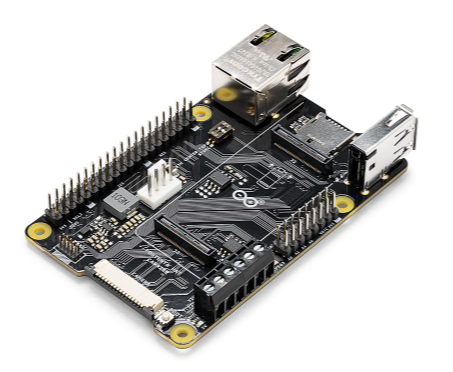
ASX00049

Arduino

* $43.18 - * $50.33

IN STOCK 2847
Buy

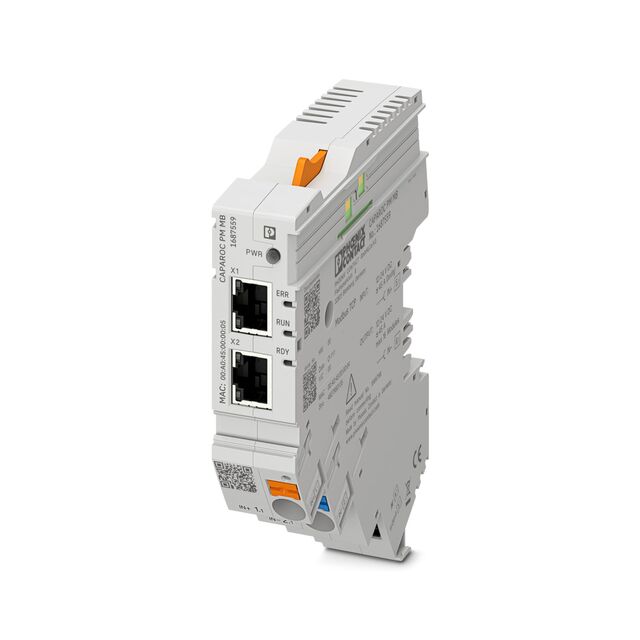
1687559

Phoenix Contact Ltd

[no prices available]

IN STOCK 4
Buy

Reference Designs

RD006

Wurth Elektronik

RD006 - 3 W Dual-output isolated auxiliary supply for communication interfaces and measurement systems

CN0583

Analog Devices Inc.

Multistandard Micropower Verified Smoke Detection System-on-Module

Technical Resources

EVALUATION KITS

EVAL-AD7124-8SDZ

Analog Devices Inc.

$0.00 - * $79.08

IN STOCK 792
Buy
View All