Top Manufacturers
MORE
Stock

Displaying 1201 - 1220 of 12877

Evaluation Kits

AD8147-EVALZ

Analog Devices Inc.
The AD8146/AD8147/AD8148 are high speed triple, differential or single-ended input to differential output drivers. The AD8146 and AD8147 have a fixed gain of 2, and the AD8148 has a fixed gain of 4. They are all specifically designed for the highest resolution component video signals but can be used for any type of analog signals or high speed data transmission over either Category 5 UTP cable or differential printed circuit board (PCB) transmission lines.These drivers can be used with the AD8145 triple differential-to-singled-ended receiver, and the AD8117 crosspoint switch to produce a video distribution system capable of supporting UXGA or 1080p signals.Manufactured on the Analog Devices, Inc. second generation XFCB bipolar process, the drivers have large signal bandwidths of 700 MHz and fast slew rates. They have an internal common-mode feedback feature that provides output amplitude and phase matching that is balanced to ?60 dB at 50 MHz, suppressing even-order harmonics and minimizing radiated electromagnetic interference (EMI).The common-mode voltage of each AD8146 output can be set to any level, allowing transmission of signals over the common-mode voltages. The AD8147 and AD8148 encode the vertical and horizontal sync signals on the common-mode voltages of the outputs. All outputs can be independently set to low voltage states to be used with series diodes for line isolation, allowing easy differential multiplexing over the same twisted pair cable.The AD8146/AD8147/AD8148 are available in a 24-lead LFCSP and operate over a temperature range of ?40?C to +85?C.ApplicationsQXGA or 1080p video transmission KVM networking Video over unshielded twisted pair (UTP) Differential signal multiplexing

AD8155-EVALZ

Analog Devices Inc.
The AD8155 is an asynchronous, protocol-agnostic, dual-lane 2:1 switch with a total of six differential CML inputs and six differential CML outputs. The signal path supports NRZ signaling with data rates up to 6.5 Gbps per lane. Each lane offers programmable receive equalization, programmable output pre-emphasis, programmable output levels, and loss-of-signal detection.The nonblocking switch-core of the AD8155 implements a 2:1 multiplexer and 1:2 demultiplexer per lane and supports independent lane switching through the two select pins, SEL[1:0]. Each port is a two-lane link. Every lane implements an asynchronous path supporting dc to 6.5 Gbps NRZ data, fully independent of other lanes. The AD8155 has low latency and very low lane-to-lane skew.The main application of the AD8155 is to support redundancy on both the backplane and the line interface sides of a serial link. The demultiplexing path implements unicast and bicast capability, allowing the part to support either 1+1 or 1:1 redundancy.The AD8155 is also suited for testing high speed serial links because of its ability to duplicate incoming data. In a port monitoring application, the AD8155 can maintain link connectivity with a pass-through connection from Port C to Port A while sending a duplicate copy of the data to test equipment on Port B.The rich feature set of the AD8155 can be controlled either through external toggle pins or by setting on-chip control registers through the I2C? interface.ApplicationsLow cost redundancy switchSONET OC48/SDH16 and lower data ratesRXAUI, 4x Fibre Channel, Infiniband , and GbE over backplaneOIF CEI 6.25 Gbps over backplaneSerial data-level shift2-/4-/6-lane equalizers or redrivers

AD8188-EVALZ

Analog Devices Inc.
The AD8188 (G = 1) is a high speed, single-supply, triple 2-to-1 multiplexer. It offers -3 dB small signal bandwidth of 350 MHz and -3 dB large signal bandwidth of 300 MHz, along with a slew rate in excess of 1000 V/?s. With -84 dB of all hostile crosstalk and -95 dB off isolation, the part is well suited for many high speed applications. The differential gain and differential phase error of 0.05% and 0.05? respectively, along with 0.1 dB flatness to 70 MHz, make the AD8188 ideal for professional and component video multiplexing. The part offers 4 ns switching time, making them an excellent choice for switching video signals, while consuming less than 20 mA on a single 5 V supply (100 mW). The device has a high speed disable feature that sets the outputs into a high impedance state. This allows the building of larger input arrays while minimizing off-channel output loading. The device is offered in a 24-lead TSSOP.

AD8209A-EVALZ

Analog Devices Inc.
The AD8209A is a single-supply difference amplifier ideal for amplifying and low-pass filtering small differential voltages in the presence of a large common-mode voltage. The input common-mode voltage range extends from ?2 V to +50 V at a single 5 V supply. The AD8209A is qualified per AEC-Q100 specifications. The amplifier offers enhanced input overvoltage and ESD protection, and includes electromagnetic interference (EMI) filtering.Automotive applications demand robust, precision components for improved system control. The AD8209A provides excellent ac and dc performance, minimizing errors in the application. Typical offset and gain drift in the MSOP package are less than 5 ?V/?C and ?5 ppm/?C, respectively. The device also delivers a minimum common-mode rejection ratio (CMRR) of 80 dB from dc to 10 kHz.The AD8209A features an externally accessible 100 k? resistor at the output of the preamplifier (A1) that can be used for low-pass filtering and for establishing gains other than 14 V/V.Applications High-side current sensing Motor controls Solenoid controls Power management Low-side current sensing Diagnostic protection

AD8224-EVALZ

Analog Devices Inc.
The AD8224 is the first single-supply, JFET input instrumentation amplifier available in the space-saving 16-lead, 4 mm ? 4 mm LFCSP. It requires the same board area as a typical single instrumentation amplifier yet doubles the channel density and offers a lower cost per channel without compromising performance.Designed to meet the needs of high performance, portable instrumentation, the AD8224 has a minimum common-mode rejection ratio (CMRR) of 86 dB at dc and a minimum CMRR of 80 dB at 10 kHz for G = 1. Maximum input bias current is 10 pA and typically remains below 300 pA over the entire industrial temperature range. Despite the JFET inputs, the AD8224 typically has a noise corner of only 10 Hz.With the proliferation of mixed-signal processing, the number of power supplies required in each system has grown.Designed to alleviate this problem, the AD8224 can operate on a ?18 V dual supply, as well as on a single +5 V supply. The device?s rail-to-rail output stage maximizes dynamic range on the low voltage supplies common in portable applications. Its ability to run on a single 5 V supply eliminates the need for higher voltage, dual supplies. The AD8224 draws 750 ?A of quiescent current per amplifier, making it ideal for battery powered devices.In addition, the AD8224 can be configured as a single-channel, differential output, instrumentation amplifier. Differential outputs provide high noise immunity, which can be useful when the output signal must travel through a noisy environment, such as with remote sensors. The configuration can also be used to drive differential input ADCs.For a single-channel version, use the AD8220.Applications Medical instrumentation Precision data acquisition Transducer interfaces Differential drives for high resolution input ADCs Remote sensors

AD8253-EVALZ

Analog Devices Inc.
The AD8253 is an instrumentation amplifier with digitally programmable gains that has gigaohm (G?) input impedance, low output noise, and low distortion, making it suitable for interfacing with sensors and driving high sample rate analog-to-digital converters (ADCs).It has a high bandwidth of 10 MHz, low THD of ?110 dB, and fast settling time of 780 ns (maximum) to 0.001%. Offset drift and gain drift are guaranteed to 1.2 ?V/?C and 10 ppm/?C, respectively, for G = 1000. In addition to its wide input common voltage range, it boasts a high common-mode rejection of 100 dB at G = 1000 from dc to 20 kHz. The combination of precision dc performance coupled with high speed capabilities makes the AD8253 an excellent candidate for data acquisition. Furthermore, this monolithic solution simplifies design and manufacturing and boosts performance of instrumentation by maintaining a tight match of internal resistors and amplifiers.The AD8253 user interface consists of a parallel port that allows users to set the gain in one of two different ways (see Figure 1 for the functional block diagram). A 2-bit word sent via a bus can be latched using the WR input. An alternative is to use transparent gain mode, where the state of logic levels at the gain port determines the gain.The AD8253 is available in a 10-lead MSOP package and is specified over the ?40?C to +85?C temperature range, making it an excellent solution for applications where size and packing density are important considerations.ApplicationsData acquisition Biomedical analysis Test and measurement

AD8279-EVALZ

Analog Devices Inc.
The AD8278 and AD8279 are general-purpose difference amplifiers intended for precision signal conditioning in power critical applications that require both high performance and low power. The AD8278 and AD8279 provide exceptional common-mode rejection ratio (80 dB) and high bandwidth while amplifying input signals that are well beyond the supply rails. The on-chip resistors are laser trimmed for excellent gain accuracy and high CMRR. They also have extremely low gain drift vs. temperature.The common-mode range of the amplifier extends to almost triple the supply voltage (for G = ?), making the amplifer ideal for single-supply applications that require a high common-mode voltage range. The internal resistors and ESD circuitry at the inputs also provide overvoltage protection to the op amp.The AD8278 and AD8279 can be used as difference amplifiers with G = ? or G = 2. They can also be connected in a high precision, single-ended configuration for non inverting and inverting gains of ??, ?2, +3, +2, +1?, +1, or +?. The AD8278 and AD8279 provide an integrated precision solution that has a smaller size, lower cost, and better performance than a discrete alternative.The AD8278 and AD8279 operate on single supplies (2.0 V to 36 V) or dual supplies (?2 V to ?18 V). The maximum quiescent supply current is 200 ?A, which is ideal for battery-operated and portable systems. For unity-gain difference amplifiers with similar performance, refer to the AD8276 and AD8277 data sheets.The AD8278 is available in the space-saving 8-lead MSOP and SOIC packages, and the AD8279 is offered in a 14-lead SOIC package. Both are specified for performance over the industrial temperature range of ?40?C to +85?C and are fully RoHS compliant.ApplicationsVoltage measurement and monitoringCurrent measurement and monitoringInstrumentation amplifier building blockPortable, battery-powered equipmentTest and measurement

AD8280-EVALZ

Analog Devices Inc.
The AD8280 is a hardware-only safety monitor for lithium ionbattery stacks. The device has inputs to monitor six battery cellsand two temperature sensors (either NTC or PTC thermistors).The device is designed to be daisy-chained with additional AD8280devices to monitor a stack of significantly more than six cellswithout the need for numerous isolators. The output can beconfigured for an independent or shared alarm state.The AD8280 functions independently from a primarymonitor and contains a reference and LDO, both of which arepowered completely from the battery cell stack. The reference, inconjunction with external resistor dividers, establishes trip pointsfor the overvoltages and undervoltages. Each cell channel containsprogrammable deglitching circuitry to prevent alarms fromtransient input levels.The AD8280 also has two digital pins that can select variouscombinations of inputs in the case where fewer than six cells areto be monitored. Most important, it has a self-test feature, makingit suitable for high reliability applications, such as automotivehybrid electric vehicles or higher voltage industrial usage, such asuninterruptible power supplies. The AD8280 can function over atemperature range of ?40?C to +105?C. Applications Lithium ion battery backup monitor and threshold detection Electric and hybrid electric vehicle Industrial vehicle Uninterruptible power supply Wind and solar

AD8310-EVALZ

Analog Devices Inc.
The AD8310 is a complete, dc to 440 MHz demodulating logarithmic amplifier (log amp) with a very fast voltage mode output, capable of driving up to 25 mA into a grounded load in under 15 ns. It uses the progressive compression (successive detection) technique to provide a dynamic range of up to 95 dB to ?3 dB law conformance or 90 dB to a ?1 dB error bound up to 100 MHz. It is extremely stable and easy to use, requiring no significant external components. A single-supply voltage of 2.7 V to 5.5 V at 8 mA is needed, corresponding to a power consumption of only 24 mW at 3 V. A fast-acting CMOS-compatible enable pin is provided.Each of the six cascaded amplifier/limiter cells has a small-signal gain of 14.3 dB, with a ?3 dB bandwidth of 900 MHz. A total of nine detector cells are used to provide a dynamic range that extends from ?91 dBV (where 0 dBV is defined as the amplitude of a 1 V rms sine wave), an amplitude of about ?40 ?V, up to +4 dBV (or ?2.2 V). The demodulated output is accurately scaled, with a log slope of 24 mV/dB and an intercept of ?108 dBV. The scaling parameters are supply- and temperature-independent.The fully differential input offers a moderately high impedance (1 k? in parallel with about 1 pF). A simple network can match the input to 50 ? and provide a power sensitivity of ?78 dBm to +17 dBm. The logarithmic linearity is typically within ?0.4 dB up to 100 MHz over the central portion of the range, but it is somewhat greater at 440 MHz. There is no minimum frequency limit; the AD8310 can be used down to low audio frequencies. Special filtering features are provided to support this wide range.The output voltage runs from a noise-limited lower boundary of 400 mV to an upper limit within 200 mV of the supply voltage for light loads. The slope and intercept can be readily altered using external resistors. The output is tolerant of a wide variety of load conditions and is stable with capacitive loads of 100 pF.The AD8310 provides a unique combination of low cost, small size, low power consumption, high accuracy and stability, high dynamic range, a frequency range encompassing audio to UHF, fast response time, and good load-driving capabilities, making this product useful in numerous applications that require the reduction of a signal to its decibel equivalent.The AD8310 is available in the industrial temperature range of ?40?C to +85?C in an 8-lead MSOP package.Applications Conversion of signal level to decibel form Transmitter antenna power measurement Receiver signal strength indication (RSSI) Low cost radar and sonar signal processing Network and spectrum analyzers Signal-level determination down to 20 Hz True-decibel ac mode for multimeters

ADRV9008-2W/PCBZ

Analog Devices Inc.
The ADRV9008-2 is a highly integrated, RF agile transmit subsystem offering dual channel transmitters, observation path receiver, integrated synthesizers, and digital signal processing functions. The IC delivers a versatile combination of high performance and low power consumption demanded by 2G, 3G and 4G macro-cell base stations, and active antenna, applications.The transmitters use an innovative direct conversion modulator that achieves multi-carrier macro-base-station quality performance and very low power. In 3G/4G mode, the maximum large-signal bandwidth is 200MHz. In MC-GSM mode, which has higher in-band SFDR, the maximum large-signal bandwidth is 75MHz.The observation path consists of a wide bandwidth direct-conversion receiver with state-of-the-art dynamic range. The complete receive subsystem includes dc offset correction, quadrature correction, and digital filtering thus eliminating the need for these functions in the digital baseband. Several auxiliary functions such as ADCs, DACs, and GPIOs for PA and RF-front-end control are also integrated. The fully integrated phase locked loops (PLLs) provide high performance, low power fractional-N RF frequency synthesis for the transmitter and receiver sections. An additional synthesizer is used to generate the clocks needed for the converters, digital circuits, and the serial interface. Special precautions have been taken to provide the isolation demanded in high performance base station applications. All VCO and loop filter components are integrated.The high-speed JESD204B interface supports up to 12.288 Gbps lane rates resulting in two lanes per transmitter in the widest bandwidth mode and two lanes for the observation path receiver in the widest bandwidth mode. The core of the ADRV9008-2 can be powered directly from 1.3 V and 1.8 V regulators and is controlled via a standard 4 wire serial port. Comprehensive power-down modes are included to minimize power consumption in normal use. The ADRV9008-2 is packaged in a 12mm ? 12 mm, 196-ball chip scale ball grid array (CSP_BGA).

ADRV9009-W/PCBZ

Analog Devices Inc.
The ADRV9009 is a highly integrated, radio frequency (RF), agile transceiver offering dual transmitters and receivers, integrated synthesizers, and digital signal processing functions. The IC delivers a versatile combination of high performance and low power consumption demanded by 3G, 4G, and 5G macro cell time division duplex (TDD) base station applications.The receive path consists of two independent, wide bandwidth, direct conversion receivers with state-of-the-art dynamic range. The device also supports a wide bandwidth, time shared observation path receiver (ORx) for use in TDD applications. The complete receive subsystem includes automatic and manual attenuation control, dc offset correction, quadrature error correction (QEC), and digital filtering, thus eliminating the need?for these functions in the digital baseband. Several auxiliary functions, such as analog-to-digital converters (ADCs), digital-to-analog converters (DACs), and general-purpose inputs/outputs (GPIOs) for the power amplifier (PA), and RF front-end control are also integrated.In addition to automatic gain control (AGC), the ADRV9009 also features flexible external gain control modes, allowing significant flexibility in setting system level gain dynamically.The received signals are digitized with a set of four high dynamic range, continuous time ?-? ADCs that provide inherent antialiasing. The combination of the direct conversion architecture, which does not suffer from out of band image mixing, and the lack of aliasing, relaxes the requirements of the RF filters when compared to traditional intermediate frequency (IF) receivers.The transmitters use an innovative direct conversion modulator that achieves high modulation accuracy with exceptionally low noise.The observation receiver path consists of a wide bandwidth, direct conversion receiver with state-of-the-art dynamic range.The fully integrated phase-locked loop (PLL) provides high performance, low power, fractional-N RF frequency synthesis for the transmitter (Tx) and receiver (Rx) signal paths. An additional synthesizer generates the clocks needed for the converters, digital circuits, and the serial interface. A multichip synchronization mechanism synchronizes the phase of the RF local oscillator (LO) and baseband clocks between multiple ADRV9009 chips. Precautions are taken to provide the isolation required in high performance base station applications. All voltage controlled oscillators (VCOs) and loop filter components are integrated.The high speed JESD204B interface supports up to 12.288 Gbps lane rates, resulting in two lanes per transmitter and a single lane per receiver in the widest bandwidth mode. The interface also supports interleaved mode for lower bandwidths, thus reducing the total number of high speed data interface lanes to one. Both fixed and floating point data formats are supported. The floating point format allows internal AGC to be invisible to the demodulator device.The core of the ADRV9009 can be powered directly from 1.3 V regulators and 1.8 V regulators, and is controlled via a standard 4-wire serial port. Comprehensive power-down modes are included to minimize power consumption in normal use. The ADRV9009 is packaged in a 12 mm ? 12 mm, 196-ball chip scale ball grid array (CSP_BGA).Applications 3G, 4G, and 5G TDD macrocell base stations TDD active antenna systems Massive multiple input, multiple output (MIMO) Phased array radar Electronic warfare Military communications Portable test equipment

ADRV9029-LB/PCBZ

Analog Devices Inc.
The ADRV9029 is a highly integrated, radio frequency (RF) agile transceiver offering four independently controlled transmitters, dedicated observation receiver inputs for monitoring each transmitter channel, four independently controlled receivers, integrated synthesizers, and digital signal processing functions providing a complete transceiver solution. The device provides the performance demanded by cellular infrastructure applications, such as small cell base station radios, macro 3G/4G/5G systems, and massive multiple in/multiple out (MIMO) base stations.The receiver subsystem consists of four independent, wide bandwidth, direct conversion receivers with wide dynamic range. The four independent transmitters use a direct conversion modulator resulting in low noise operation with low power consumption. The device also includes two wide bandwidth, time shared, observation path receivers with two inputs each for monitoring transmitter outputs.The complete transceiver subsystem includes automatic and manual attenuation control, dc offset correction, quadrature error correction (QEC), and digital filtering, eliminating the need for these functions in the digital baseband. Other auxiliary functions such as analog-to-digital converters (ADCs), digital-to-analog converters (DACs), and general-purpose input/ outputs (GPIOs) that provide an array of digital control options are also integrated.To achieve a high level of RF performance, the transceiver includes five fully integrated phase-locked loops (PLLs). Two PLLs provide low noise and low power fractional-N RF synthesis for the transmitter and receiver signal paths. A third fully integrated PLL supports an independent local oscillator (LO) mode for the observation receiver. The fourth PLL generates the clocks needed for the converters and digital circuits, and a fifth PLL provides the clock for the serial data interface.A multichip synchronization mechanism synchronizes the phase of all LOs and baseband clocks between multiple ADRV9029 chips. All voltage controlled oscillators (VCOs) and loop filter components are integrated and adjustable through the digital control interface.This device contains a fully integrated, low power digital predistortion (DPD) adaptation engine for use in power amplifier linearization. DPD enables use of high efficiency power amplifiers, reducing the power consumption of base station radios while also reducing the number of SERDES lanes necessary to interface with baseband processors.The low power crest factor reduction (CFR) engine of the ADRV9029 reduces the peak to average ratio (PAR) of the input signal, enabling higher efficiency transmit line ups while reducing the processing load on baseband processors.The serial data interface consists of four serializer lanes and four deserializer lanes. The interface supports both the JESD204B and JESD204C standards, operating at data rates up to 24.33 Gbps. The interface also supports interleaved mode for lower bandwidths, thus reducing the number of high speed data interface lanes to one. Both fixed and floating-point data formats are supported. The floating-point format allows internal automatic gain control (AGC) to be invisible to the demodulator device.The ADRV9029 is powered directly from 1.0 V, 1.3 V, and 1.8 V regulators and is controlled via a standard serial peripheral interface (SPI) serial port. Comprehensive power-down modes are included to minimize power consumption in normal use. The ADRV9029 is packaged in a 14 mm ? 14 mm, 289-ball chip scale ball grid array (CSP_BGA).APPLICATIONS3G/4G/5G TDD and FDD massive MIMO, macro and small cell base stations

ADRV9029-MB/PCBZ

Analog Devices Inc.
The ADRV9029 is a highly integrated, radio frequency (RF) agile transceiver offering four independently controlled transmitters, dedicated observation receiver inputs for monitoring each transmitter channel, four independently controlled receivers, integrated synthesizers, and digital signal processing functions providing a complete transceiver solution. The device provides the performance demanded by cellular infrastructure applications, such as small cell base station radios, macro 3G/4G/5G systems, and massive multiple in/multiple out (MIMO) base stations.The receiver subsystem consists of four independent, wide bandwidth, direct conversion receivers with wide dynamic range. The four independent transmitters use a direct conversion modulator resulting in low noise operation with low power consumption. The device also includes two wide bandwidth, time shared, observation path receivers with two inputs each for monitoring transmitter outputs.The complete transceiver subsystem includes automatic and manual attenuation control, dc offset correction, quadrature error correction (QEC), and digital filtering, eliminating the need for these functions in the digital baseband. Other auxiliary functions such as analog-to-digital converters (ADCs), digital-to-analog converters (DACs), and general-purpose input/ outputs (GPIOs) that provide an array of digital control options are also integrated.To achieve a high level of RF performance, the transceiver includes five fully integrated phase-locked loops (PLLs). Two PLLs provide low noise and low power fractional-N RF synthesis for the transmitter and receiver signal paths. A third fully integrated PLL supports an independent local oscillator (LO) mode for the observation receiver. The fourth PLL generates the clocks needed for the converters and digital circuits, and a fifth PLL provides the clock for the serial data interface.A multichip synchronization mechanism synchronizes the phase of all LOs and baseband clocks between multiple ADRV9029 chips. All voltage controlled oscillators (VCOs) and loop filter components are integrated and adjustable through the digital control interface.This device contains a fully integrated, low power digital predistortion (DPD) adaptation engine for use in power amplifier linearization. DPD enables use of high efficiency power amplifiers, reducing the power consumption of base station radios while also reducing the number of SERDES lanes necessary to interface with baseband processors.The low power crest factor reduction (CFR) engine of the ADRV9029 reduces the peak to average ratio (PAR) of the input signal, enabling higher efficiency transmit line ups while reducing the processing load on baseband processors.The serial data interface consists of four serializer lanes and four deserializer lanes. The interface supports both the JESD204B and JESD204C standards, operating at data rates up to 24.33 Gbps. The interface also supports interleaved mode for lower bandwidths, thus reducing the number of high speed data interface lanes to one. Both fixed and floating-point data formats are supported. The floating-point format allows internal automatic gain control (AGC) to be invisible to the demodulator device.The ADRV9029 is powered directly from 1.0 V, 1.3 V, and 1.8 V regulators and is controlled via a standard serial peripheral interface (SPI) serial port. Comprehensive power-down modes are included to minimize power consumption in normal use. The ADRV9029 is packaged in a 14 mm ? 14 mm, 289-ball chip scale ball grid array (CSP_BGA).APPLICATIONS3G/4G/5G TDD and FDD massive MIMO, macro and small cell base stations

ADRV9371-W/PCBZ

Analog Devices Inc.
The AD9371 is a highly integrated, wideband RF transceiveroffering dual channel transmitters and receivers, integrated synthesizers, and digital signal processing functions. The ICdelivers a versatile combination of high performance and low power consumption required by 3G/4G micro and macro BTSequipment in both FDD and TDD applications. The AD9371operates from 300 MHz to 6000 MHz, covering most of the licensed and unlicensed cellular bands. The IC supports receiver bandwidths up to 100 MHz. It also supports observation receiver and transmit synthesis bandwidths up to 250 MHz to accommodate digital correction algorithms.The transceiver consists of wideband direct conversion signalpaths with state-of-the-art noise figure and linearity. Each complete receiver and transmitter subsystem includes dc offset correction, quadrature error correction (QEC), and programmable digitalfilters, eliminating the need for these functions in the digitalbaseband. Several auxiliary functions such as an auxiliary analog-to-digital converter (ADC), auxiliary digital-to-analog converters (DACs), and general-purpose input/outputs (GPIOs) are integratedto provide additional monitoring and control capability.An observation receiver channel with two inputs is included to monitor each transmitter output and implement interference mitigation and calibration applications. This channel also connects to three sniffer receiver inputs that can monitor radio activity in different bands.The high speed JESD204B interface supports lane rates up to 6144 Mbps. Four lanes are dedicated to the transmitters and four lanes are dedicated to the receiver and observation receiver channels.The fully integrated phase-locked loops (PLLs) provide high performance, low power fractional-N frequency synthesis forthe transmitter, the receiver, the observation receiver, and theclock sections. Careful design and layout techniques provide theisolation demanded in high performance base station applications.All voltage controlled oscillator (VCO) and loop filter components are integrated to minimize the external component count. A 1.3 V supply is required to power the core of the AD9371, anda standard 4-wire serial port controls it. Other voltage supplies provide proper digital interface levels and optimize transmitterand auxiliary converter performance. The AD9371 is packaged in a12 mm ? 12 mm, 196-ball chip scale ball grid array (CSP_BGA).Applications 3G/4G micro and macro base stations (BTS) 3G/4G multicarrier picocells? FDD and TDD active antenna systems? Microwave, nonline of sight (NLOS) backhaul systems

ADV3205-EVALZ

Analog Devices Inc.
The ADV3205 is a fully buffered crosspoint switch matrix that operates on ?5 V, making it ideal for video applications. It offers a ?3 dB signal bandwidth of 60 MHz and channel switch times of less than 60 ns with 0.1% settling. The ADV3205 has excellent crosstalk performance, and ground/power pins surround all inputs and outputs to provide extra shielding required for the most demanding applications. The differential gain and differential phase of better than 0.1% and 0.1?, respectively, along with 0.1 dB flatness out to 10 MHz, make the ADV3205 an excellent choice for many video applications.The ADV3205 includes 16 independent output buffers that can be placed into a disabled state for paralleling crosspoint outputs. The ADV3205 has a gain of +2 and operates on voltage supplies of ?5 V while consuming only 34 mA of current. Channel switching is performed via a serial digital control (which can accommodate daisy-chaining of several devices) or via a parallel control, allowing updating of an individual output without reprogramming the entire array.?The ADV3205 is packaged in a 100-lead LQFP and is available over the commercial temperature range of 0?C to 70?C.?ApplicationsCCTV surveillanceVideo routers (NTSC, PAL, S-Video, SECAM)Video conferencing

ADV3220-EVALZ

Analog Devices Inc.
The ADV3219 and ADV3220 are high speed, high slew rate,buffered, 2:1 analog multiplexers. They offer a ?3 dB signalbandwidth greater than 800 MHz and channel switch times ofless than 20 ns with 1% settling. With ?82 dB of crosstalk and?88 dB isolation (at 5 MHz), the ADV3219 and ADV3220 areuseful in many high speed applications. The differential gain ofless than 0.02% and the differential phase of less than 0.02?,together with 0.1 dB flatness beyond 100 MHz while driving a75 ? back terminated load, make the ADV3219 and ADV3220ideal for all types of signal switching. The ADV3219/ADV3220 include an output buffer that can beplaced into a high impedance state to allow multiple outputs tobe connected together for cascading stages without the off channelsloading the output bus. The ADV3219 has a gain of +1, and theADV3220 has a gain of +2; they both operate on ?5 V supplieswhile consuming less than 7.5 mA of idle current.The ADV3219/ADV3220 are available in the 8-lead LFCSPpackage over the extended industrial temperature range of?40?C to +85?C. Applications Routing of high speed signals including ??Video (NTSC, PAL, S, SECAM, YUV, and RGB) ??Compressed video (MPEG, wavelet) ??3-level digital video (HDB3) Data communications Telecommunications

ADV3227-EVALZ

Analog Devices Inc.
The ADV3226/ADV3227 are high speed 16 ? 16 analog crosspoint switch matrices. They offer a ?3 dB signal bandwidth greater than 750 MHz and channel switch times of less than 20 ns with 1% settling.The ADV3226/ADV3227 include 16 independent output buffers that can be placed into a high impedance state for paralleling crosspoint outputs to prevent off channels from loading the output bus. The ADV3226 has a gain of +1 and the ADV3227 has a gain of +2. They both operate on voltage supplies of ?5 V while consuming only 118 mA (ADV3226) and 133 mA (ADV3227) of idle current. Channel switching is performed via a serial digital control that can accommodate daisy chaining of several devices or via a parallel control to allow updating of an individual output without reprogramming the entire array.The ADV3226/ADV3227 are available in the 100-lead LFCSP package over the extended industrial temperature range of ?40?C to +85?C.Applications Routing of high speed signals including ? ? Video (NTSC, PAL, S, SECAM, YUV, RGB) ? ? Compressed video (MPEG, wavelet) ? ? 3-level digital video (HDB3) Data communications Telecommunications

ADV3228-EVALZ

Analog Devices Inc.
The ADV3228/ADV3229 are high speed 8 ? 8 analog crosspoint switch matrices. They offer a ?3 dB large signal bandwidth of 750 MHz (ADV3228) and a slew rate of 2500 V/?s.The ADV3228/ADV3229 include eight independent output buffers that can be placed into a high impedance state for paralleling crosspoint outputs to prevent off channels from loading the output bus. The ADV3228 has a gain of +1, the ADV3229 has a gain of +2, and they both operate on voltage supplies of ?5 V. Channel switching is performed via a serial digital control that can accommodate daisy chaining of several devices or via a parallel control to allow updating of an individual output without reprogramming the entire array.The ADV3228/ADV3229 are available in the 72-lead LFCSP package over the extended industrial temperature range of ?40?C to +85?C.Applications Routing of high speed signals including: ? ? ? Video (NTSC, PAL, S, SECAM, YUV, RGB) ? ? ? Compressed video (MPEG, wavelet) ? ? ? 3-level digital video (HDB3) Data communications Telecommunications

ADXL213EB

Analog Devices Inc.
The ADXL213 is a low cost, low power, complete dual axis accelerometer with signal conditioned, duty cycle modulated outputs, all on a single monolithic IC. The ADXL213 measures acceleration with a full-scale range of ?1.2 g (typical). The ADXL213 can measure both dynamic acceleration (e.g., vibration) and static acceleration (e.g., gravity).The outputs are digital signals whose duty cycles (ratio of pulse width to period) are proportional to acceleration (30%/g). The duty cycle outputs can be directly measured by a microcontroller without an A/D converter or glue logic.Innovative design techniques are used to ensure high zero g bias stability (typically better than 0.25 mg/?C), as well as tight sensitivity stability (typically better than 50 ppm/?C).The typical noise floor is 160 ?g/?, allowing signals below 1 mg (0.06? of inclination) to be resolved in tilt sensing applications using narrow bandwidths (The user selects the bandwidth of the accelerometer usingcapacitors CX and CYM at the XFILT and YFILT pins. Bandwidths of0.5 Hz to 250 Hz may be selected to suit the application.The ADXL213 is available in a 5mm x 5mm x 2mm, 8-pad hermetic LCC package.ApplicationsAutomotive tilt alarmData projectorsNavigationPlatform stabilization/levelingAlarms and motion detectorsHigh accuracy, 2-axis tilt sensing

Amplifier Mezzanine Card for ADA4500-2

Analog Devices Inc.
The Analog Devices, Inc., amplifier mezzanine card (AMC) analog-to-digital converter (ADC) driver evaluates the performance of amplifiers in 8-lead, single and dual SOIC, 6-lead single SOT23, 8-lead dual MSOP, and 16-lead LFCSP packages. This add on board can be inserted on ADC evaluation boards using its 7-pin header. Figure 1 shows the AMC mounted on an Analog Devices, Inc., ADC evaluation board. The AMC can support any of Analog Devices operational amplifiers and ADC drivers in different packages. The user can configure the ADC driver as a Sallen-Key low-pass, high-pass, or band-pass filter, as a multiple feedback low-pass, high-pass, or band-pass filter, or as an inverting and noninverting operational amplifier. The user can also configure the AMC to drive a single-ended, fully differential, or a single-ended signal to a differential ADC. Optimized power and ground planes ensure low noise and high speed operation. Component placement and power supply bypassing are optimized for maximum circuit flexibility and performance. The AMC evaluation board accepts 0402 or 0603 surface mount technology (SMT) components, 1206 bypass capacitors, and 2.54 mm headers. All components are placed on the primary side. No components are placed on the secondary side.

Displaying 1201 - 1220 of 12877

Latest Parts

IN STOCK 1481
Buy

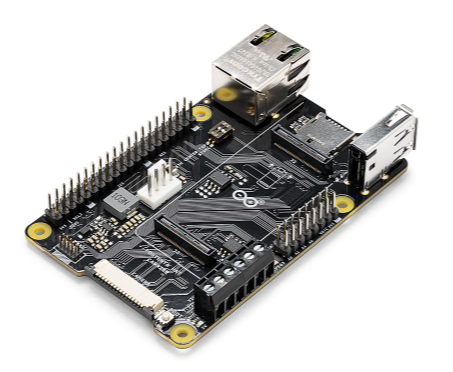
ASX00049

Arduino

* $40.26 - * $50.96

IN STOCK 2824
Buy

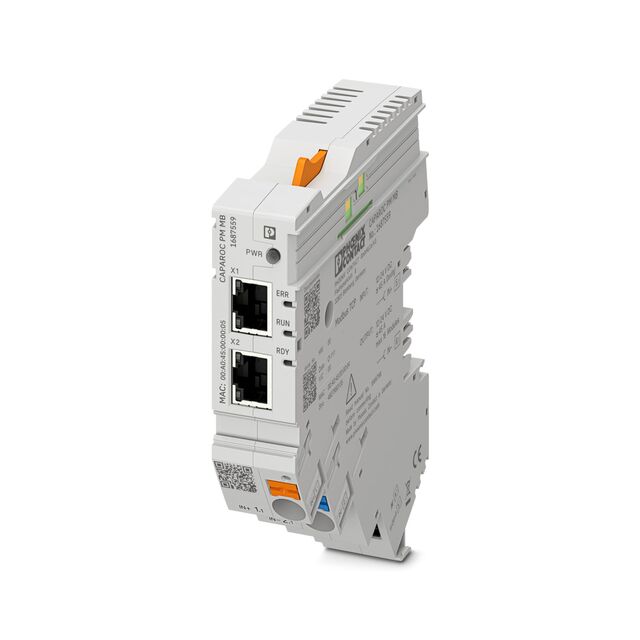
1687559

Phoenix Contact Ltd

[no prices available]

IN STOCK 1
Buy

Reference Designs

RD006

Wurth Elektronik

RD006 - 3 W Dual-output isolated auxiliary supply for communication interfaces and measurement systems

CN0583

Analog Devices Inc.

Multistandard Micropower Verified Smoke Detection System-on-Module

Technical Resources

EVALUATION KITS

EVAL-AD7124-8SDZ

Analog Devices Inc.

$0.00 - * $94.98

IN STOCK 792
Buy
View All