Sizing the UCC3919 Charge-Pump Capacitor
Texas InstrumentsThe UCC3919 works in most hot-swap designs with the charge-pump capacitance recommended in the UCC3919 data sheet. However, this capacitance may be inadequate in high-current designs. This application
TMS320C6474 Common Bus Architecture (CBA) Throughput
Texas InstrumentsThis application report presents common bus architecture protocols and components as main factors for generic throughput analysis. It provides necessary details on the internal bus structure which enables you to estimate system-on-chip (SoC) performance for a given application.
TPS61042 Dual Li-Ion and Higher Input Voltages
Texas InstrumentsThis document shows how to operate the TPS61042 from input voltages greater than 6 V. The ability to operate from input voltages greater than 6 V allows the TPS61042 to operate from dual Li-Ion or hi
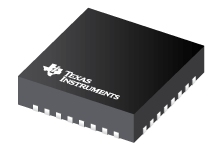
Fibre Channel and SAN Clock Generation Using the CDCM6100x
Texas InstrumentsThis application report is a guide for using Texas Instruments CDCM6100x in a Fibre Channel application as a clock distributor and clock synthesizer along with measured jitter performance results.
Method to Select the Value of LC Sensor for MSP430 Extended Scan Interface (ESI)
Texas InstrumentsThis document describes a method that can be used to select an LC sensor for use with the MSP430™ Extended Scan Interface (ESI).
Pwring Port Devices: Alts To Linear Regs In Step-Dwn Conversion
Texas InstrumentsPowering Portable Devices: Alternatives To Linear Regulators In Step-Down Conversion
Interface TSC Through McBSP
Texas InstrumentsThis application report develops and presents the methodology to interface TI's touch screen controller products and multichannel buffered serial ports (McBSP) through SPI and I2S buses. The interface software code is designed and tested using the TMS320VC5416 DSK and the TSC2100 EVM.
AN-329 Implementing an 8-Bit Buffer in COPS
Texas InstrumentsAN-329 Implementing an 8-Bit Buffer in COPS
DN006 -- CC11xx Settings for FCC15.247 Solutions (Rev. B)
Texas InstrumentsDN006 -- CC11xx Settings for FCC15.247 Solutions
AN-1794 Using RMII Master Mode (Rev. A)
Texas InstrumentsTexas Instruments PHYTER® family of products incorporate the Reduced Media Independent Interface (RMII) as described in the RMII revision 1.2 specification from the RMII Consortium. This interface may be used to connect a PHY device to a MAC in 10/100 Mb/s systems using a reduced number of pins relative to standard MII. In this mode data is transferred two bits at a time using a 50 MHz refere
Building GStreamer
Texas InstrumentsThis Application Report has been contributed to the TI DaVinci & OMAP Developer Wiki. To see the most recently updated version or to contribute visit this topic at http://wiki.davincidsp.com/index.php?title=GStreamer
GStreamer is a pipeline-based multimedia framework that allows you to create a variety of media-handling componen
Calculation of TMS320LC54x Power Dissipation
Texas InstrumentsDigital signal processor (DSP) applications continue to demand more from less: more features while consuming less power. The TMS320LC54x meets these challenges by combining high processing capability wth the greatly reduced power consumption that battery-powered and portable applications demand. This application report describes the power-saving features of the TMS320LC54x and presents techniq
Interfacing the TLC2543 ADC to the TMS320C25 DSP
Texas InstrumentsThis document details an interface between a TMS320C25 digital signal processor (DSP) and the TLC2543 12-bit 11-channel analog-to-digital converter (ADC). A description of the TLC2543 hardware interfacing and a software description are provided. Benchmark information for sample rates data timing and control timing are provided. Briefly discussed are the benefits in compensators or feedback sy
DC-to-DC Converter Noise Reduction
Texas InstrumentsThe inherent switching inside the DC-to-DC converter gives rise to potential sources of noise. This noise manifests itself on the output voltage as spikes at the switching frequency. Due to size and cost requirements internal filtering is limited but usually adequate for most applications. When excessive noise is suspected you must rule out extraneous noise sources.
Using the TLC5951 for Keyboard Backlighting
Texas InstrumentsTLC5951 Using the TLC5951 for Keyboard Backlighting
Thermal Considerations for RF Power Amplifier Devices Application Report
Texas InstrumentsThe fundamentals of printed circuit board (PCB) layout, thermal heatsink definition, and die temperature calculations are examined. PCB layout approaches that enhance heat transfer are also discussed,
TAG-IT(TM) ENVIRONMENTAL EFFECTS ON TRANSPONDER INLAYS
Texas InstrumentsTAG-IT(TM) ENVIRONMENTAL EFFECTS ON TRANSPONDER INLAYS
Programming the DSP MMU in the OMAP5910 Device
Texas InstrumentsThe OMAP5910 device from Texas Instruments (TI) has a new dual-core architecture that is optimized for multimedia applications in a low-power environment. It couples two processors—a TI-enhanced TI925T general-purpose processor and an ultralow-power TMS320C55x™ (C55x™) digital signal processor (DSP)—with a rich set of peripherals and powerful interfaces to achieve optimal per
Designing with the TLC320AC01 Analog Interface for DSPs
Texas InstrumentsThe TLC320AC01 is a 14-bit resolution audio frequency (~12 kHz) analog interface for digital signal processors (DSPs) with integral anti-aliasing and reconstruction filters. The device contains a synchronous serial digital interface designed for easy connection to a DSP. This document contains an overview of the TLC320AC01 discussions of the analog input and output and design consideration fo