Powering a White LED Flashlight with the TPS61090
Texas InstrumentsThis application report details how to drive a 3-W white LED from a single lithium-ion battery using the Texas Instruments TPS61090 low-power dc-dc boost converter to achieve efficiencies >90%. Design
Searching for the Best Quadriphase Codes Using the TMS320C50 DSK
Texas InstrumentsThis application report presents a study concerning the search for the best quadriphase complex sequences to use in digital pulse compression (DPC) radar sub-systems.Presently only an exhaustive search is able to insure the discovery of best codes. This type of research requires a system with high computational power to scan a very important number of sequences.The Texas Instruments (TITM
Designing Macros for the TMS320C5x
Texas InstrumentsThe TMS320 Assembler includes a powerful macro capability. It provides an effective way to generate a macro function that appears to be a normal instruction including support of all the normal addressing modes. An example illustrating a lower-limit macro is used to demonstrate the capability. The lower-limit macro has the characteristics typical of many of the native 'C5x instructions.
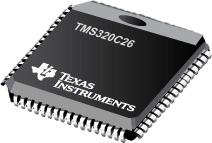
TMS320C2x/C5x EVM AIC Initialization and Configuration
Texas InstrumentsTexas Instruments' TMS320C2x and TMS320C5x Evaluation Modules (EVMs) come with TMS320C26/TMS320C51 DSPs interfaced by the serial port to a TLC32046 Wide-Band Analog Interface Circuit (AIC) with the AIC providing the frame sync pulses and shift clocks. The AIC is a configurable device that uses the serial port to download commands from the DSP. The communications protocol uses an interleaving techn
The Solution To Optimize The Load Dynamic Performance in UCC28019A LED Lighting (Rev. A)
Texas InstrumentsThe Solution To Optimize The Load Dynamic Performance in UCC28019A LED Lighting Applicatio
Implementing a Bidirectional Wireless UART Application w/TRF6903 & MSP430
Texas InstrumentsImplementing a Bidirectional Wireless UART Application With TRF6903 and MSP430
Optimizing Output Voltage Ripple for the REG710
Texas InstrumentsMany portable power applications require a power source that has buck?boost capability with low output ripple. For this application the REG710 is a prime choice; however understanding the affects of the pump and output capacitors allows designers to take full advantage of theREG710?s capabilities in order to minimize output voltage ripple.
bq27500-V120 to bq27500-V130 Change List
Texas InstrumentsThis document describes the changes made between firmware versions bq27500-V120 and bq27500-V130. The latest ordering information and data sheet is on the TI Web site.
Designing a UCD3138 Controlled Interleaved PFC
Texas InstrumentsThe UCD3138 is a digital power supply controller from Texas Instruments offering superior levels of integration and performance in a single chip solution. The flexible nature of the UCD3138 makes it suitable for a wide variety of power conversion applications. In addition multiple peripherals inside the device have been specifically optimized to enhance the performance of ac/dc applications such
DSP to DSP Link Using LVDS
Texas InstrumentsIn digital signal processor (DSP) applications it is important to transfer data to and from DSPs as well as between them at high speed and with high reliability. On single-board designs the on-chip integrated inputs/outputs (I/O) of the DSP (e.g. the multichannel buffered serial port (McBSP) can be used for short-distance runs. For board-to-board-links or even between racks/cabinets ano
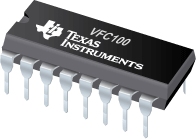
Voltage-to-Frequency Converters Offer Useful Options in A/D Conversion
Texas InstrumentsVoltage-to-frequency converters (VFCs) provide unique characteristics when used as analog-to-digital (A/D) converters. Their excellent accuracy linearity and integrating input characteristics often provide performance attributes unattainable with other converter types. By using efficient frequency counting techniques familiar speed/accuracy tradeoffs can be averted.
Differential Passive Signal Switch on Computing (Rev. A)
Texas InstrumentsThis application report describes multiplexing applications for differential bus signals and how to use Texas Instruments high-speed passive-switch products (TS3DV416 TS3DV520 TS3DV520E TS3DV421 and others on the product roadmap such as TS3DSxxx and TS2DSxxxx) with various bandwidths and data rates. This application report describes the components that make up the system applications includin
MPU Configuration
Texas InstrumentsThis application report provides an introduction to the MPU register and recommended usage for the TMS570 and RM48 devices.
Using The DRV3204EVM To Evaluate The DRV3203-Q1
Texas InstrumentsThis application report is a supplement to the DRV3203-Q1 Data Sheet (<a href=http://www.ti.com/product/drv3203-q1>SLVSC09</a>). This document details the hardware implementation of DRV3203-Q1 evaluat
Programming External Nonvolatile Memory Using SDFlash for TMS320C28x Devices
Texas InstrumentsThe C28xxx generation of microcontrollers can connect to external nonvolatile memory through a variety of interfaces including parallel serial peripheral interface (SPI) and inter-integrated circuit (I2C). This application report discusses how to write drivers for your external nonvolatile memory to allow for in-place programming using SDFlash an application provided by Spectrum Digital Inc. A
AN-1440 LM4962 Stereo Ceramic Speaker Driver AN- (Rev. B)
Texas InstrumentsThis application note provides information on the performance of the LM4962 and the LM4951 in a stereo application.
TPS61150 Dual Output Boost Converter Drive Up to 14 WLED Keypad LCD Backlight
Texas InstrumentsThe TPS61150/1 is a high-frequency boost converter with two regulated current outputs for driving white light-emitting diodes (WLED). The reference design and applications examples in this document sh