Top Manufacturers

Displaying 5681 - 5700 of 6424

Application Notes from Texas Instruments

Extending the SPI bus for long-distance communication

Texas Instruments

The serial peripheral interface (SPI) bus is an unbalanced or single-ended serial interface designed for short-distance communication between integrated circuits. Typically, a master device exchanges data with one or multiple slave devices. The data exchange is full-duplex and requires synchronization to an interface clock signal. However, recent trends in the design of industrial data-acquisition systems have not taken this synchronization requirement into account, and distances between the microcontroller and the corresponding analog-to-digital and digital-to-analog converters (ADCs and DACs) can reach 100 m or more.

The impact of the added propagation delay on the data-to-clock synchronicity is often ignored, and interface designs that operate perfectly in the lab environment cease operation when implemented on the factory floor. There can be multiple reasons for the interface malfunction. This article tries to shed light on the major ones, including:

  • Lack of synchronization due to large propagation delays of the signal path
  • Reduced noise immunity due to long-distance, unbalanced signal paths
  • Damaged transceivers due to large ground-potential differences (GPDs)
  • Data transmission errors due to unterminated data lines
  • Transceiver latch-up and network downtime due to large electrical transients

Transient Response versus Ripple - An Analysis of Ripple Injection Techniques

Texas Instruments

In this application note we highlight the implications of ripple injection techniques, aimed at minimizing output ripple voltage, on the transient response of a supply. The results help choose a suitable ripple injection technique after striking a balance between the output ripple voltage and the transient response required by the load.

Microstepping Bipolar Drive of Two-Phase Hybrid Stepping Motor on F2808 DSP

Texas Instruments
This application report describes the implementation of a micro-stepping algorithm for a two-phase stepper motor using the TMS320F2808 digital signal controller (DSC). The C code can easily be utilized with other members of the C2000™ DSC platform of devices.

Using the TPS61150 With Vin > 6V

Texas Instruments
Using the TPS61150 With Vin > 6V

Detecting the Reset Source on the TMS320x240 DSP Controller (Rev. A)

Texas Instruments
The TMS320x240 ('x240) DSP Controller allows three internal and two external methods to generate device resets. The 'x240 DSP Controller provides the capability to detect the source of a reset through the use of the System Status Register (SYSSR at address 701Ah). This register contains a status bit for four of the five possible reset sources. The fifth source the external pin does not have a st

AN-2227 LP5523 Evaluation Kit

Texas Instruments
AN-2227 LP5523 Evaluation Kit

C5000 DSP-Based Low-Power System Design

Texas Instruments
Low-power consumption is one of the most important requirements for the embedded system. The C5000™ ultra low-power DSP family is ideal for portable devices (audio voice and vision) and other applications that require analytics with low power.

To take advantage of this feature in system design good practices need to be carried out. This application report focuses on the Texas Instrum
PORT17 Guidance for CC430

Texas Instruments
CC430 erratum PORT17 describes the behavior of certain CC430 devices that can latch-up under specific conditions on the general-purpose I/O pins. This document described the conditions that cause the latch up the affected devices and pins and workarounds to prevent the latch up from occurring.Due to the multiple factors that can cause the latch-up to occur it is challenging to provide a singl

Limiting Clamp Currents on TMS470/TMS570 Digital and Analog Inputs (Rev. A)

Texas Instruments
Digital and Analog input pins require protection from input voltages that are negative or positive exceeding the maximum input levels. This is a practical explanation of using the Electrostatic Discharge (ESD) protection diodes that are part of the input pins to help limit the voltage if input current is limited.

AD-04 Reducing the power Requirements of Comlinear CLC949 support Circuitry

Texas Instruments
AD-04 Reducing the power Requirements of Comlinear CLC949 support Circuitry

Driving Capacitive Loads with Gamma Buffers

Texas Instruments
BUF01900, BUF01901, BUF04701, BUF05703, BUF05704, BUF06704, BUF07703, BUF07704, and more Driving Capacitive Loads with Gamma Buffers

Migrating From MSP430F12x(2) to MSP430F21x2

Texas Instruments
The purpose of this application report is to facilitate the migration of designs based on MSP430F122/F123/F1222/F1232 devices to the MSP430F21x2 device family. In the course of this application report

Using the bqSWITCHER, bq24115, as a Nickel Charger

Texas Instruments
This application report describes the combination of the bqSWITCHER™ bq24115 charge management device and the bq2002 battery charge controller to provide a high-efficiency-switching charging sol

Antenna Matching for the TRF7960 RFID Reader (Rev. A)

Texas Instruments
TRF7960 Antenna Matching for the TRF7960 RFID Reader

TMS320C6x Thermal Design Considerations

Texas Instruments
This document discusses thermal analysis and heat sink selection for the Texas Instuments (TI™) TMS320C6x digital signal processor (DSP). A simplified approach is offered to select a heat sink that matches a particular operating environment. Examples are included to demonstrate the method for selecting a heat sink for a typical design.

Piccolo MCU CAN Module Operation Using the On-Chip Zero-Pin Oscillator (Rev. A)

Texas Instruments
CAN protocol imposes rather stringent requirements on its timing source which are generally met by the provision of an external quartz crystal/oscillator. The TMS320C2803x/TMS320F2806x series of microcontrollers have an on-chip zero-pin oscillator that needs no external components. This application report describes how to use the CAN module with this oscillator to operate at the maximum bit rate

FlashBurn: A DSK Flash Memory Programmer (Rev. A)

Texas Instruments
The FlashBurn utility is a Windows program that works along with Code Composer Studio and an FBTC (FlashBurn Target Component) program to burn data and programs into the FLASH memory of a DSP target b

TUSB6250 Bootcode Application Note

Texas Instruments
The TUSB6250 bootcode is a start-up code stored as a ROM image within the TUS6250 device. An embedded microcontroller starts executing this code after power-on reset. Once the code is running it loads application firmware from either an external memory device or the USB host controller. After the code has finished downloading the bootcode releases its control to the application firmware.This

Displaying 5681 - 5700 of 6424

Latest Parts

IN STOCK 1481
Buy

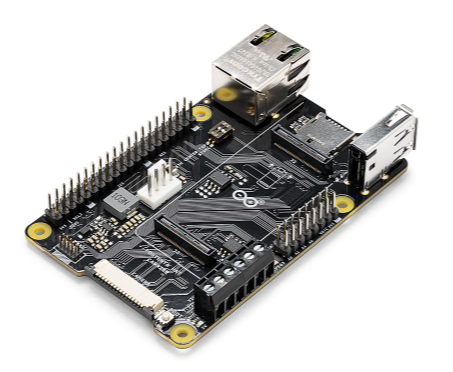
ASX00049

Arduino

* $40.28 - * $50.95

IN STOCK 2803
Buy

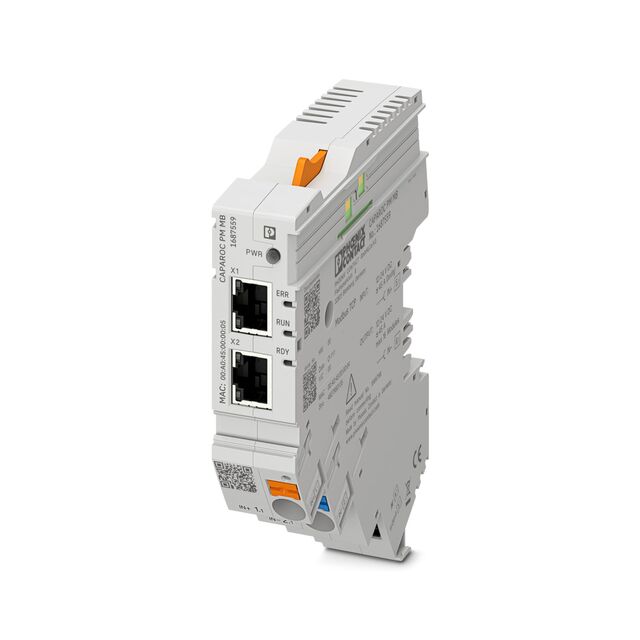
1687559

Phoenix Contact Ltd

[no prices available]

IN STOCK 5
Buy

Reference Designs

RD006

Wurth Elektronik

RD006 - 3 W Dual-output isolated auxiliary supply for communication interfaces and measurement systems

CN0583

Analog Devices Inc.

Multistandard Micropower Verified Smoke Detection System-on-Module

Technical Resources

EVALUATION KITS

EVAL-AD7124-8SDZ

Analog Devices Inc.

$0.00 - * $94.96

IN STOCK 792
Buy
View All