Top Manufacturers
Stock

Displaying 1841 - 1860 of 99869

Parts from Analog Devices Inc.

ADSP-BF706BCPZ-3

Part Number : ADSP-BF706BCPZ-3

Analog Devices Inc.
This device is a member of the ADSP-BF70x Blackfin Digital Signal Processor (DSP) product family. The new Blackfin+ processor core combines dual-MAC 16-bit, 32-bit MAC and 16-bit complex MAC in to a state-of-the-art signal processing engine. It also combines advantages of a clean, orthogonal RISC-like microprocessor instruction set, and single-instruction, multiple-data (SIMD) multimedia capabilities within a single instruction-set architecture. Further new enhancements to the Blackfin+ core add cache enhancements, branch prediction and other instruction set improvements—all while maintaining instruction set compatibility to previous Blackfin products.The processor offers performance up to 400 MHz, as well as lowest power consumption at

ADSP-BF706KCPZ-4

Part Number : ADSP-BF706KCPZ-4

Analog Devices Inc.
This device is a member of the ADSP-BF70x Blackfin Digital Signal Processor (DSP) product family. The new Blackfin+ processor core combines dual-MAC 16-bit, 32-bit MAC and 16-bit complex MAC in to a state-of-the-art signal processing engine. It also combines advantages of a clean, orthogonal RISC-like microprocessor instruction set, and single-instruction, multiple-data (SIMD) multimedia capabilities within a single instruction-set architecture. Further new enhancements to the Blackfin+ core add cache enhancements, branch prediction and other instruction set improvements—all while maintaining instruction set compatibility to previous Blackfin products.The processor offers performance up to 400 MHz, as well as lowest power consumption at

ADSP-CM403CSWZ-CF

Part Number : ADSP-CM403CSWZ-CF

Analog Devices Inc.
 The ADSP-CM403F Mixed-Signal Control Processor integrates dual high precision 16 bit ADCs and an ARM® Cortex-M4™ processor core with floating-point unit operating at frequencies up to 240 MHz and integrating up to 384KB of SRAM memory, up to 2M byte of flash memory, accelerators and peripherals optimized for photo-voltaic (PV) inverter control, motor control and other embedded control applications.

ADSP-CM407CSWZ-AF

Part Number : ADSP-CM407CSWZ-AF

Analog Devices Inc.
The ADSP-CM407F Mixed-Signal Control Processor integrates dual precision 16 bit ADCs and an ARM® Cortex-M4TM processor core with floating-point unit operating at 240 MHz core clock frequency and integrating 384KB of SRAM memory, 2M byte of flash memory, and accelerators and peripherals optimized for motor control, photo-voltaic (PV) inverter control and other embedded control applications.

ADSP-CM408CSWZ-AF

Part Number : ADSP-CM408CSWZ-AF

Analog Devices Inc.
The ADSP-CM408F Mixed-Signal Control Processor integrates dual high precision 16 bit ADCs and an ARM® Cortex-M4TM processor core with floating-point unit operating at 240 MHz core clock frequency and integrating 384KB of SRAM memory, 2M byte of flash memory, and accelerators and peripherals optimized for motor control, photo-voltaic (PV) inverter control and other embedded control applications.

ADSP-CM408CSWZ-BF

Part Number : ADSP-CM408CSWZ-BF

Analog Devices Inc.
The ADSP-CM408F Mixed-Signal Control Processor integrates dual high precision 16 bit ADCs and an ARM® Cortex-M4TM processor core with floating-point unit operating at 240 MHz core clock frequency and integrating 384KB of SRAM memory, 2M byte of flash memory, and accelerators and peripherals optimized for motor control, photo-voltaic (PV) inverter control and other embedded control applications.

ADSP-SC573KBCZ-4

Part Number : ADSP-SC573KBCZ-4

Analog Devices Inc.
The ADSP-SC57x/ADSP-2157x processors are members of the SHARC® family of products. The ADSP-SC57x processor is based on the SHARC+® dual-core and the arm® Cortex®-A5 core. The ADSP-SC57x/ADSP-2157x SHARC processors are members of the single-instruction, multiple data (SIMD) SHARC family of digital signal processors (DSPs) that feature Analog Devices Super Harvard Architecture. These 32-bit/40-bit/64-bit floating-point processors are optimized for high performance audio/floating-point applications with large on-chip static random-access memory (SRAM), multiple internal buses that eliminate input/output (I/O) bottlenecks, and innovative digital audio interfaces (DAI). New additions to the SHARC+ core include cache enhancements and branch prediction, while maintaining instruction set compatibility to previous SHARC products.By integrating a set of industry leading system peripherals and memory, the arm® Cortex-A5 and SHARC processor is the platform of choice for applications that require programmability similar to reduced instruction set computing (RISC), multimedia support, and leading edge signal processing in one integrated package. These applications span a wide array of markets, including automotive, professional audio, and industrial-based applications that require high floating-point performance.

ADUCM3027BCBZ-R7

Part Number : ADUCM3027BCBZ-R7

Analog Devices Inc.
The ADuCM3027/ADuCM3029 microcontroller units (MCUs) are ultra low power microcontroller systems with integrated power management for processing, control, and connectivity. The MCU system is based on the ARM® Cortex®-M3 processor, a collection of digital peripherals, embedded SRAM and flash memory, and an analog subsystem which provides clocking, reset, and power management capability in addition to an analog-to-digital converter (ADC) subsystem. For a feature comparison across the ADuCM3027/ADuCM3029 product offerings, see Table 1. Table 1. Product Flash Memory Options Device Embedded Flash Memory Size ADuCM3029 256 kB ADuCM3027 128 kB System features that are common across the ADuCM3027/ADuCM3029/ADuCM3029-1/ADuCM3029-2 MCUs include the following: Up to 26 MHz ARM Cortex-M3 processor Up to 256 kB of embedded flash memory with error correction code (ECC) Optional 4 kB cache for lower active power 64 kB system SRAM with parity Power management unit (PMU) Multilayer advanced microcontroller bus architecture (AMBA) bus matrix Central direct memory access (DMA) controller Beeper interface Serial port (SPORT), serial peripheral interface (SPI), inter-integrated circuit (I2C), and universal asynchronous receiver/transmitter (UART) peripheral interfaces Cryptographic hardware support with advanced encryption standard (AES) and secure hash algorithm (SHA)-256 Real-time clock (RTC) General-purpose and watchdog timers Programmable general-purpose input/output (GPIO) pins Hardware cyclic redundancy check (CRC) calculator with programmable generator polynomial Power-on reset (POR) and power supply monitor (PSM) 12-bit successive approximation register (SAR) ADC True random number generator (TRNG)To support low dynamic and hibernate power management, the ADuCM3027/ADuCM3029 MCUs provide a collection of power modes and features, such as dynamic and software controlled clock gating and power gating.The ADuCM3029-1 and ADuCM3029-2 MCU models share the same features and functionality as that of the ADuCM3029 MCU. All specifications pertaining to the ADuCM3027 and ADuCM3029 are also applicable to the ADuCM3029-1 and ADuCM3029-2.For full details on the ADuCM3027/ADuCM3029 MCUs, refer to the ADuCM302x Ultra Low Power ARM Cortex-M3 MCU with Integrated Power Management Hardware Reference Manual.Product Highlights Industry leading ultralow power consumption. Robust operation, including full voltage monitoring in deep sleep modes, ECC support on flash, and parity error detection on SRAM memory. Leading edge security. Fast encryption provides read protection to customer algorithms. Write protection prevents device reprogramming by unauthorized code. Failure detection of 32 kHz LFXTAL via interrupt. SensorStrobe™ for precise time synchronized sampling of external sensors. Works in hibernate mode, resulting in drastic current reduction in system solutions. Current consumption reduces by 10 times when using, for example, the ADXL363 accelerometer. Software intervention is not required after setup. No pulse drift due to software execution.Applications Internet of Things (IoT) Electronic shelf label (ESL) and signage Smart infrastructure Smart lock Asset tracking Smart machine, smart metering, smart building, smart city, and smart agriculture Wearables Fitness and clinical Machine learning and neural network 

ADUCM362BCPZ256RL7

Part Number : ADUCM362BCPZ256RL7

Analog Devices Inc.
The ADuCM362/ADuCM363 is a fully integrated, 3.9 kSPS, 24-bit data acquisition system that incorporates dual, high performance, multichannel sigma-delta (Σ-Δ) analog-to-digital converters (ADCs), a 32-bit ARM Cortex™-M3 processor, and Flash/EE memory on a single chip. The ADuCM362/ ADuCM363 are designed for direct interfacing to external precision sensors in both wired and battery-powered applications. The ADuCM363 contains all the features of the ADuCM362, except that only one 24-bit Σ-Δ ADC (ADC1) is available.The ADuCM362/ADuCM363 contain an on-chip 32 kHz oscillator and an internal 16 MHz high frequency oscillator. The high frequency oscillator is routed through a programmable clock divider from which the operating frequency of the processor core clock is generated. The maximum core clock speed is 16 MHz; this speed is not limited by operating voltage or temperature.The microcontroller core is a low power ARM Cortex-M3 processor, a 32-bit RISC machine that offers up to 20 MIPS peak performance. The Cortex-M3 processor incorporates a flexible, 11-channel DMA controller that supports all wired communica-tion peripherals (both SPIs, both UARTs, and I2C). Also integrated on chip are up to 256 kB of nonvolatile Flash/EE memory and 24 kB of SRAM.The analog subsystem consists of dual ADCs, each connected to a flexible input mux. Both ADCs can operate in fully differential and single-ended modes. Other on-chip ADC features include dual programmable excitation current sources, diagnostic current sources, and a bias voltage generator of AVDD_REG/2 (900 mV) to set the common-mode voltage of an input channel. A low-side internal ground switch is provided to allow power-down of an external circuit (for example, a bridge circuit) between conversions. Optional input buffers are provided for the analog inputs and the external reference inputs. These buffers can be enabled for all PGA gain settings.The ADCs contain two parallel filters: a sinc3 or sinc4 filter in parallel with a sinc2 filter. The sinc3 or sinc4 filter is used for precision measurements. The sinc2 filter is used for fast measure-ments and for the detection of step changes in the input signal.The devices contain a low noise, low drift internal band gap reference, but they can be configured to accept one or two external reference sources in ratiometric measurement config-urations. An option to buffer the external reference inputs is provided on chip. A single-channel buffered voltage output DAC is also provided on chip.The ADuCM362/ADuCM363 integrate a range of on-chip peripherals, which can be configured under microcontroller software control as required in the application. The peripherals include two UARTs, I2C, and dual SPI serial I/O communication controllers; a 19-pin GPIO port; two general-purpose timers; a wake-up timer; and a system watchdog timer. A 16-bit PWM controller with six output channels is also provided.The ADuCM362/ADuCM363 are specifically designed to operate in battery-powered applications where low power operation is critical. The microcontroller core can be configured in a normal operating mode that consumes 290 μA/MHz (including flash/SRAM IDD). An overall system current consumption of 1 mA can be achieved with both ADCs on (input buffers off), PGA gain of 4, one SPI port on, and all timers on.The ADuCM362/ADuCM363 can be configured in a number of low power operating modes under direct program control, including a hibernate mode (internal wake-up timer active) that consumes only 4 μA. In hibernate mode, peripherals, such as external interrupts or the internal wake-up timer, can wake up the devices. This mode allows the devices to operate with ultralow power while still responding to asynchronous external or periodic events.On-chip factory firmware supports in-circuit serial download via a serial wire interface (2-pin JTAG system) and UART; non-intrusive emulation is also supported via the serial wire interface. These features are incorporated into a low cost QuickStart™ Development System that supports this precision analog micro-controller family.The devices operate from an external 1.8 V to 3.6 V voltage supply and are specified over an industrial temperature range of −40°C to +125°C.Applications Industrial automation and process control Intelligent precision sensing systems 4 mA to 20 mA loop-powered smart sensor systems Medical devices, patient monitoring

MAX32664GTGC+T

Part Number : MAX32664GTGC+T

Analog Devices Inc.
The MAX32664 is a sensor hub family with embedded firmware and world-class algorithms for wearables. It seamlessly enables customer-desired sensor functionality, including communication with Analog Devices' optical sensor solutions and delivering raw or calculated data to the outside world. This is achieved while keeping overall system power consumption in check. The device family interfaces to a microcontroller host through a fast-mode slave I2C interface for access to raw and processed sensor data as well as field updates. A firmware bootloader is also provided.The MAX32664 Version A supports the MAX30101/MAX30102 high-sensitivity pulse oximeter and heart-rate sensor for wearable health for finger-based applications. A master mode I2C interface for communication with sensors is provided.The MAX32664 Version B supports the MAX86140/MAX86141 for wrist-based applications. A master mode SPI interface for communication with sensors is provided.The MAX32664 Version C supports the MAX86140/MAX86141 for wrist-based applications and MAXM86161 for ear-based applications. The device provides either a master mode SPI or an I2C interface for communication with sensors.The MAX32664Version D supports the MAX30101/MAX30102 high-sensitivity pulse oximeter and heart-rate sensor for wearable health for finger-based applications. A master mode I2C interface for communication with sensors is provided. Version D also supports estimated blood pressure monitoring.The wearable algorithms in the MAX32664 sensor hub support a directly connected accelerometer. They also allow feeding of X, Y, and Z samples from a host-connected accelerometer. This architecture provides robust detection and compensation of motion artifacts in captured samples.The tiny form factor 1.6mm x 1.6mm WLP or 3mm x 3mm TQFN allows for integration into extremely small application devices.Also See: MAX32664 FAQsLearn more about the different versions ›ApplicationsWearable FitnessHearablesWearable MedicalPortable MedicalMobile Devices

MAX32664GTGD+T

Part Number : MAX32664GTGD+T

Analog Devices Inc.
The MAX32664 is a sensor hub family with embedded firmware and world-class algorithms for wearables. It seamlessly enables customer-desired sensor functionality, including communication with Analog Devices' optical sensor solutions and delivering raw or calculated data to the outside world. This is achieved while keeping overall system power consumption in check. The device family interfaces to a microcontroller host through a fast-mode slave I2C interface for access to raw and processed sensor data as well as field updates. A firmware bootloader is also provided.The MAX32664 Version A supports the MAX30101/MAX30102 high-sensitivity pulse oximeter and heart-rate sensor for wearable health for finger-based applications. A master mode I2C interface for communication with sensors is provided.The MAX32664 Version B supports the MAX86140/MAX86141 for wrist-based applications. A master mode SPI interface for communication with sensors is provided.The MAX32664 Version C supports the MAX86140/MAX86141 for wrist-based applications and MAXM86161 for ear-based applications. The device provides either a master mode SPI or an I2C interface for communication with sensors.The MAX32664Version D supports the MAX30101/MAX30102 high-sensitivity pulse oximeter and heart-rate sensor for wearable health for finger-based applications. A master mode I2C interface for communication with sensors is provided. Version D also supports estimated blood pressure monitoring.The wearable algorithms in the MAX32664 sensor hub support a directly connected accelerometer. They also allow feeding of X, Y, and Z samples from a host-connected accelerometer. This architecture provides robust detection and compensation of motion artifacts in captured samples.The tiny form factor 1.6mm x 1.6mm WLP or 3mm x 3mm TQFN allows for integration into extremely small application devices.Also See: MAX32664 FAQsLearn more about the different versions ›ApplicationsWearable FitnessHearablesWearable MedicalPortable MedicalMobile Devices

MAX32664GWEA+

Part Number : MAX32664GWEA+

Analog Devices Inc.
The MAX32664 is a sensor hub family with embedded firmware and world-class algorithms for wearables. It seamlessly enables customer-desired sensor functionality, including communication with Analog Devices' optical sensor solutions and delivering raw or calculated data to the outside world. This is achieved while keeping overall system power consumption in check. The device family interfaces to a microcontroller host through a fast-mode slave I2C interface for access to raw and processed sensor data as well as field updates. A firmware bootloader is also provided.The MAX32664 Version A supports the MAX30101/MAX30102 high-sensitivity pulse oximeter and heart-rate sensor for wearable health for finger-based applications. A master mode I2C interface for communication with sensors is provided.The MAX32664 Version B supports the MAX86140/MAX86141 for wrist-based applications. A master mode SPI interface for communication with sensors is provided.The MAX32664 Version C supports the MAX86140/MAX86141 for wrist-based applications and MAXM86161 for ear-based applications. The device provides either a master mode SPI or an I2C interface for communication with sensors.The MAX32664Version D supports the MAX30101/MAX30102 high-sensitivity pulse oximeter and heart-rate sensor for wearable health for finger-based applications. A master mode I2C interface for communication with sensors is provided. Version D also supports estimated blood pressure monitoring.The wearable algorithms in the MAX32664 sensor hub support a directly connected accelerometer. They also allow feeding of X, Y, and Z samples from a host-connected accelerometer. This architecture provides robust detection and compensation of motion artifacts in captured samples.The tiny form factor 1.6mm x 1.6mm WLP or 3mm x 3mm TQFN allows for integration into extremely small application devices.Also See: MAX32664 FAQsLearn more about the different versions ›ApplicationsWearable FitnessHearablesWearable MedicalPortable MedicalMobile Devices

MAX32664GWEZ+

Part Number : MAX32664GWEZ+

Analog Devices Inc.
The MAX32664 is a sensor hub family with embedded firmware and world-class algorithms for wearables. It seamlessly enables customer-desired sensor functionality, including communication with Analog Devices' optical sensor solutions and delivering raw or calculated data to the outside world. This is achieved while keeping overall system power consumption in check. The device family interfaces to a microcontroller host through a fast-mode slave I2C interface for access to raw and processed sensor data as well as field updates. A firmware bootloader is also provided.The MAX32664 Version A supports the MAX30101/MAX30102 high-sensitivity pulse oximeter and heart-rate sensor for wearable health for finger-based applications. A master mode I2C interface for communication with sensors is provided.The MAX32664 Version B supports the MAX86140/MAX86141 for wrist-based applications. A master mode SPI interface for communication with sensors is provided.The MAX32664 Version C supports the MAX86140/MAX86141 for wrist-based applications and MAXM86161 for ear-based applications. The device provides either a master mode SPI or an I2C interface for communication with sensors.The MAX32664Version D supports the MAX30101/MAX30102 high-sensitivity pulse oximeter and heart-rate sensor for wearable health for finger-based applications. A master mode I2C interface for communication with sensors is provided. Version D also supports estimated blood pressure monitoring.The wearable algorithms in the MAX32664 sensor hub support a directly connected accelerometer. They also allow feeding of X, Y, and Z samples from a host-connected accelerometer. This architecture provides robust detection and compensation of motion artifacts in captured samples.The tiny form factor 1.6mm x 1.6mm WLP or 3mm x 3mm TQFN allows for integration into extremely small application devices.Also See: MAX32664 FAQsLearn more about the different versions ›ApplicationsWearable FitnessHearablesWearable MedicalPortable MedicalMobile Devices

MAX32666GWP+

Part Number : MAX32666GWP+

Analog Devices Inc.
DARWIN is a new breed of low-power microcontrollers built to thrive in the rapidly evolving Internet of Things (IoT). They are smart, with the biggest memories in their class and a massively scalable memory architecture. They run forever, thanks to wearable-grade power technology. They are durable enough to withstand the most advanced cyberattacks. DARWIN microcontrollers are designed to run any application imaginable—in places where you would not dream of sending other microcontrollers.Generation UB microcontrollers are designed to handle the increasingly complex applications demanded by today's advanced battery-powered devices and wirelessly connected devices, while providing robust hardware security and Bluetooth® 5 Low Energy (BLE) radio connectivity.The MAX32665/MAX32666 UB class microcontrollers are advanced systems-on-chips featuring an Arm® Cortex®-M4 with FPU CPU for efficient computation of complex functions and algorithms with integrated power management. They also include the newest generation Bluetooth 5 Low Energy radio with high throughput (2Mbps) and Maxim's best-in-class hardware security suite trust protection unit (TPU). The devices offer large on-board memory with 1MB flash and up to 560KB SRAM that can be configured as 448KB SRAM with error correction coding (ECC). Split flash banks of 512KB each support seamless over the air upgrades, adding an additional degree of reliability. Memory scalability of data (SRAM) and code (flash) space is supported by two SPI execute-in-place (SPIX) interfaces.Multiple high-speed interfaces are supported including HS-USB, secure digital interface (SD, SDIO, MMC, SDHC, and microSD™), SPI, UART, and I2C serial interfaces, and an audio subsystem supporting PDM, PCM, I2S, and TDM interfaces. An 8-input, 10-bit ADC is available to monitor analog inputs from external sensors and meters. The devices are available in 109-bump WLP (0.35mm pitch) and 121-bump CTBGA (0.65mm pitch).ApplicationsConnected HomeGaming DevicesHearablesIndustrial SensorsPayment/Fitness/Medical WearablesTelemedicine

MAX32666GXMBL+T

Part Number : MAX32666GXMBL+T

Analog Devices Inc.
DARWIN is a new breed of low-power microcontrollers built to thrive in the rapidly evolving Internet of Things (IoT). They are smart, with the biggest memories in their class and a massively scalable memory architecture. They run forever, thanks to wearable-grade power technology. They are durable enough to withstand the most advanced cyberattacks. DARWIN microcontrollers are designed to run any application imaginable—in places where you would not dream of sending other microcontrollers.Generation UB microcontrollers are designed to handle the increasingly complex applications demanded by today's advanced battery-powered devices and wirelessly connected devices, while providing robust hardware security and Bluetooth® 5 Low Energy (BLE) radio connectivity.The MAX32665/MAX32666 UB class microcontrollers are advanced systems-on-chips featuring an Arm® Cortex®-M4 with FPU CPU for efficient computation of complex functions and algorithms with integrated power management. They also include the newest generation Bluetooth 5 Low Energy radio with high throughput (2Mbps) and Maxim's best-in-class hardware security suite trust protection unit (TPU). The devices offer large on-board memory with 1MB flash and up to 560KB SRAM that can be configured as 448KB SRAM with error correction coding (ECC). Split flash banks of 512KB each support seamless over the air upgrades, adding an additional degree of reliability. Memory scalability of data (SRAM) and code (flash) space is supported by two SPI execute-in-place (SPIX) interfaces.Multiple high-speed interfaces are supported including HS-USB, secure digital interface (SD, SDIO, MMC, SDHC, and microSD™), SPI, UART, and I2C serial interfaces, and an audio subsystem supporting PDM, PCM, I2S, and TDM interfaces. An 8-input, 10-bit ADC is available to monitor analog inputs from external sensors and meters. The devices are available in 109-bump WLP (0.35mm pitch) and 121-bump CTBGA (0.65mm pitch).ApplicationsConnected HomeGaming DevicesHearablesIndustrial SensorsPayment/Fitness/Medical WearablesTelemedicine

MAX32666GXMBT+T

Part Number : MAX32666GXMBT+T

Analog Devices Inc.
DARWIN is a new breed of low-power microcontrollers built to thrive in the rapidly evolving Internet of Things (IoT). They are smart, with the biggest memories in their class and a massively scalable memory architecture. They run forever, thanks to wearable-grade power technology. They are durable enough to withstand the most advanced cyberattacks. DARWIN microcontrollers are designed to run any application imaginable—in places where you would not dream of sending other microcontrollers.Generation UB microcontrollers are designed to handle the increasingly complex applications demanded by today's advanced battery-powered devices and wirelessly connected devices, while providing robust hardware security and Bluetooth® 5 Low Energy (BLE) radio connectivity.The MAX32665/MAX32666 UB class microcontrollers are advanced systems-on-chips featuring an Arm® Cortex®-M4 with FPU CPU for efficient computation of complex functions and algorithms with integrated power management. They also include the newest generation Bluetooth 5 Low Energy radio with high throughput (2Mbps) and Maxim's best-in-class hardware security suite trust protection unit (TPU). The devices offer large on-board memory with 1MB flash and up to 560KB SRAM that can be configured as 448KB SRAM with error correction coding (ECC). Split flash banks of 512KB each support seamless over the air upgrades, adding an additional degree of reliability. Memory scalability of data (SRAM) and code (flash) space is supported by two SPI execute-in-place (SPIX) interfaces.Multiple high-speed interfaces are supported including HS-USB, secure digital interface (SD, SDIO, MMC, SDHC, and microSD™), SPI, UART, and I2C serial interfaces, and an audio subsystem supporting PDM, PCM, I2S, and TDM interfaces. An 8-input, 10-bit ADC is available to monitor analog inputs from external sensors and meters. The devices are available in 109-bump WLP (0.35mm pitch) and 121-bump CTBGA (0.65mm pitch).ApplicationsConnected HomeGaming DevicesHearablesIndustrial SensorsPayment/Fitness/Medical WearablesTelemedicine

MAX32674CGWG+

Part Number : MAX32674CGWG+

Analog Devices Inc.
The MAX32674C is an algorithm/sensor hub with embedded software and world-class algorithms for the fitness and medical wearables market meant to interface directly with Analog Devices' optical sensors. The MAX32674C processes raw data and outputs biometric measurements when configured as an algorithm hub. When configured as a sensor hub, the MAX32674C seamlessly enables customer-desired sensor functionality, including driver communication with Analog Devices optical sensor solutions and delivering raw or calculated data to the outside world. The MAX32674C optimizes system power consumption by sleeping when idle.Analog Devices provides software algorithms developed by data scientists and machine learning experts for a complete solution—taking raw ADC data and turning it into usable data such as heart rate and SpO2. The device is delivered unprogrammed. The host microcontroller interfaces to an internal bootloader through an I2C slave interface for initial programming or in-field upgrades.The MAX32674C supports the MAX86176 for wrist-based algorithm hub and sensor hub applications. The sensor hub uses the master mode SPI interface to communicate with the sensors.The wearable algorithms in the MAX32674C support a directly connected accelerometer when used as a sensor hub. It also supports an indirect connection where the accelerometer is instead connected to the host microcontroller. This architecture provides robust detection and compensation of motion artifacts in captured samples.The device is packaged in a tiny form factor: 2.50mm x 1.75mm, 0.4mm pitch, 24-pin WLP.ApplicationsWearable FitnessHearablesWearable MedicalPortable MedicalMobile Devices

MAX33012EASA+

Part Number : MAX33012EASA+

Analog Devices Inc.
The MAX33011E/MAX33012E, and MAX33014E/MAX33015E are a family of +5V control area network (CAN) transceivers with integrated protection for industrial applications. These devices have extended ±65V fault protection on the CAN bus for equipment where overvoltage protection is required. The CAN family also incorporates high ±45kV ESD HBM protection and an input common-mode range (CMR) of ±25V, exceeding the ISO 11898 specification of -2V to +7V, and well suited for applications where ground planes from different systems are shifting relative to each other.This CAN family incorporates a fault-detection feature where it monitors the CANH and CANL line for faults like overcurrent, overvoltage, and transmission failure. When a fault is detected, the FAULT pin goes high, which triggers an external interrupt with the local CAN controller, and the driver and receiver lines are placed in recessive mode. The system clock then drives the TXD pin and a fault code is transmitted through the RXD line back to the controller. When the specific fault code is transmitted and the system is programmed to alert local service personnel, they are able to troubleshoot and debug the problem quicker, providing valuable diagnostics and decreased equipment downtime. In addition, the family features a variety of options to address common CAN application requirements; low-current standby mode, slow slew rate for improved EMI performance, silent-mode to disable the transmitter, low level translation to interface with low-voltage controllers, and loopback mode for remote self diagnostics.These devices are specified for data rates up to 5Mbps. The transceivers include a dominant timeout to prevent bus lockup caused by controller error or by a fault on the TXD input. When TXD remains in the dominant state (low) for longer than tDOM, the driver is switched to the recessive state, releasing the bus.The MAX33011E/MAX33012E are in a standard 8-pin SOIC package and the MAX33014E/MAX33015E are in a 10-pin TDFN-EP package The family of devices operates over the -40°C to +125°C temperature range.ApplicationsBase StationElevator ControlFactory AutomationHVACIndustrial ConstructionPower GridPower SupplyVending Machine

MAX33014EATB+

Part Number : MAX33014EATB+

Analog Devices Inc.
The MAX33011E/MAX33012E, and MAX33014E/MAX33015E are a family of +5V control area network (CAN) transceivers with integrated protection for industrial applications. These devices have extended ±65V fault protection on the CAN bus for equipment where overvoltage protection is required. The CAN family also incorporates high ±45kV ESD HBM protection and an input common-mode range (CMR) of ±25V, exceeding the ISO 11898 specification of -2V to +7V, and well suited for applications where ground planes from different systems are shifting relative to each other.This CAN family incorporates a fault-detection feature where it monitors the CANH and CANL line for faults like overcurrent, overvoltage, and transmission failure. When a fault is detected, the FAULT pin goes high, which triggers an external interrupt with the local CAN controller, and the driver and receiver lines are placed in recessive mode. The system clock then drives the TXD pin and a fault code is transmitted through the RXD line back to the controller. When the specific fault code is transmitted and the system is programmed to alert local service personnel, they are able to troubleshoot and debug the problem quicker, providing valuable diagnostics and decreased equipment downtime. In addition, the family features a variety of options to address common CAN application requirements; low-current standby mode, slow slew rate for improved EMI performance, silent-mode to disable the transmitter, low level translation to interface with low-voltage controllers, and loopback mode for remote self diagnostics.These devices are specified for data rates up to 5Mbps. The transceivers include a dominant timeout to prevent bus lockup caused by controller error or by a fault on the TXD input. When TXD remains in the dominant state (low) for longer than tDOM, the driver is switched to the recessive state, releasing the bus.The MAX33011E/MAX33012E are in a standard 8-pin SOIC package and the MAX33014E/MAX33015E are in a 10-pin TDFN-EP package The family of devices operates over the -40°C to +125°C temperature range.ApplicationsBase StationElevator ControlFactory AutomationHVACIndustrial ConstructionPower GridPower SupplyVending Machine

MAX33045EASA+

Part Number : MAX33045EASA+

Analog Devices Inc.
The MAX33045E/MAX33046E is a half-duplex RS-485/422 transceiver that operates at either 3.3V or 5.0V supply rail for ease of design. Both devices feature enhanced protection for applications in harsh environments. All driver outputs and receiver inputs are protected with both high-fault and high-ESD (electrostatic discharge) protection. The A/B lines have up to ±25V fault protection for accidental shorts with local power supplies and ±40kV ESD (Human Body Model) HBM protection. They are also rated up to ±15kV Air-Gap Discharge and ±10kV Contact Discharge per IEC 61000-4-2. Both features ensure robust protection in harsh industrial environments. Drivers are short-circuit current limited and protected against excessive power dissipation by thermal-shutdown circuitry that places the driver outputs into a high-impedance state. The receiver input has a true fail-safe feature that guarantees a logic-high output if both inputs are open or short circuited.The MAX33045E is rated for a 500kbps (min) data rate, and the MAX33046E is rated for a 20Mbps data rate.Both devices are packaged in an 8-pin SOIC with an operating ambient temperature from -40°C to +125°C.ApplicationsBackplane BusesEncoder InterfacesFactory Automation EquipmentMotion ControllersProgrammable ControllerTelecommunication Equipment

Displaying 1841 - 1860 of 99869

Latest Parts

IN STOCK 1481
Buy

ASX00049

Arduino

* $40.39 - * $51.04

IN STOCK 2824
Buy

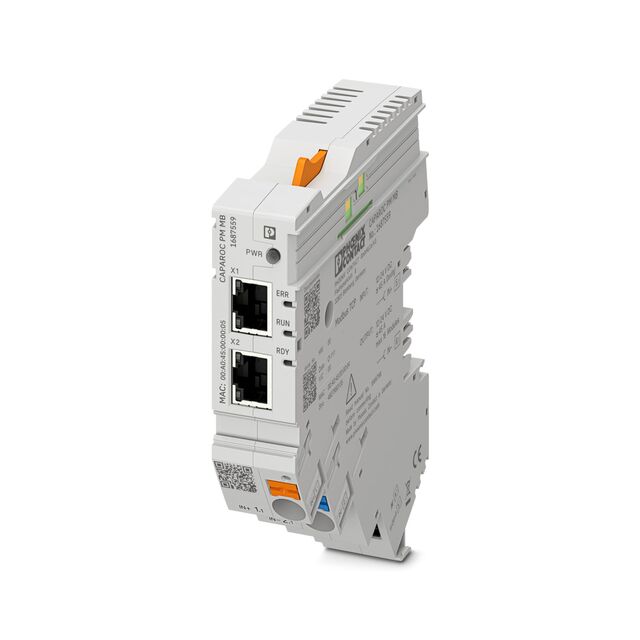
1687559

Phoenix Contact Ltd

[no prices available]

IN STOCK 1
Buy

Reference Designs

RD006

Wurth Elektronik

RD006 - 3 W Dual-output isolated auxiliary supply for communication interfaces and measurement systems

CN0583

Analog Devices Inc.

Multistandard Micropower Verified Smoke Detection System-on-Module

Technical Resources

EVALUATION KITS

EVAL-AD7124-8SDZ

Analog Devices Inc.

$0.00 - * $95.12

IN STOCK 792
Buy
View All