
Search results
AC input 85V to 265V non-isolated output 28.5V@1.8A

Texas Instruments
AC input 85V to 265V non-isolated output 28.5V@1.8A
Texas Instruments
This PMP5643 is a universal mains quasi-resonant isolated flyback: delivering a peak power of 51W and 37W average @ 13.65V. The converter benefits from the cascode" topology to reduce further the no-load losses and to achieve very fast startup time."
TMS3705 Passive Antenna Solution
Texas Instruments
TMS3705 Passive Antenna Solution
Texas Instruments
The Texas Instruments low-frequency transponder technology provides the possibility to use a simple passive antenna in combination with various antenna cable lengths. This solution significantly reduces system costs because the active part of the transceiver can be added to the already existing host system e.g. the body control module (BCM) of a vehicle.
In comparison to a standard system n
Automotive 200-VA High Frequency Inverter Design
Texas Instruments
Automotive 200-VA High Frequency Inverter Design
Texas Instruments
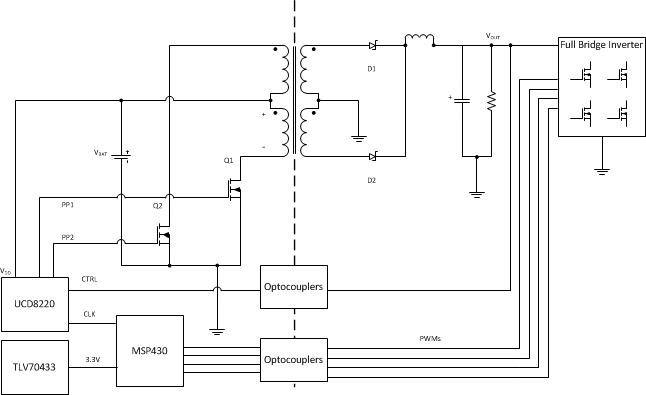
This design presents a low-cost: small size: robust 200-VA DC to AC inverter based on TI’s MSP430 and UCD8220-digitally managed push-pull controller. It is targetted towards car inverters and small-segment inverters for commercial applications. In this design: UCD8220 is used for a boost stage to get 250-V DC from a 12-V battery. The MSP430 acts as a host controller and provides a 100-kHz clock to UCD8220 and drives for output DC-AC bridge. This inverter has a peak efficiency of 90% and has natural cooling and does not require a fan for cooling.
300VDC-800VDC Input: 54W 4 Channel Outputs: PSR Flyback with SiC-FET Reference Design

Texas Instruments
300VDC-800VDC Input: 54W 4 Channel Outputs: PSR Flyback with SiC-FET Reference Design
Texas Instruments
This design uses low cost primary side regulation (PSR) IC UCC28700 with a SiC-FET for 300VDC-800VDC input range. Four outputs with separated grounds: 25V/19W: 25V/17W: 25V/10.1W: and 25V/8W are generated.
Dynamic Near Field Communication (NFC) Type 4B Tag

Texas Instruments
Dynamic Near Field Communication (NFC) Type 4B Tag
Texas Instruments
This dynamic Near Field Communication (NFC) tag design outlines the required components: layout considerations: and provides firmware examples to implement NFC into applications such as Bluetooth® and Wi-Fi® pairing: equipment configuration and diagnostics: or as a general purpose NFC data interface. The documentation: hardware: and example code provided allows the designer to quickly implement NFC functionality with an MSP430 or other MCU of choice.
ADP5071CP-EVALZ

Analog Devices Inc.
ADP5071CP-EVALZ
Analog Devices Inc.
The ADP5071 is a dual high performance dc-to-dc regulator that generates independently regulated positive and negative rails.The input voltage range of 2.85 V to 15 V supports a wide variety of applications. The integrated main switch in both regulators enables generation of an adjustable positive output voltage up to +39 V and a negative output voltage down to ?39 V below input voltage.The ADP5071 operates at a pin selected 1.2 MHz/2.4 MHz switching frequency. The ADP5071 can synchronize with an external oscillator from 1.0 MHz to 2.6 MHz to ease noise filtering in sensitive applications. Both regulators implement programmable slew rate control circuitry for the MOSFET driver stage to reduce electromagnetic interference (EMI).Flexible start-up sequencing is provided with the options of manual enable, simultaneous mode, positive supply first, and negative supply first.The ADP5071 includes a fixed internal or resistor programmable soft start timer to prevent inrush current at power-up. During shutdown, both regulators completely disconnect the loads from the input supply to provide a true shutdown.Other key safety features in the ADP5071 include overcurrent protection (OCP), overvoltage protection (OVP), thermal shutdown (TSD), and input undervoltage lockout (UVLO).The ADP5071 is available in a 20-lead LFCSP or in a 20-lead TSSOP and is rated for a ?40?C to +125?C junction temperature range.Applications Bipolar amplifiers, ADCs, DACs, and multiplexers Charge-coupled device (CCD) bias supply Optical module supply RF power amplifier (PA) bias
EN55011 Compliant: Industrial Temperature: 10/100Mbps Ethernet PHY Brick Reference Design

Texas Instruments
EN55011 Compliant: Industrial Temperature: 10/100Mbps Ethernet PHY Brick Reference Design
Texas Instruments
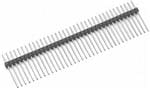
This Ethernet PHY Brick reference design enables Texas Instruments customers to quickly design systems and release them to market: using TI industrial Ethernet PHY transceiver devices: fully compliant to EN5501 Class A EMI requirements. A 50 Pin Interface has been provided to interface with 32-Bit Cortex M4 processor based Controller board. The board has been designed in a small form factor (2 inches x 3 inches) which makes it easy to fit into existing products. This reference design demonstrates the advanced performance of the DP83848K Ethernet PHY transceiver devices: supports 10/100 Base-T and is compliant with IEEE 802.3 standard. The entire reference design operates from a single power supply (5V with On-Board regulator or 3.3V). All other voltages required for the Ethernet PHY transceiver are internally generated.
AN-336 Understanding Integrated Circuit Package Power Capabilities (Rev. A)
Texas Instruments
AN-336 Understanding Integrated Circuit Package Power Capabilities (Rev. A)
Texas Instruments
The short and long term reliability of National Semiconductor's interface circuits like any integrated circuit is very dependent on its environmental condition. Beyond the mechanical/environmental factors nothing has a greater influence on this reliability than the electrical and thermal stress seen by the integrated circuit. Both of these stress issues are specifically addressed on every inter
EV-ADUCRF101QS3Z

Analog Devices Inc.
EV-ADUCRF101QS3Z
Analog Devices Inc.
The ADuCRF101 is a fully integrated, data acquisition solution that is designed for low power, wireless applications. It features a 12-bit analog-to-digital converter (ADC), a low power ARM Cortex?-M3 processor, a 862 MHz to 928 MHz and 431 MHz to 464 MHz RF transceiver, and Flash?/EE memory. The ADuCRF101 is packaged in a 9 mm ? 9 mm LFCSP.The data acquisition section consists of a 12-bit SAR ADC. The six inputs can be configured in single-ended or differential mode. When configured in single-ended mode, they can be used for ratiometric measurements on sensors that are powered, when required, from the internal low dropout regulator (LDO). An internal battery monitor channel and an on-chip temperature sensor are also available.This wireless data acquisition system is designed to operate in battery-powered applications where low power is critical. The device can be configured in normal operating mode or different low power modes under direct program control. In flexi mode, any peripheral can wake up the device and operate it. In hibernate mode, the internal wake-up timer remains active. In shutdown mode, only an external interrupt can wake up the device.The ADuCRF101 integrates a low power ARM Cortex-M3 processor. It is a 32-bit RISC machine, offering up to 1.25 DMIPS peak performance. The ARM Cortex-M3 processor also has a flexible 14-channel direct memory access (DMA) controller that supports communication peripherals, serial peripheral interface (SPI), UART, and I2C. Also provided on chip are 128 kB of nonvolatile Flash/EE memory and 16 kB of SRAM.A 16 MHz on-chip oscillator generates the system clock. This clock can be internally divided for the processor to operate at a lower frequency, thus saving power. A low power, internal 32 kHz oscillator is available and can be used to clock the four timers, as follows: two general-purpose timers, a wake-up timer, and a system watchdog timer.A range of communication peripherals can be configured, as required, in a specific application. These peripherals include UART, I2C, SPI, GPIO ports, PWM, and RF transceivers.The RF transceiver communicates in the 862 MHz to 928 MHz and 431 MHz to 464 MHz frequency bands using multiple configurations.On-chip factory firmware supports in-circuit serial download via the UART, and nonintrusive emulation and program download are also supported via the serial wire interface. These features are incorporated into a low cost development system supporting this precision analog microcontroller family.The ADuCRF101 operates from 2.2 V to 3.6 V and is specified over an industrial temperature range of ?40?C to +85?C. It is available in a 64-lead LFCSP packageApplications Battery powered wireless sensor Medical telemetry systems Industrial and home automation Asset tracking Security systems (access systems) Health and fitness applications??
AD8479R-EBZ

Analog Devices Inc.
AD8479R-EBZ
Analog Devices Inc.
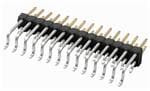
The AD8479 is a difference amplifier with a very high inputcommon-mode voltage range. The AD8479 is a precision devicethat allows the user to accurately measure differential signals inthe presence of high common-mode voltages up to ?600 V.The AD8479 can replace costly isolation amplifiers in applicationsthat do not require galvanic isolation. The device operates overa ?600 V common-mode voltage range and has inputs that areprotected from common-mode or differential mode transientsup to ?600 V.The AD8479 has low offset voltage, low offset voltage drift, low gain drift, low common-mode rejection drift, and excellent common-mode rejection ratio (CMRR) over a wide frequency range.The AD8479 is available in a space-saving 8-lead SOIC package and is operational over the ?40?C to +125?C temperature range.Applications High voltage current sensing Battery cell voltage monitors Power supply current monitors Motor controls Isolation
Feedback Plots Define Op Amp AC Performance
Texas Instruments
Feedback Plots Define Op Amp AC Performance
Texas Instruments
Feedback plots simplify the analysis of an op amp's closed-loop AC performance by showing bandwidth and stability conditions as a function of the op amp's gain and phase response. These plots also provide insight into noise performance and the special feedback requirements of circuits such as integrating converters photodiode amplifiers composite amplifiers and active feedback circuits.
16…28V to21V/8.5A
Texas Instruments
16…28V to21V/8.5A
Texas Instruments
PMP2627 is a synchronous buck converter with 16-28V DC input voltage range. The output with 12.0V @ 8.5A has much output capacitance for big load steps. The converter resists voltage peaks up to 40V on the input and an input filter reduces ripple on the supply voltage rail.
PFC THD Reduction and Efficiency Improvement by ZVS or Valley Switching
Texas Instruments
PFC THD Reduction and Efficiency Improvement by ZVS or Valley Switching
Texas Instruments
When a PFC is in discontinuous conduction mode the inductor current will resonant between the boost inductor and MOSFET parasite capacitance. The resonant current can be big enough to distort the PFC current significantly. This application note introduces a digital control scheme based on UCD3XXX to predict the position at which the resonant current first time rises back from negative to zero a