
Search results
Interfacing with the DAC8541 Digital-to-Analog Converter

Texas Instruments
Interfacing with the DAC8541 Digital-to-Analog Converter
Texas Instruments
This application report shows how to interface and operate the DAC8541 with a commercially available microprocessor or Texas Instruments DSP. Although this report uses a DSP as an example for the host interface the concept is generic in nature and therefore should fit any host processor selected to interface with this DAC. This report bridges the gap between digital signal system processing and a
AD8334-EVALZ

Analog Devices Inc.
AD8334-EVALZ
Analog Devices Inc.
The AD8334 is an ultralow noise, quad channel linear-in-dB variable gain amplifier (VGA). Although optimized for ultrasound systems, it may be used as a low noise variable gain control in any application whose operating frequency is less than 100 MHz.Included in each channel are an ultralow noise preamp (LNA), an X-AMP? VGA with 48 dB of gain range, and a selectable gain postamp with adjustable output limiting. The LNA gain is 19 dB with a single-ended input and differential outputs. Using a single resistor, the LNA input impedance can be adjusted to match a signal source without compromising noise performance.The 48 dB gain range of the VGA makes these devices suitable for a variety of applications. Excellent bandwidth uniformity is maintained across the entire range. The gain control interface provides precise linear-in-dB scaling of 50 dB/V for control voltages between 40 mV and 1 V. Factory trim ensures excellent part-to-part and channel-to-channel gain matching. Differential signal paths result in superb second- and third-order distortion performance and low crosstalk.The AD8334 is a quad version of the single AD8331 and dual AD8332.For information on specs, see the AD8331/AD8332/AD8334 datasheet.Applications Ultrasound and sonar time-gain controls High performance automatic gain control (AGC) systems I/Q signal processing High speed, dual ADC drivers
Universal AC input 4.2W GU10 LED lighting driver with Primary Side Regulator

Texas Instruments
Universal AC input 4.2W GU10 LED lighting driver with Primary Side Regulator
Texas Instruments
This reference design demonstrate an universal 85V~277V AC input 4.2W LED lighting driver using Texas Instruments TPS92310. It confirms this solution can support 3~4 LEDs in series with high efficiency: low cost and primary side regulator without any feedback on the seconday side.

EVAL-AD7405FMCZ

Analog Devices Inc.
EVAL-AD7405FMCZ
Analog Devices Inc.
The AD7405 is a high performance, second-order, ?-? modulatorthat converts an analog input signal into a high speed, single-bitLVDS data stream, with on-chip digital isolation based onAnalog Devices, Inc., iCoupler? technology. The AD7405operates from a 5 V (VDD1) power supply and accepts adifferential input signal of ?250 mV (?320 mV full-scale). Thedifferential input is ideally suited to shunt voltage monitoring inhigh voltage applications where galvanic isolation is required.The analog input is continuously sampled by a high performanceanalog modulator, and converted to a ones density digital outputstream with a data rate of up to 20 MHz. The originalinformation can be reconstructed with an appropriate digitalfilter to achieve 88 dB signal to noise ratio (SNR) at 78.1 kSPS.The LVDS input/output can use a 5 V or a 3.3 V supply (VDD2).The LVDS interface is digitally isolated. The LVDS interfacetechnology, combined with monolithic transformer technology,means the on-chip isolation provides outstanding performancecharacteristics, superior to alternatives such as optocouplerdevices. The AD7405 device is offered in a 16-lead, wide-bodySOIC package and has an operating temperature range of ?40?Cto +125?C.Applications Shunt current monitoring AC motor controls Power and solar inverters Wind turbine inverters Data acquisition systems Analog-to-digital and opto-isolator replacements
EVAL-AD4114SDZ

Analog Devices Inc.
EVAL-AD4114SDZ
Analog Devices Inc.
The AD4114 is a low power, low noise, 24-bit, sigma-delta (?-?) analog-to-digital converter (ADC) that integrates an analog front end (AFE) for eight fully differential or 16 single-ended, high impedance (?1 M?), bipolar, ?10 V voltage inputs.The AD4114 integrates key analog and digital signal conditioning blocks to configure eight individual setups for each analog input channel in use. The AD4114 features a maximum channel scan rate of 6.21 kSPS (161 ?s) for fully settled data.The embedded 2.5 V, low drift (?5 ppm/?C), band gap internal reference (with output reference buffer) reduces the external component count.The digital filter allows flexible settings, including simultaneous 50 Hz and 60 Hz rejection at a 27.27 SPS output data rate. The user can select different filter settings depending on the requirements of each channel in the application. The automatic channel sequencer enables the ADC to switch through each enabled channel.The precision performance of the AD4114 is achieved by integrating the proprietary iPassives? technology from Analog Devices, Inc. The AD4114 is factory calibrated to achieve a high degree of specified accuracy.The AD4114 operates with a single power supply that allows simplified use in galvanically isolated applications. The specified operating temperature range is ?40?C to +105?C. The AD4114 is housed in a 40-lead, 6 mm ? 6 mm LFCSP.ApplicationsProgrammable logic controller (PLC) and distributed control system (DCS) modules Instrumentation and measurement
Execution Time Measurement for Hercules ARM Safety MCUs (Rev. A)
Texas Instruments
Execution Time Measurement for Hercules ARM Safety MCUs (Rev. A)
Texas Instruments
This application report describes methods for measuring code execution time of TMS470 and TMS570 microcontrollers. Besides the typical pin toggle approach, where the duration between two pin toggles i
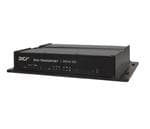
WR44-L9G4-AE1-MD
DIGI International
From $1,895.01 • 4 units available from multiple sources
WR44-L9G4-AE1-MD
DIGI International
DIGI TRANSPORT WR44 RR Router 4G LTE LATAM/ANZ, Wi-Fi (802.11ac) 300 Mbps down/150 Mbps up Transfer Rate Box
| Distributor | SKU | Stock | MOQ | 1 | 10 | 50 | 100 | 1,000 | 10,000 | |
|---|---|---|---|---|---|---|---|---|---|---|
| DigiKey | 602-2175-ND | 1 | $1,895.01 | $1,895.01 | $1,895.01 | $1,895.01 | $1,895.01 | $1,895.01 | Buy | |
| Mouser Electronics | 888-WR44-L9G4-AE1-MD | 3 | 1 | $1,893.11 | $1,893.11 | $1,893.11 | $1,893.11 | $1,893.11 | $1,893.11 | |
| AVNET Express | WR44-L9G4-AE1-MD | 0 | 1 | $2,569.00 | $2,569.00 | $2,569.00 | $2,569.00 | $2,569.00 | $2,569.00 | Buy |
| Arrow North American Components | WR44-L9G4-AE1-MD | 0 | 1 | $1,895.00 | $1,895.00 | $1,895.00 | $1,895.00 | $1,895.00 | $1,895.00 |

12-mm Tape-and-Reel Component-Delivery System
Texas Instruments
12-mm Tape-and-Reel Component-Delivery System
Texas Instruments
The design advances of component pick-and-place automated equipment for board assembly increasingly are pushing the margins of the tape-and-reel packing configurations. The continuing drive for faster assembly reduces the index time and tends to amplify the forces acting on the tape-and-reel component-delivery system. The magnified forces when combined with a high carrier-tape width-to-component

Implementing Serial Rapid I/O PCB layout on a TMS320C6455 Hardware Design (Rev. A)
Texas Instruments
Implementing Serial Rapid I/O PCB layout on a TMS320C6455 Hardware Design (Rev. A)
Texas Instruments
This application report contains implementation instructions for the Serial Rapid I/O (SRIO) interface on the TMS320C6455 DSP device. The approach to specifying interface timing and physical requirements for the SRIO interface is quite different than previous approaches for other interfaces.
Serial Rapid I/O is an industry-standard high-speed switched-packet interconnect. Physical layer data t
Understanding the Functional Enhancements of DSP/BIOS II and Their Utilization
Texas Instruments
Understanding the Functional Enhancements of DSP/BIOS II and Their Utilization
Texas Instruments
Building upon the software foundation architecture of DSP/BIOS DSP/BIOS II extends Texas Instruments? system software capabilities and services to enable the development of more advanced and complex applications; and provide support for traditional concurrent-system design paradigms. This support is a combination of additional software modules and modifications to the kernel to provide preemp